Sheshi Gjergj Kastrioti Skënderbeu
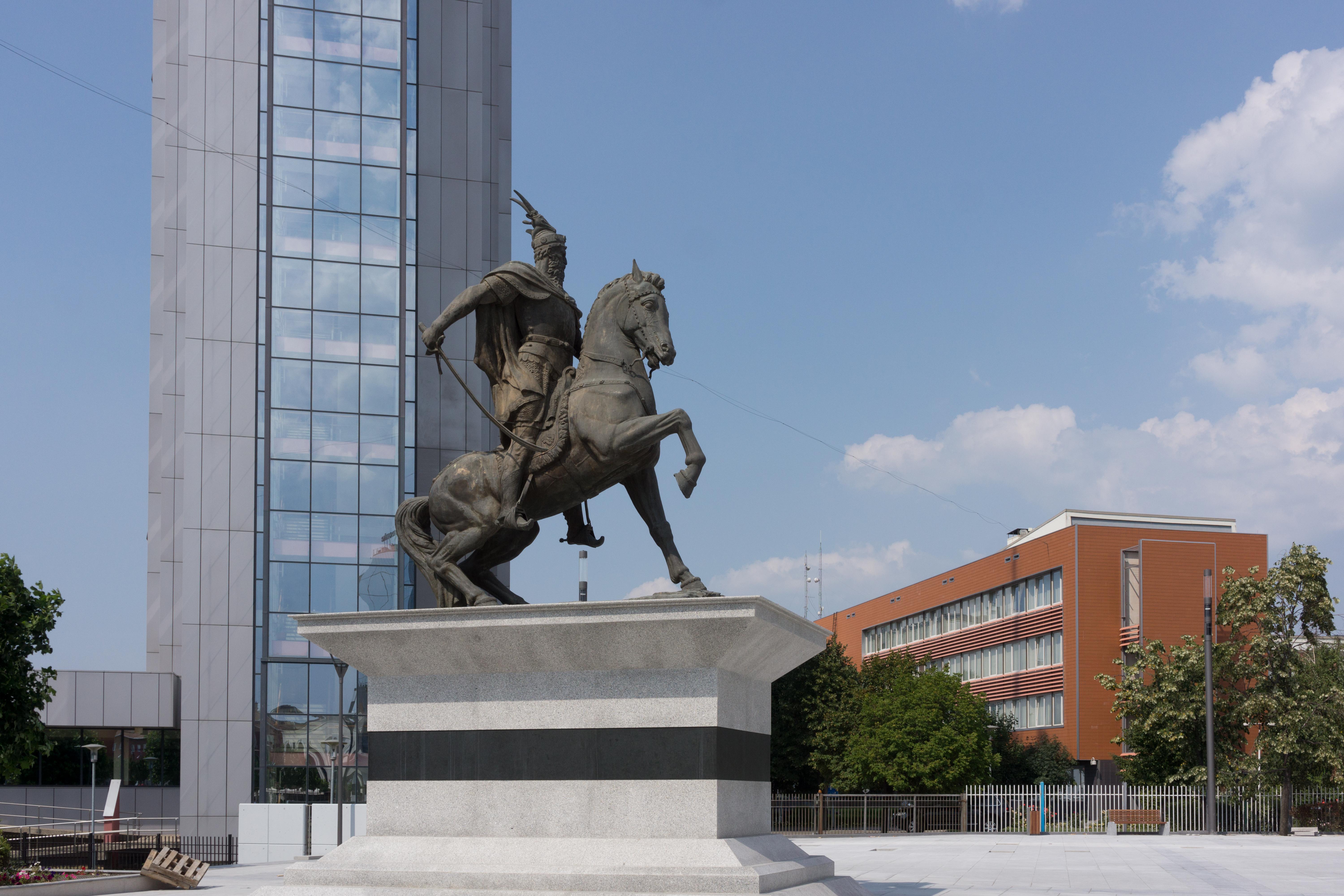
In the heart of Pristina stands the Permendorja Gjergj Kastrioti Skënderbeu, a statue of the man the world knows as Skanderbeg. His story begins around 1405 in the Dibra region, amid wars, empires and foreign rulers. The Ottomans took him hostage as a child and trained him as a soldier of the empire threatening his homeland.
At the Battle of Nish in 1443 he turned against his former masters and returned to Albania as a liberator. He united the divided Albanian principalities under the banner of the double-headed eagle and held out for twenty-five years. Popes Callixtus III and Pius II honoured him as Defender of Christianity, and Pius II added the rare title Athleta Christi. The Military History Museum in Vienna keeps his armour, a relic of that unbowed quarter-century. Praise rarely came with soldiers: Hungary under John Hunyadi stood beside him, while Serbia under Branković refused help.
He died in 1468, and the resistance soon collapsed. Many Albanians fled across the Adriatic, and their descendants, the Arbëresh, still keep their language and identity in Italy. Vivaldi, Francoeur, Rebel and Raff composed operas about him, and statues in his honour rise in seven countries from Albania to Belgium. And in Mirdita the mourning never ended: women there wear black for him, a custom recorded over a century ago.
- City
- Pristina
- Content updated
Take this page with you
The myTuur app is free, and once you are standing at a spot its story starts by itself.


Spots like this one are the stops myTuur strings into tours through Pristina. In the app, each story begins where you stand: walk up to a spot and it starts, read it on screen or listen as you go, then follow the route to the next one.
What is myTuur?
myTuur is a free city-guide app. Its tours are built from spots, and each spot carries a story that starts when you get there, to read or to listen to as you like.