Casa Milà
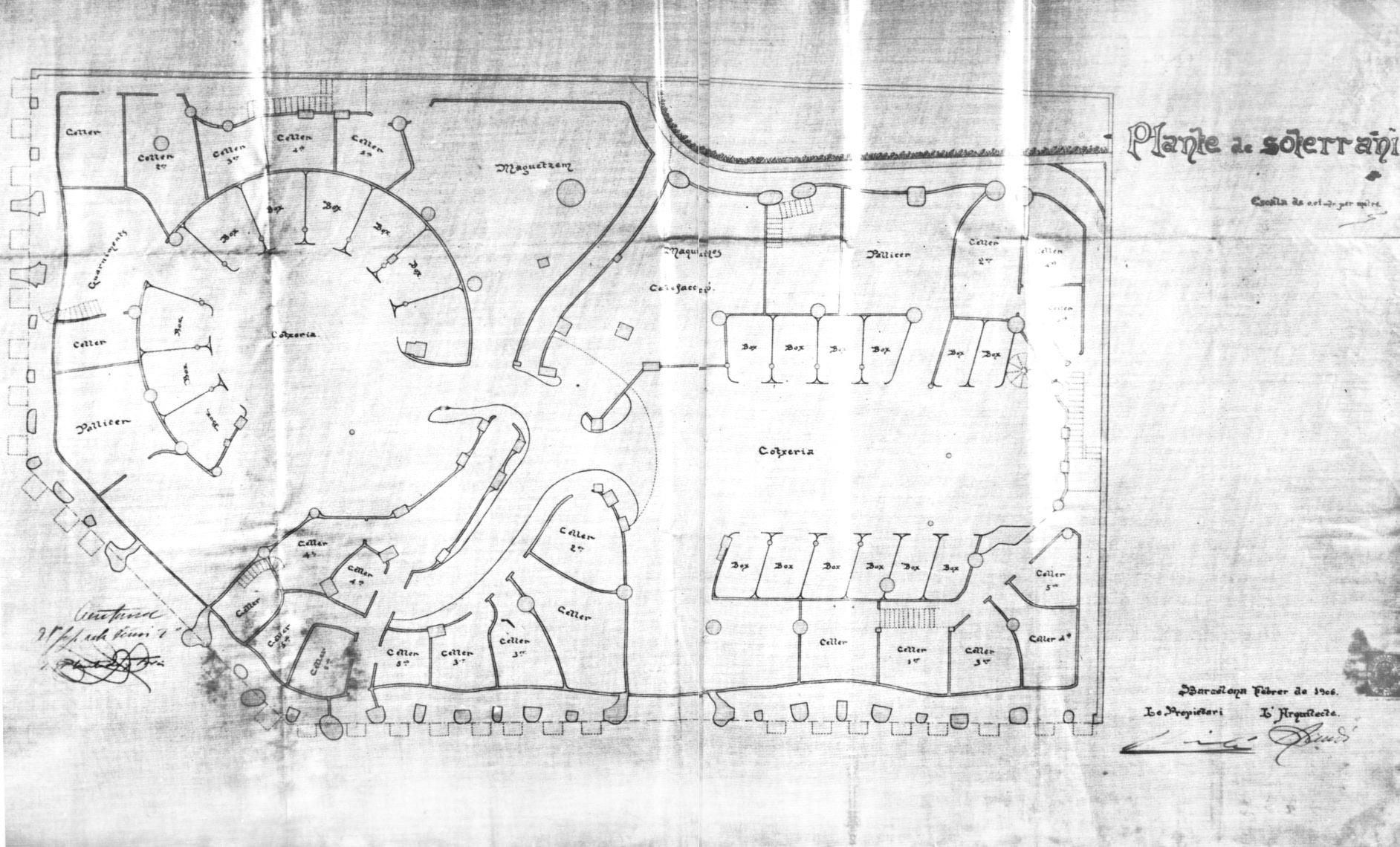
Casa Milà is an apartment building in Barcelona and the last private residence that Antoni Gaudí ever designed. Pere Milà and his wife Roser Segimon commissioned it, and the work ran from 1906 to 1912. An undulating limestone facade and twisting wrought-iron balconies, shaped by Josep Maria Jujol, broke away from the styles of their day. Barcelonans who disliked the rough-hewn result called it La Pedrera, the stone quarry. The insult became the name the whole city still uses.
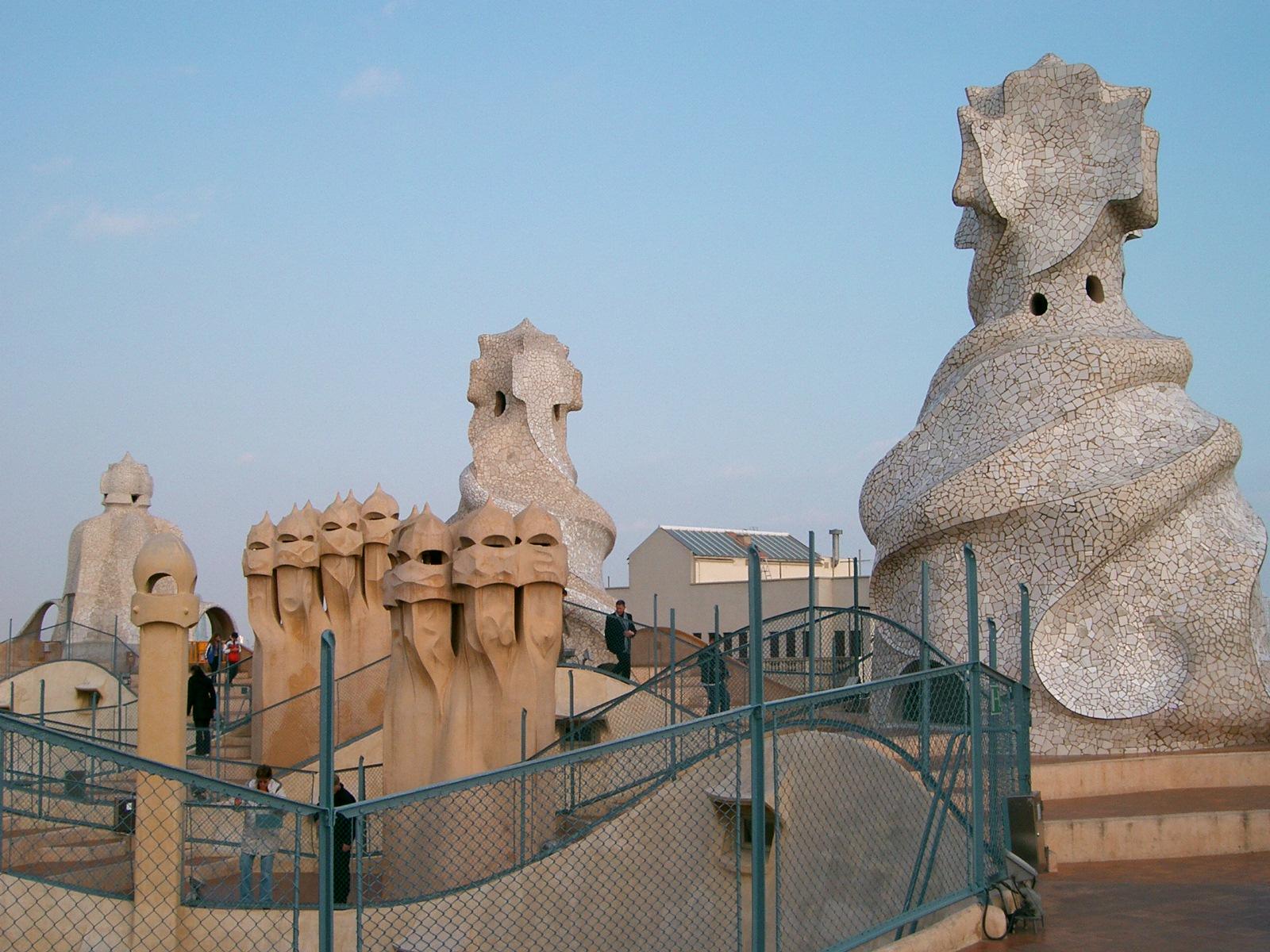
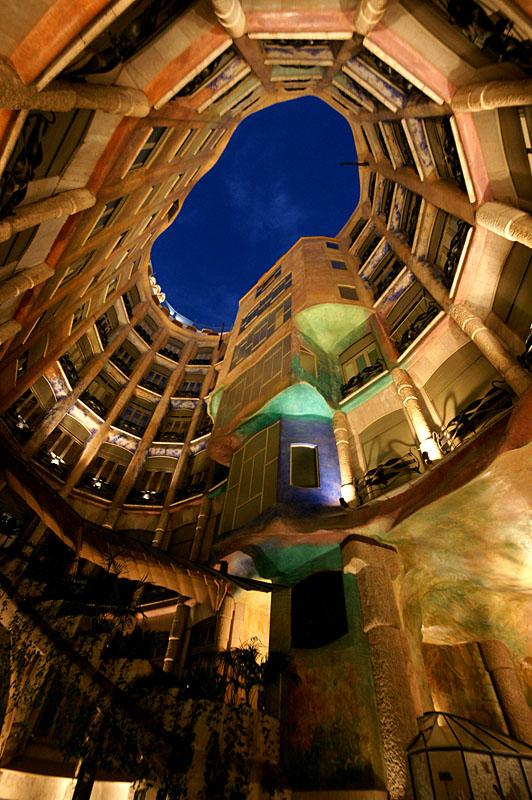
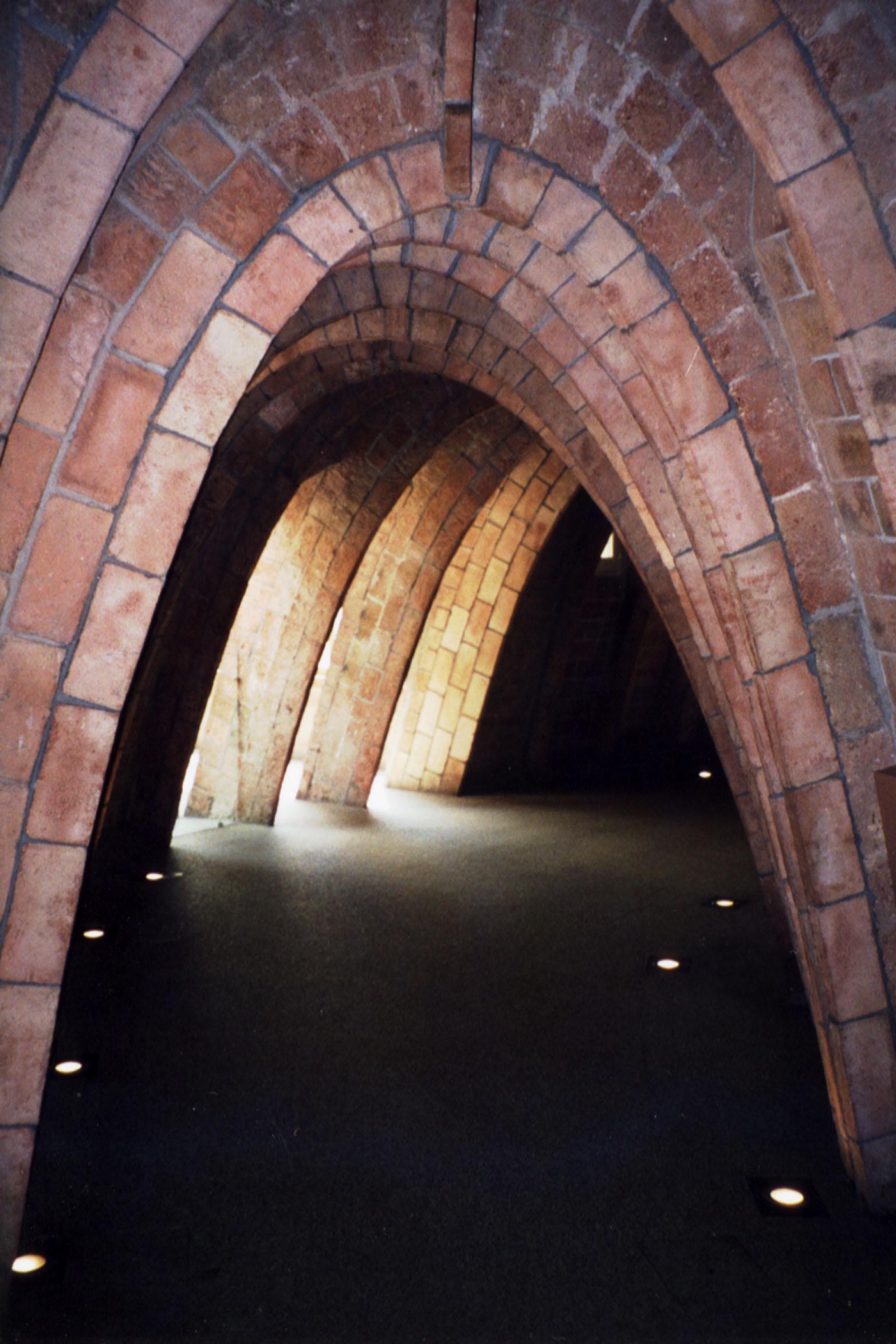
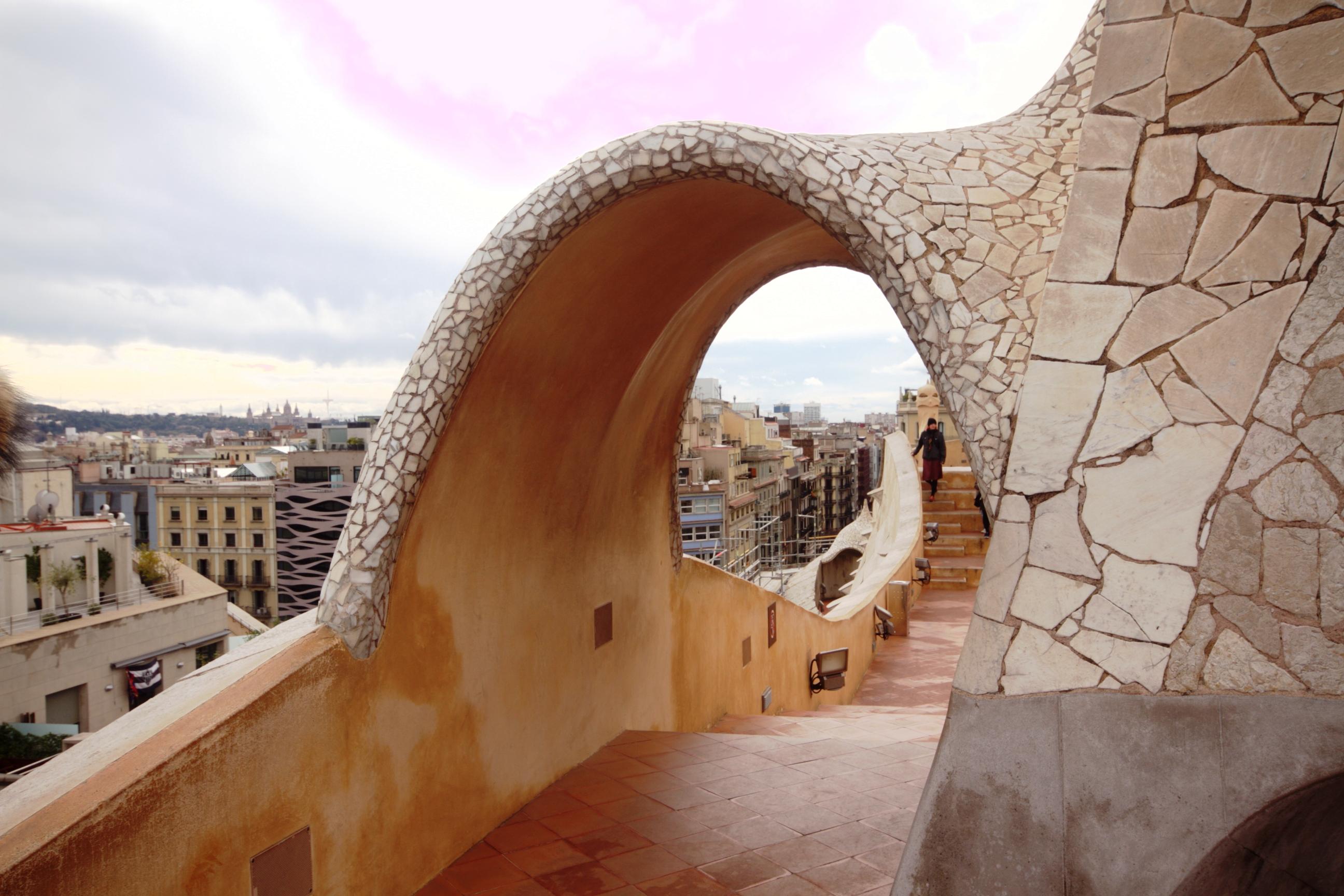
The stone facade bears no weight at all: curved iron beams tie it to the structure of each floor. Inner walls can move or vanish without harming the stability, so apartment layouts stay free to change. Two large courtyards pull daylight down through nine storeys, and the main floor alone spans more than 1,300 square metres. Gaudí designed the lifts to stop on every other floor, so neighbours would meet on the shared landings. Overhead, brick chimneys and skylights dressed in lime, broken marble or glass turn the roof into a working sculpture garden. Inside, plastered ceilings carry dynamic reliefs beside handcrafted wooden doors and hydraulic tiles. Gaudí planned statues of the Virgin for the cornice, but building rules and anticlerical anger after Semana Trágica stopped them.
After Roser Segimon sold the property in 1946, it served as offices, an academy and even a bingo hall. By the 1980s the facade wore brown paint, its original colours gone. Restoration followed the 1969 monument listing, and in 1984 the building joined Gaudí's works on the UNESCO World Heritage list. The Fundació Catalunya La Pedrera runs the visits and exhibitions that fill the floors. Wheelchair users can get around the whole building. Even the stone has a split origin: the first-floor blocks came from the Garraf Massif, those higher up from the Villefranche quarry.
- City
- Barcelona
- Content updated
Take this page with you
The myTuur app is free, and once you are standing at a spot its story starts by itself.


Spots like this one are the stops myTuur strings into tours through Barcelona. In the app, each story begins where you stand: walk up to a spot and it starts, read it on screen or listen as you go, then follow the route to the next one.
What is myTuur?
myTuur is a free city-guide app. Its tours are built from spots, and each spot carries a story that starts when you get there, to read or to listen to as you like.