Tempio della Vittoria
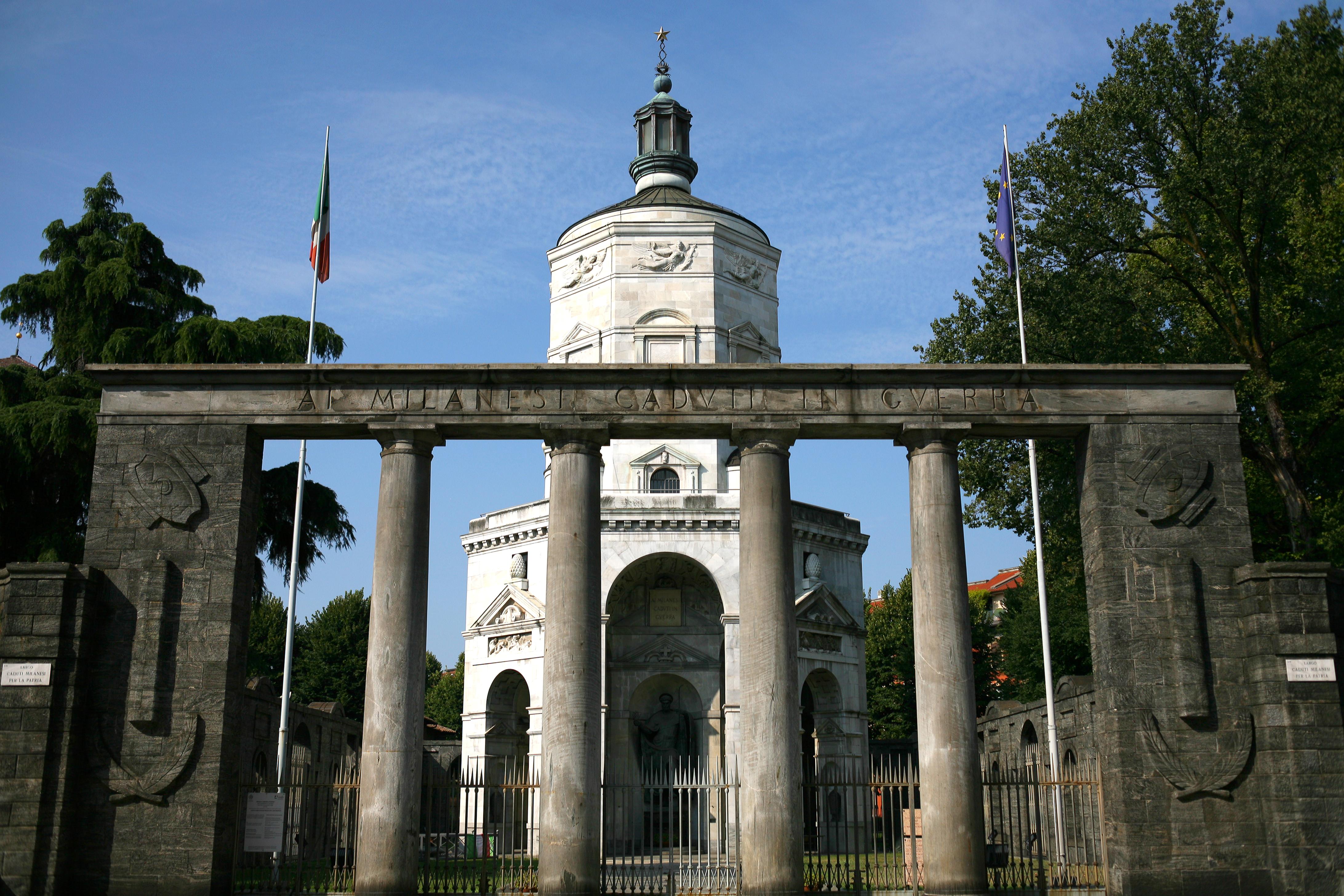
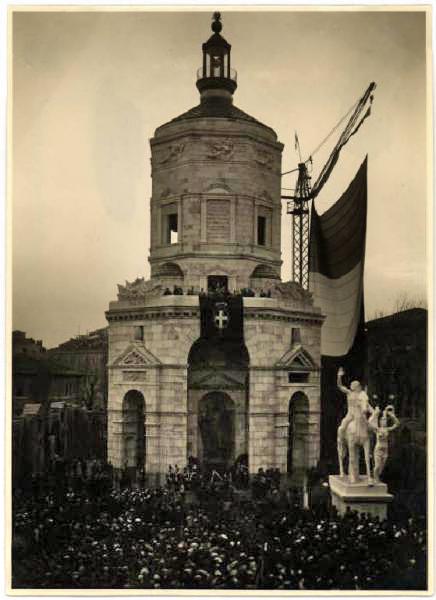
Milan built the Tempio della Vittoria for its soldiers who died in the First World War. Giovanni Muzio designed it between 1927 and 1930, with contributions from Gio Ponti and Alberto Alpago Novello. The city inaugurated it on 4 November 1928, the tenth anniversary of the war's end. You find it close to the Basilica of Sant'Ambrogio, built of Musso white marble. That stone carries on a Milanese tradition seen in the columns of San Lorenzo and the Duomo.
The octagonal plan echoes the atrium of the nearby basilica. Eight sides face Milan's eight gates, marking the paths the soldiers took out of the city to join the Italian forces. The four main sides carry large arches, their reliefs standing for each year of the war. Beside them run the names of the war's significant battles. Between the niches sit stone urns holding soil from those battlefields. The four secondary sides stand for earth, water, fire and air, each set with smaller niches topped by classical triangular pediments. A bronze Saint Ambrose by Adolfo Wildt dominates the entrance, trampling the seven deadly sins.
The ground under the temple carries its own history. A paleochristian cemetery for martyrs once occupied the site, joining the fallen soldiers to those ancient martyrs. Below ground, the temple holds a vast sacrarium over three subterranean levels, enlarged in 1973 by Mario Baccini. The names of ten thousand dead run across its walls, etched in bronze. Milan's war dead rest there in the dark, on ground that once held the city's martyrs.
- City
- Milan
- Content updated
Take this page with you
The myTuur app is free, and once you are standing at a spot its story starts by itself.


Spots like this one are the stops myTuur strings into tours through Milan. In the app, each story begins where you stand: walk up to a spot and it starts, read it on screen or listen as you go, then follow the route to the next one.
What is myTuur?
myTuur is a free city-guide app. Its tours are built from spots, and each spot carries a story that starts when you get there, to read or to listen to as you like.