Therese Jacob
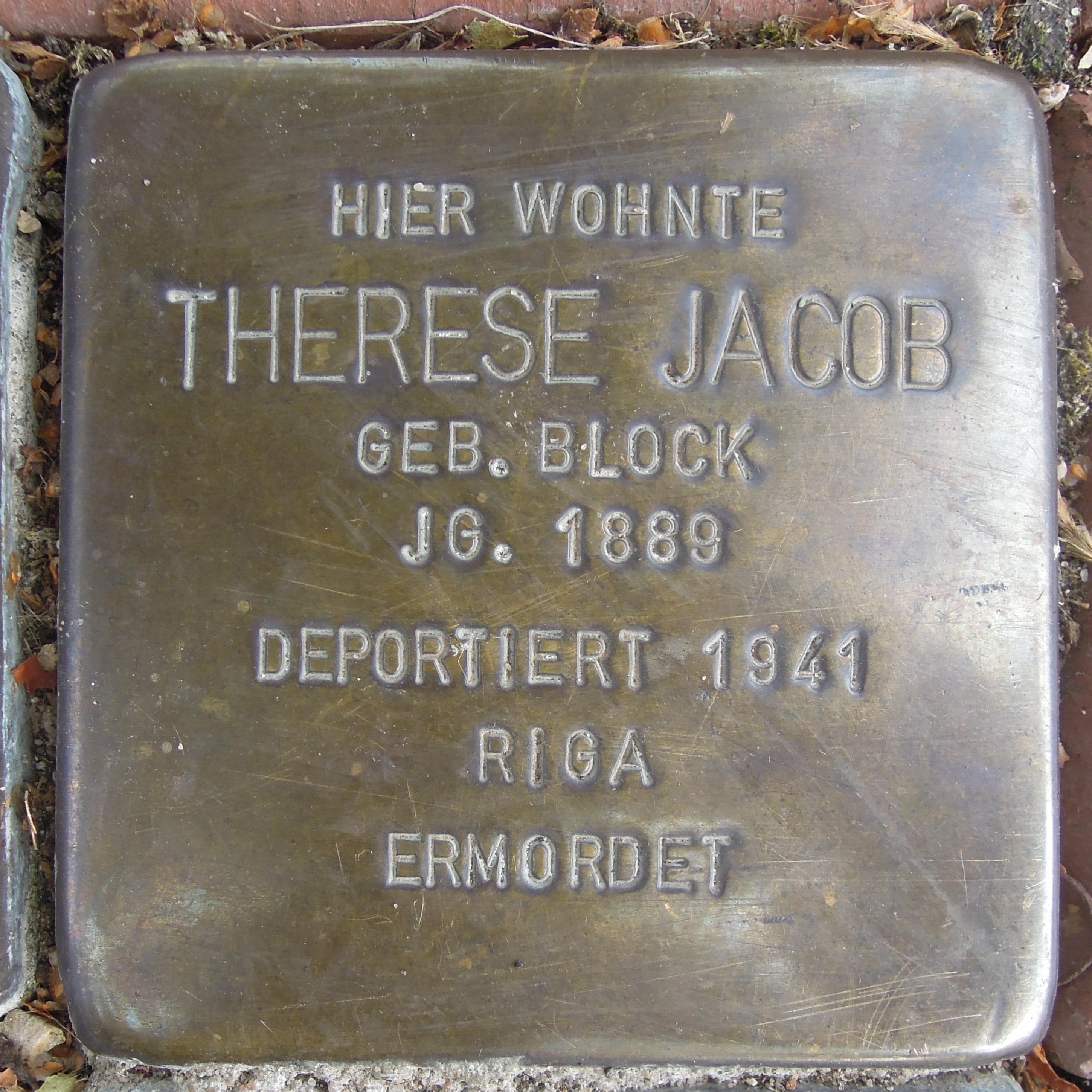
A brass-plated Stolperstein sits flush in the pavement of Petershagen, a town in Germany, level enough for wheelchairs to cross. It commemorates Therese Jacob, born in this city on 15 January 1889. You could walk straight over it without noticing the brass at your feet.
After her marriage to Albrecht Jacob, Therese moved to Freienohl in the Sauerland, where their daughter Margot was born in January 1925. Albrecht died of war injuries a month later, and mother and child returned to the Petershagen family home. In December 1941 they belonged to the first group of Jewish residents the town lost to deportation. The route ran through a collection point in Bielefeld and on to Riga. Nazi officials called the deportations evacuation, a euphemism for what they actually were. Therese did not survive the Riga Ghetto: malnutrition claimed her in April 1942, at the age of fifty-three.
Margot survived, the only Jewish person from Petershagen to return after the war. She had been at school in Berlin until it closed, and her mother had urged her to come home. Later she married Kurt Scheurenberg, who also survived the war, and the two of them settled in Frille. Four children grew up there because Margot came home.
- City
- Petershagen
- Content updated
Take this page with you
The myTuur app is free, and once you are standing at a spot its story starts by itself.


Spots like this one are the stops myTuur strings into tours through Petershagen. In the app, each story begins where you stand: walk up to a spot and it starts, read it on screen or listen as you go, then follow the route to the next one.
What is myTuur?
myTuur is a free city-guide app. Its tours are built from spots, and each spot carries a story that starts when you get there, to read or to listen to as you like.