Tiefburg
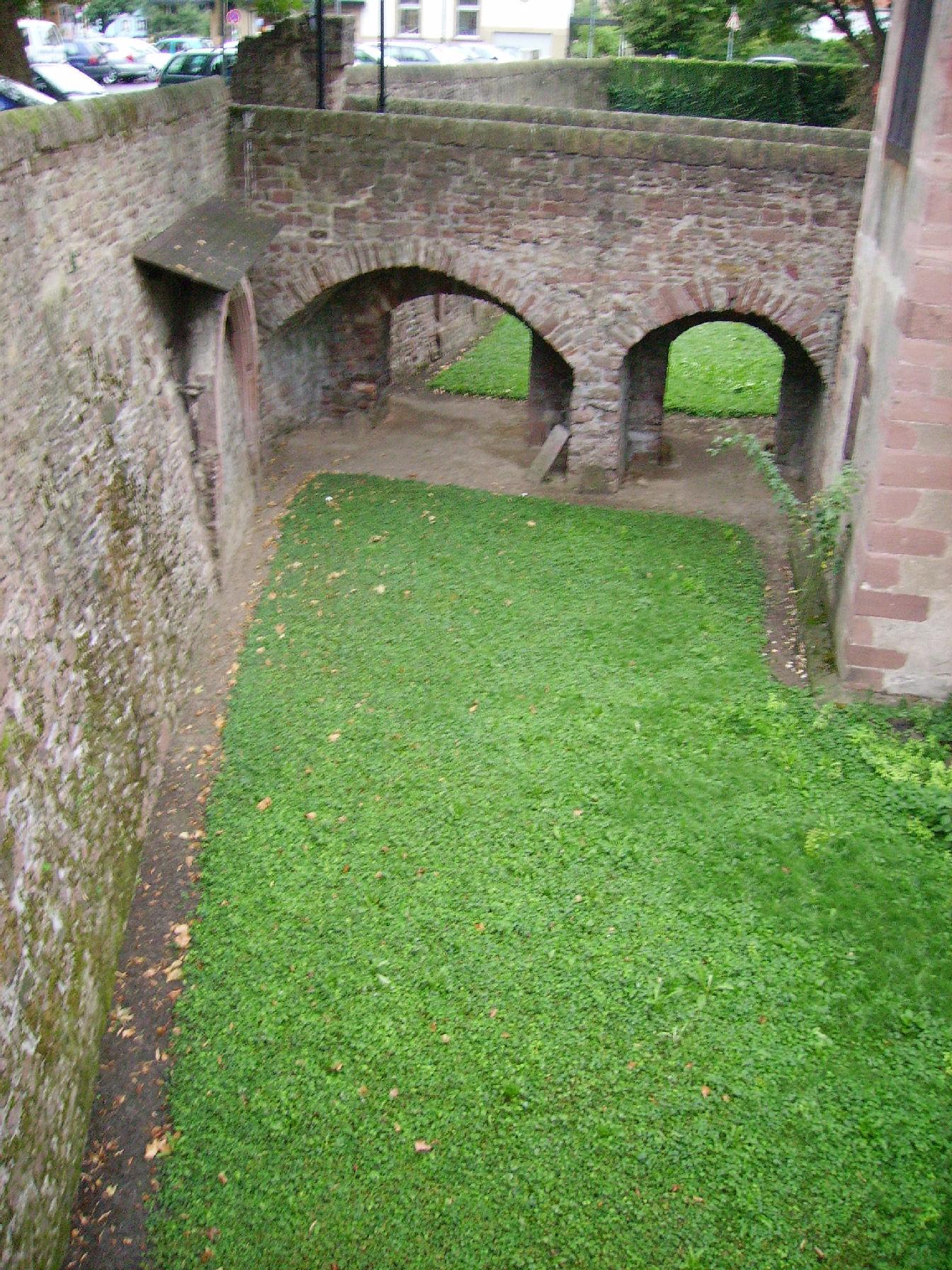
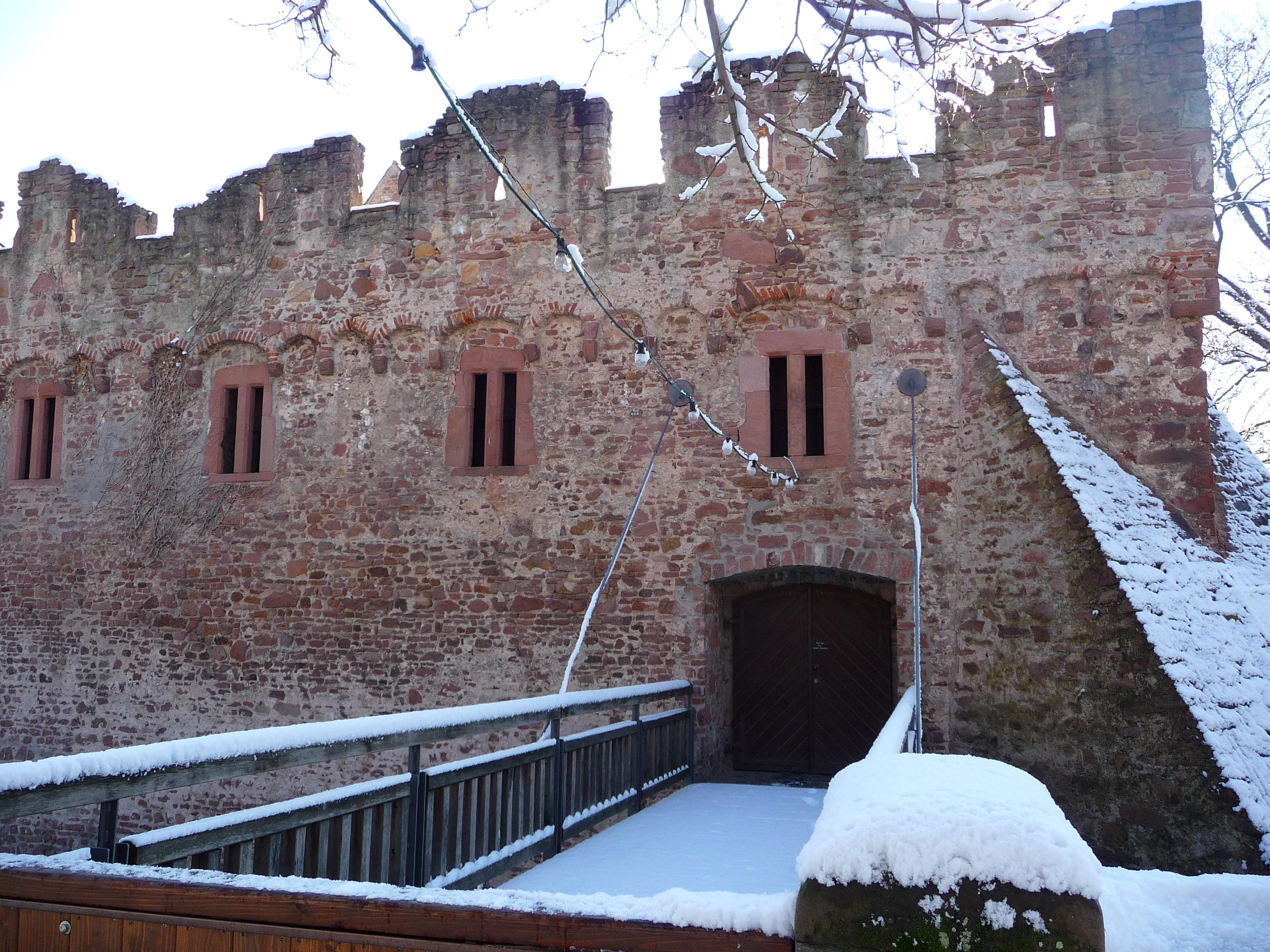
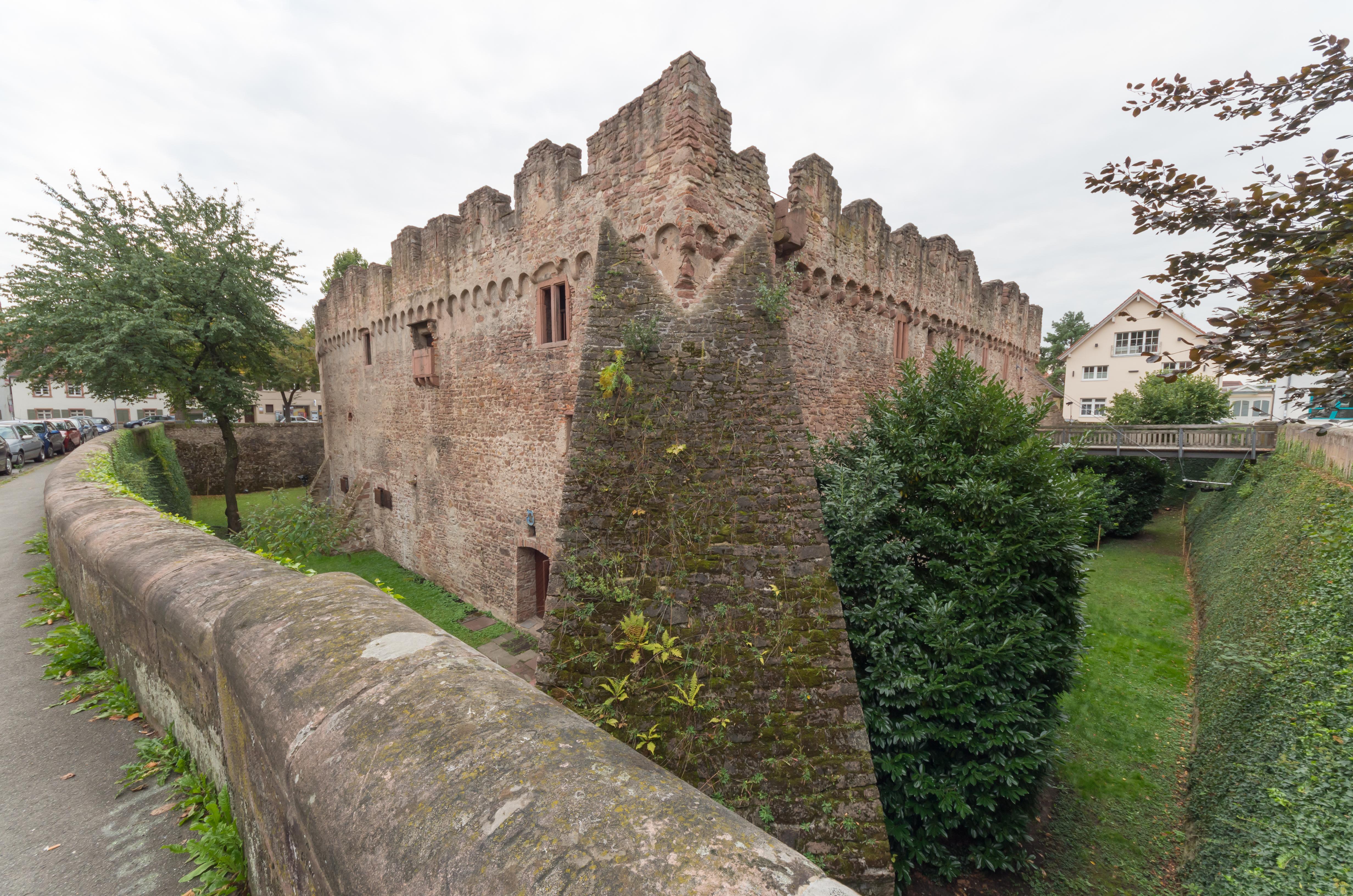
The Tiefburg stands in Heidelberg's Handschuhsheim district, a medieval moated castle now half ruin, half meeting place. You still enter over a bridge that crosses the former moat, twelve metres wide and once fed by the Mühlbach. At the northeast corner a walled-up opening marks where the water flowed in. Beside the entrance you can trace the slot where the portcullis of the old drawbridge dropped.
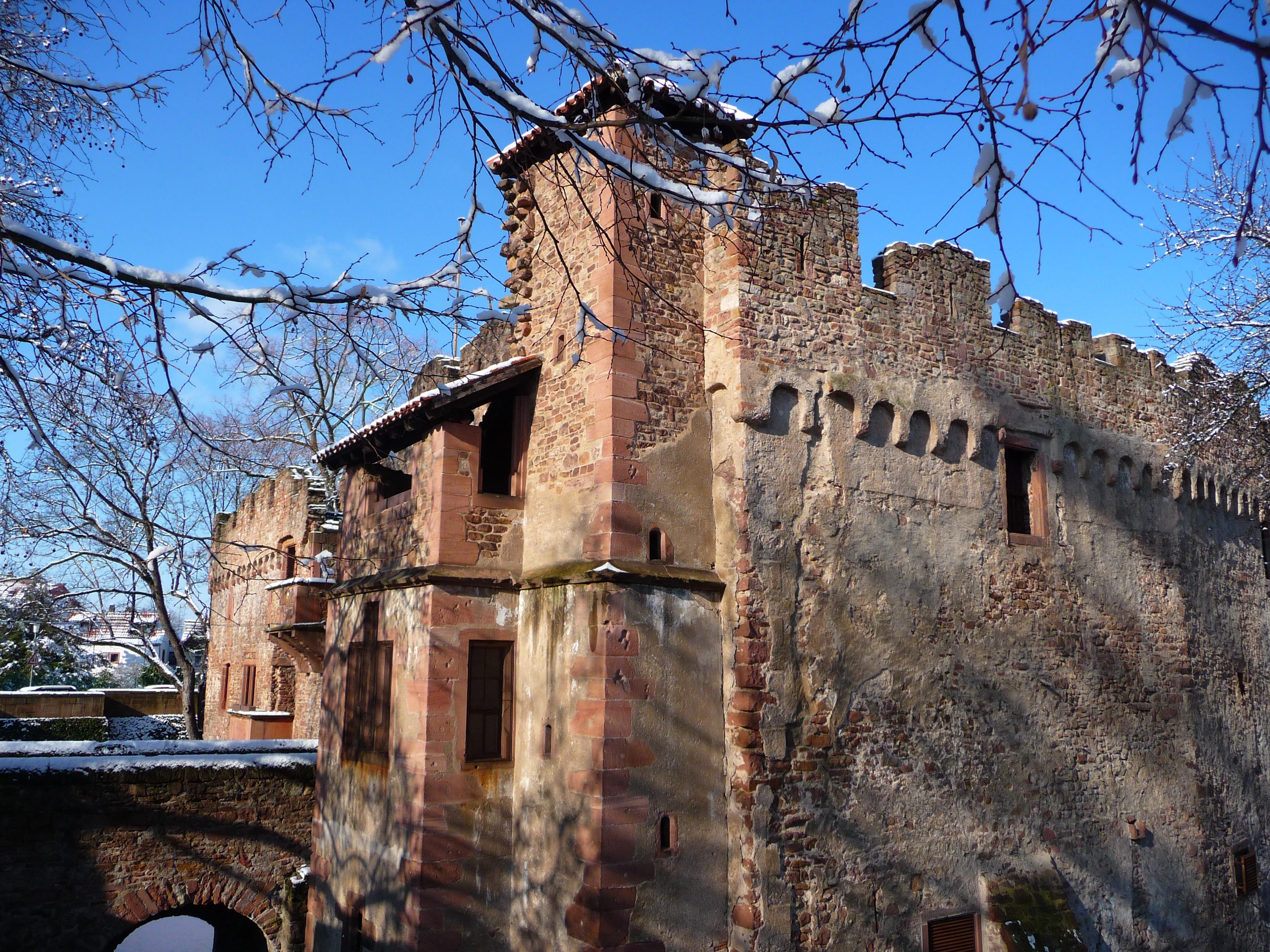
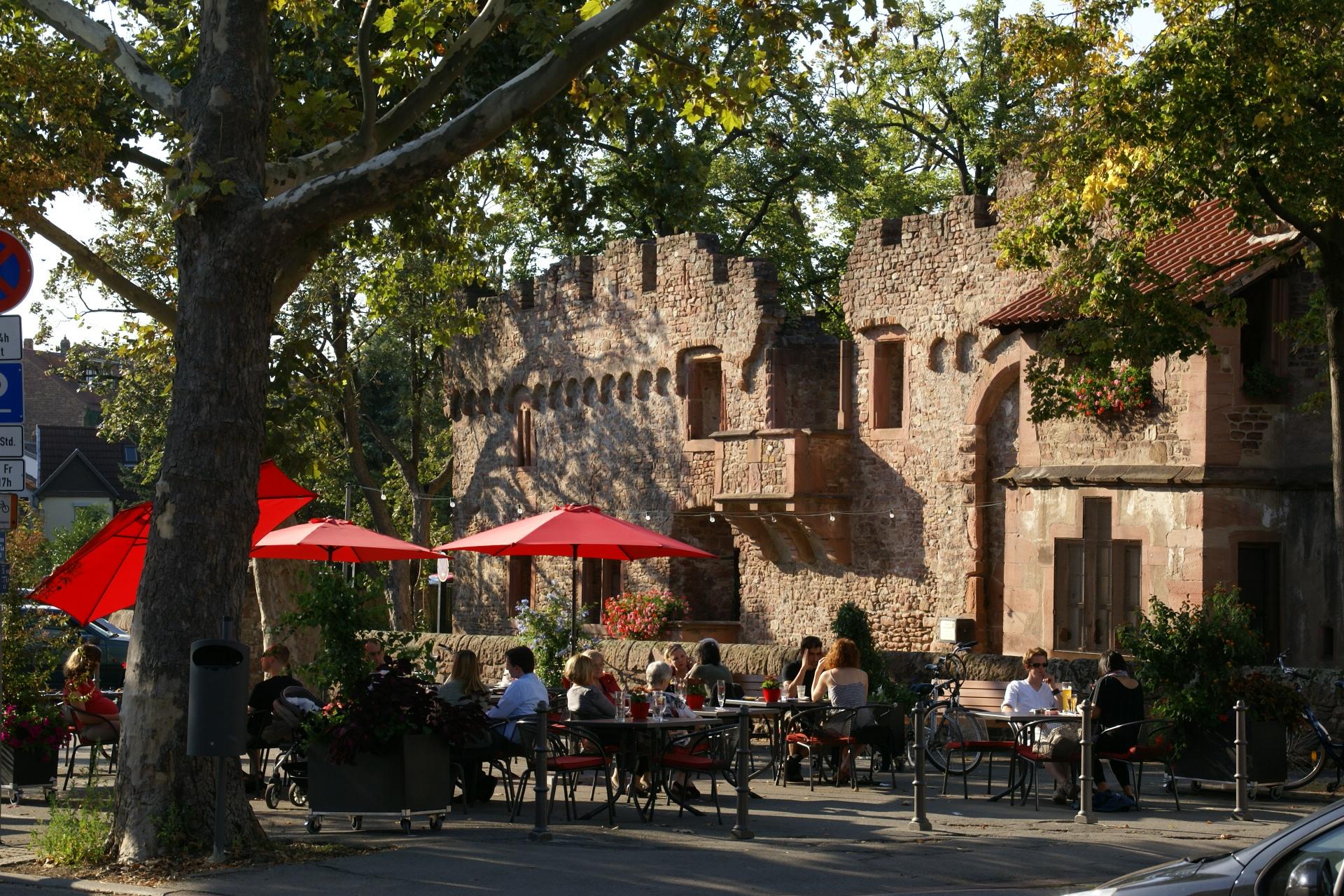
Nobody knows who built the castle or exactly when, but records place it here by the thirteenth century. The four defensive walls, each about thirty metres long, and the vaulted cellars still date from the high Middle Ages. Coats of arms on the balcony railings carry the year 1544, pinpointing a Renaissance overhaul. The Lords of Handschuhsheim made it their family seat. When that line ended around 1600, the Helmstatt family took over in 1624 and held the castle for over three hundred years. The wars of the seventeenth century left their marks: the castle burned in 1642 and lay uninhabitable by 1674. Around 1700 a manor house with stables and barns rose beside the ruin and stayed in use. Raban Graf von Helmstatt renovated the residence between 1911 and 1913, and a youth hostel operated there from 1921 until 1951. The city of Heidelberg bought it soon after, and the district association manages it today. The restored house holds the local historical archive, and the courtyard hosts festivals and meetings.
A darker tale comes from 1770, when the owner found a skeleton in medieval armour hidden behind a wall. Legends call him the walled-in knight, sealed in alive as punishment for a love affair. The armour passed to a general, reached a museum in Munich and has since vanished. Walter Laufenberg even set a historical novel here, Ritter, Tod und Teufel of 1992. Since 1977 a replica has stood at the spot where the skeleton came to light.
- City
- Heidelberg
- Content updated
Take this page with you
The myTuur app is free, and once you are standing at a spot its story starts by itself.


Spots like this one are the stops myTuur strings into tours through Heidelberg. In the app, each story begins where you stand: walk up to a spot and it starts, read it on screen or listen as you go, then follow the route to the next one.
What is myTuur?
myTuur is a free city-guide app. Its tours are built from spots, and each spot carries a story that starts when you get there, to read or to listen to as you like.