Baths of Caracalla
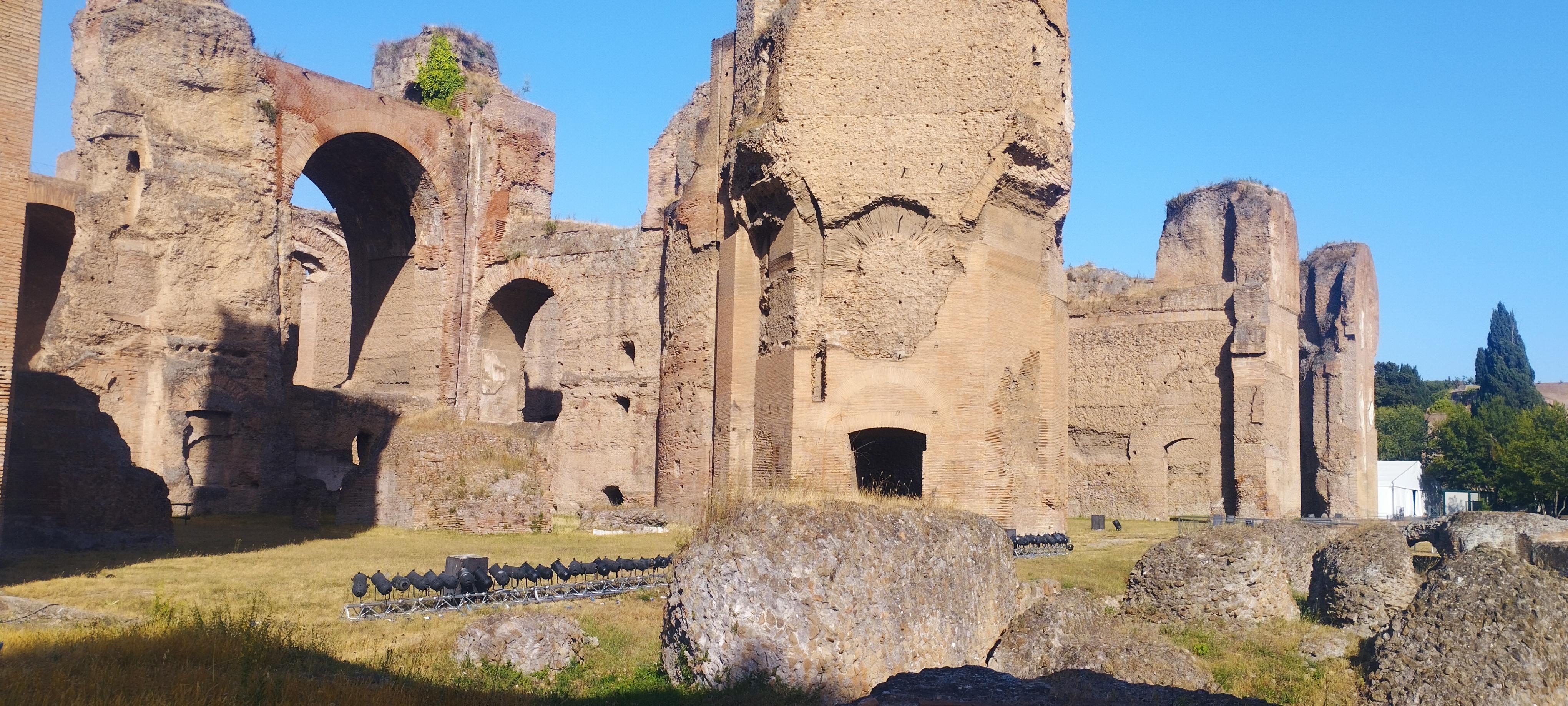
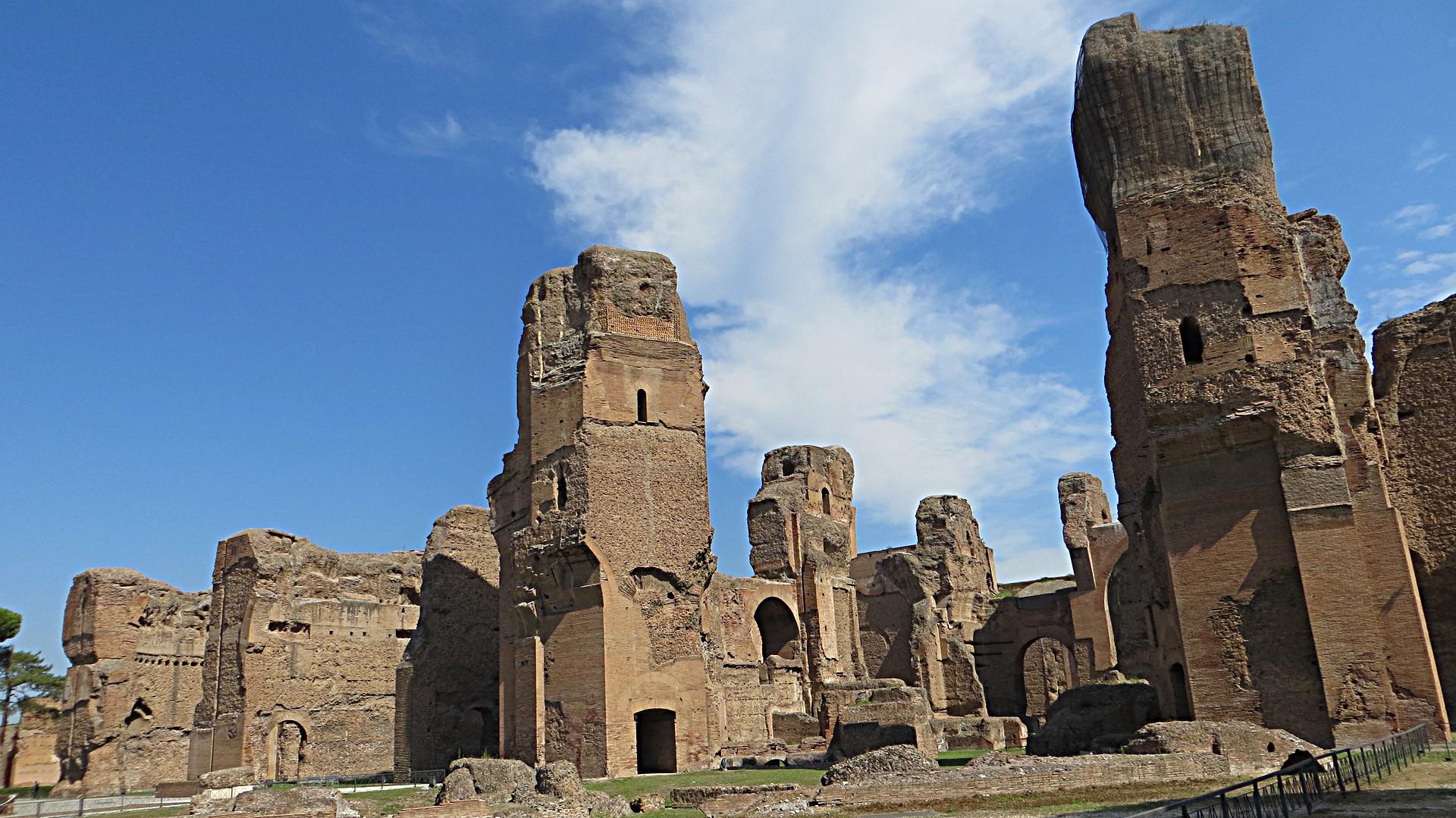
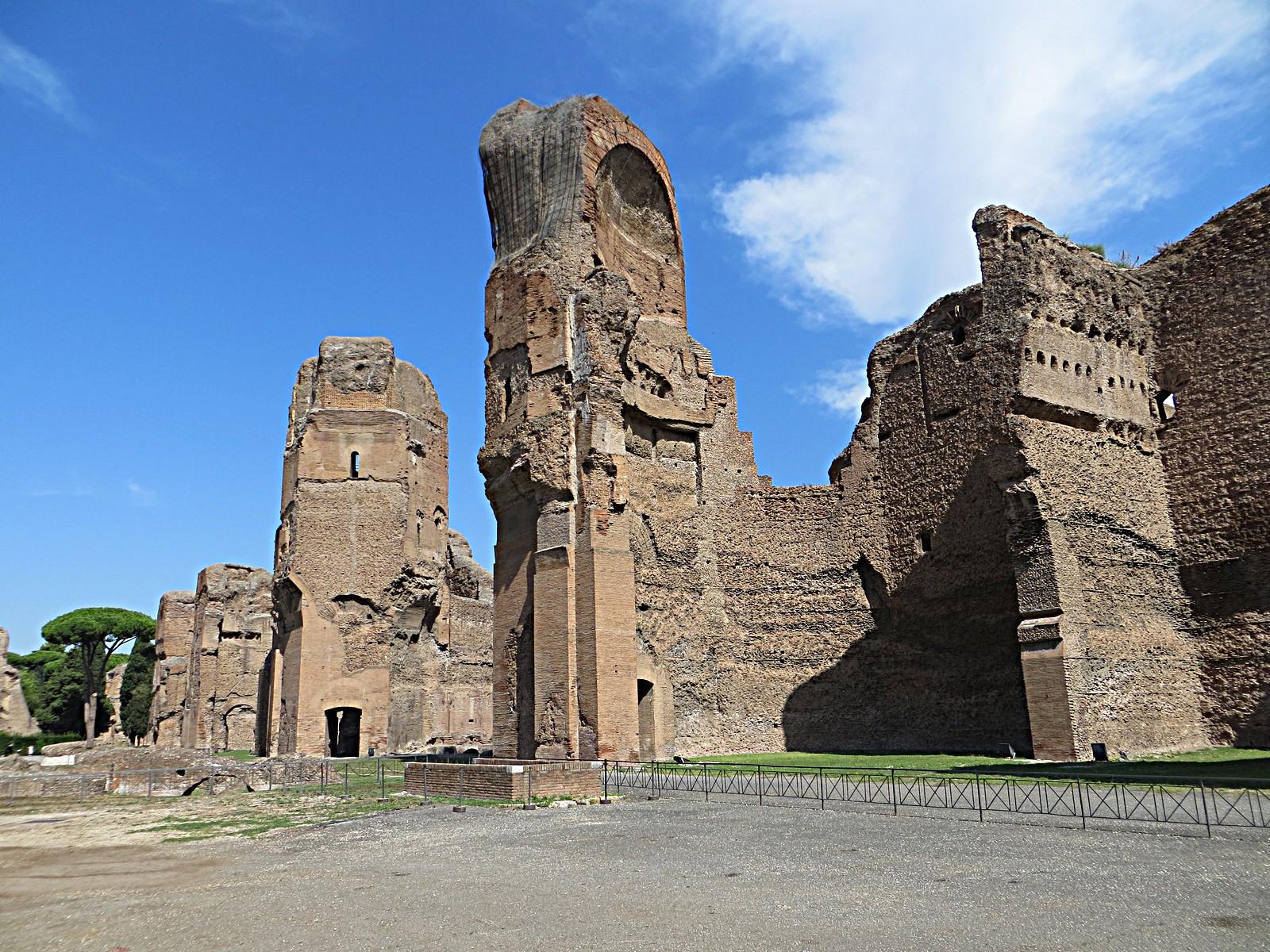
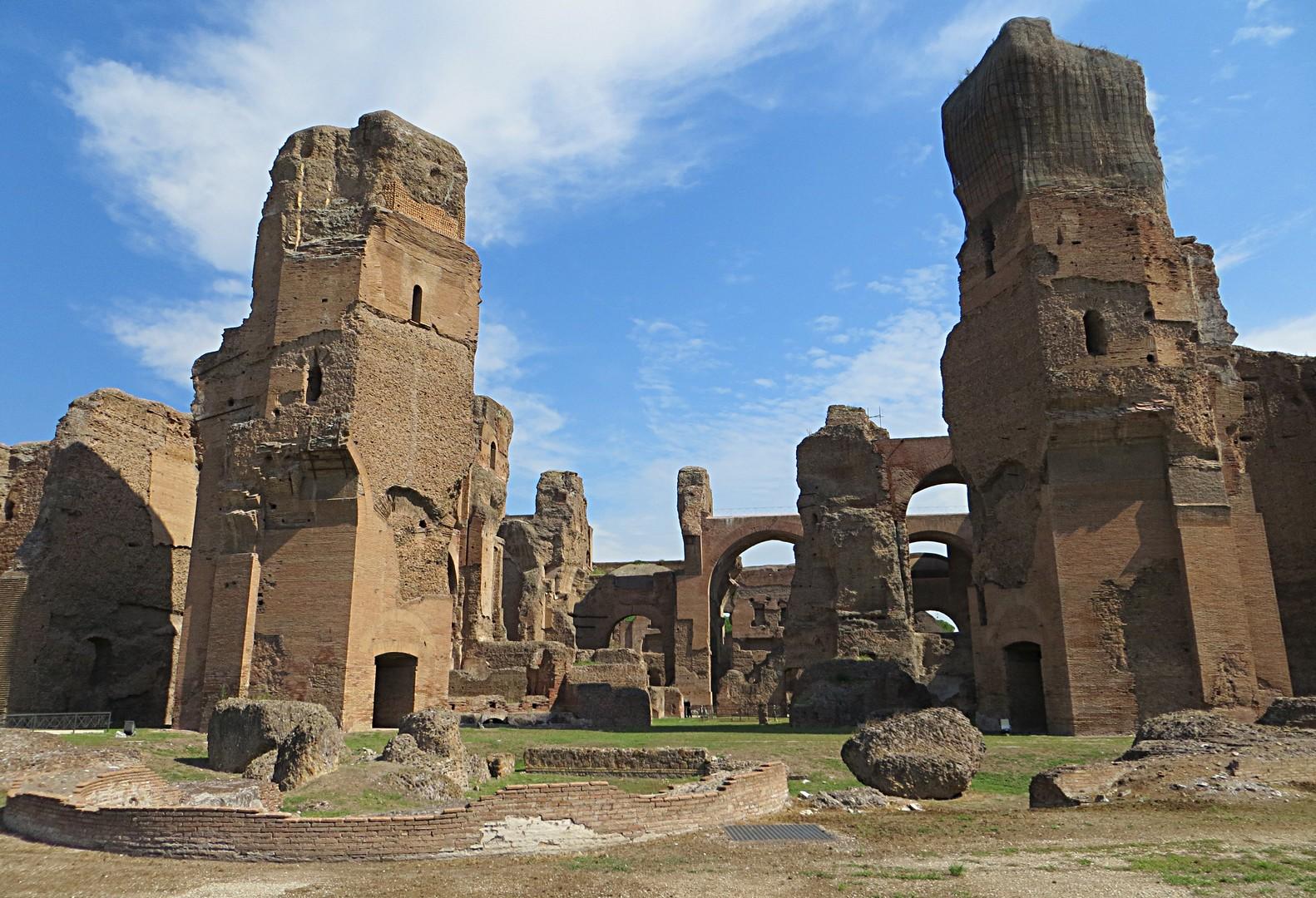
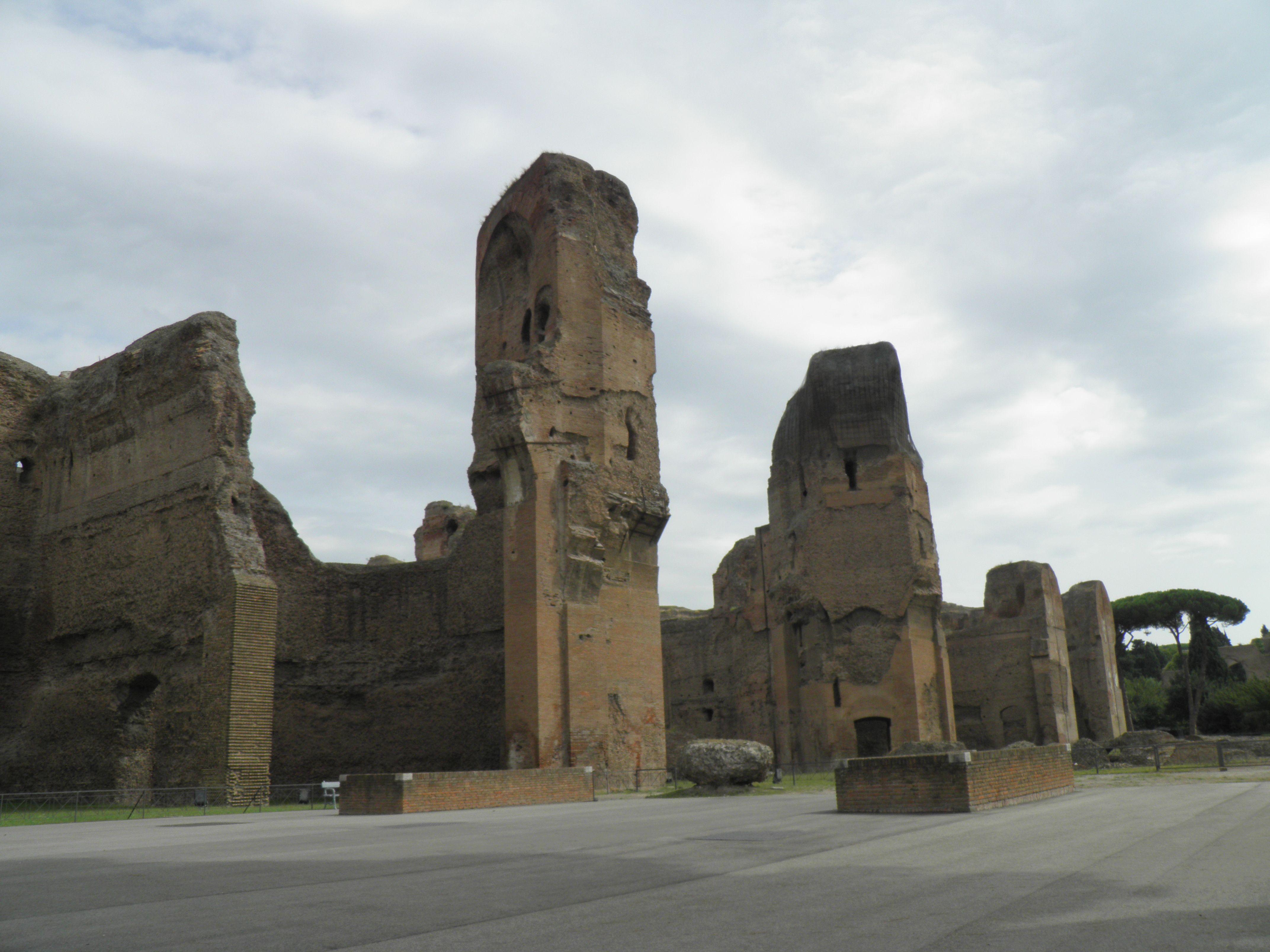
Terme di Caracalla rises in Rome as one of the grandest surviving bath complexes of imperial Rome. Brick walls still reach thirty-six metres, surrounding traces of terraces, gardens, mosaics, and monumental halls. The scale lets you picture a public world built for bathing, exercise, reading, and conversation.
Emperor Caracalla commissioned the complex, and its central building opened in 216. A straight axis linked the hot caldarium, warm tepidarium, cold frigidarium, and partly open natatio pool. Two palaestrae, changing rooms, and symmetrical libraries extended the experience beyond bathing. Beneath these spaces, tunnels held furnaces, boilers, water pipes, a mill, and stored fuel. A large mithraeum preserves the visible fossa sanguinis, probably used during initiation rituals.
Much of the marble, painted stucco, glass mosaic, and sculpture has disappeared. The remaining architecture still shows how decoration and engineering worked together across the complex. Damaged aqueducts ended the baths’ operation in 537, while the ruins later became an open-air stage for opera. Look down into the underground passages, where hidden workers once kept this enormous machine alive.
- City
- Rome
- Content updated
Take this page with you
The myTuur app is free, and once you are standing at a spot its story starts by itself.


Spots like this one are the stops myTuur strings into tours through Rome. In the app, each story begins where you stand: walk up to a spot and it starts, read it on screen or listen as you go, then follow the route to the next one.
What is myTuur?
myTuur is a free city-guide app. Its tours are built from spots, and each spot carries a story that starts when you get there, to read or to listen to as you like.