Pyramid of Cestius
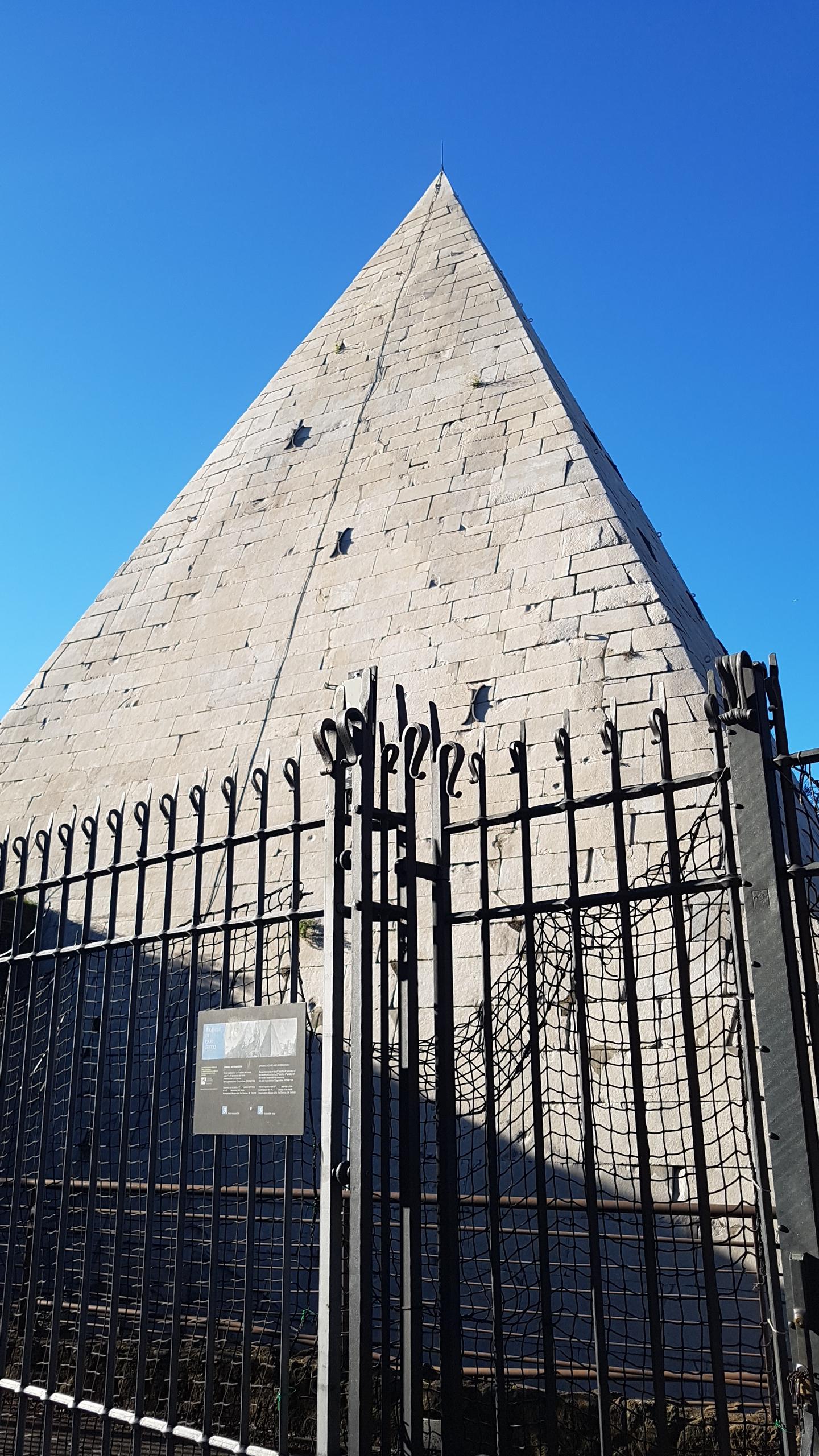
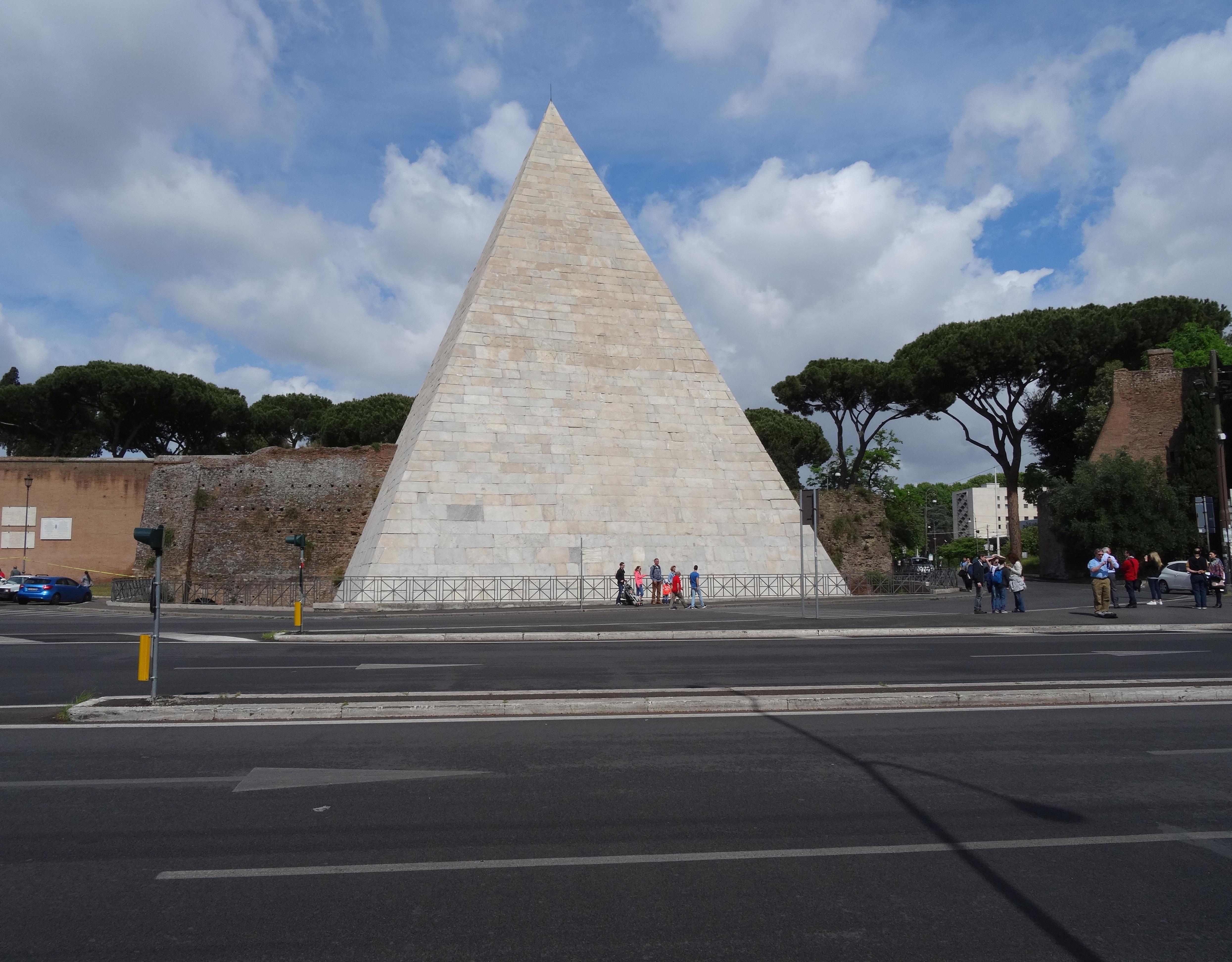
Piramide di Caio Cestio rises beside the Aurelian Walls, its bright marble sides forming a sharp Egyptian shape. This Roman tomb once stood along the road towards Ostia. Caio Cestio commissioned it between eighteen and twelve BCE for his own burial.
Caio Cestio served as praetor, tribune of the plebs, and member of the Septemviri Epulones. Pyramid-shaped tombs became fashionable after Octavian Augustus conquered Egypt in thirty-one BCE. Lunense marble slabs cover the square structure, while a barrel-vaulted chamber lies within. White panels and delicate frescoes once showed nymphs and winged victories holding wreaths and ribbons. Several centuries later, Emperor Aurelian incorporated the tomb into defensive walls with gates and towers. A medieval tunnel cut through the northern side, and the intrusion cost the chamber its cremation urn and much decoration.
One inscription demanded completion within three hundred and thirty days, linking the family inheritance to the builders’ speed. That deadline gives every marble slab a striking human detail. The surviving monument also preserves Rome’s changing relationship with Egypt, burial customs, and military architecture.
- City
- Rome
- Content updated
Take this page with you
The myTuur app is free, and once you are standing at a spot its story starts by itself.


Spots like this one are the stops myTuur strings into tours through Rome. In the app, each story begins where you stand: walk up to a spot and it starts, read it on screen or listen as you go, then follow the route to the next one.
What is myTuur?
myTuur is a free city-guide app. Its tours are built from spots, and each spot carries a story that starts when you get there, to read or to listen to as you like.