Grefsen kirke
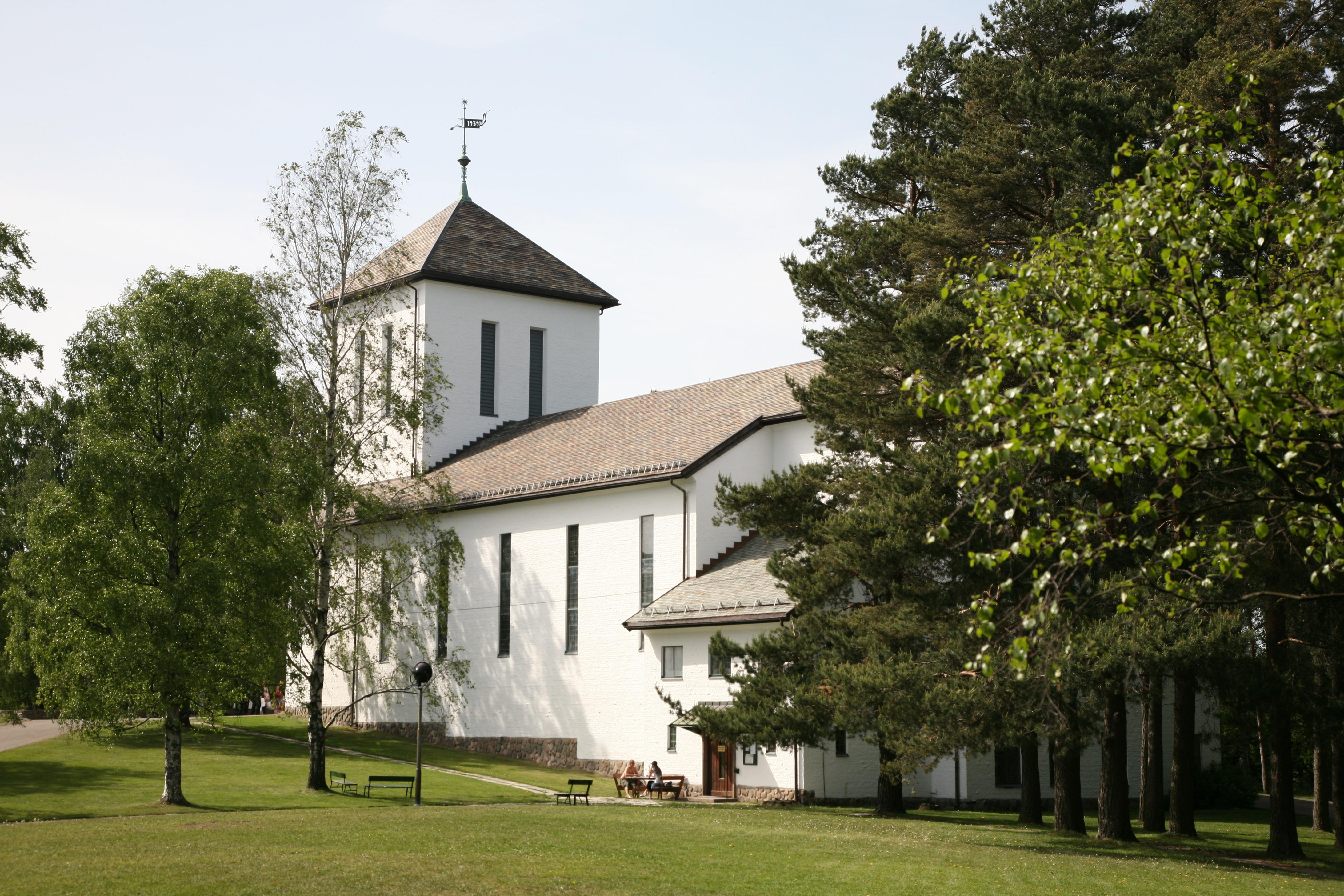
Grefsen kirke stands on the Grefsen plateau in Oslo, its strong white tower rising over a wide view of the city. The architect Georg Greve designed it as a long church, a langkirke in Norwegian, raised mainly in brick. Bishop Eivind Berggrav consecrated it on the third of March 1940, and it has served Grefsen Parish ever since. Its style leans on the Norwegian Romanesque tradition, though the windows are rectangular rather than arched. The Norwegian Directorate for Cultural Heritage protects it as a listed building.
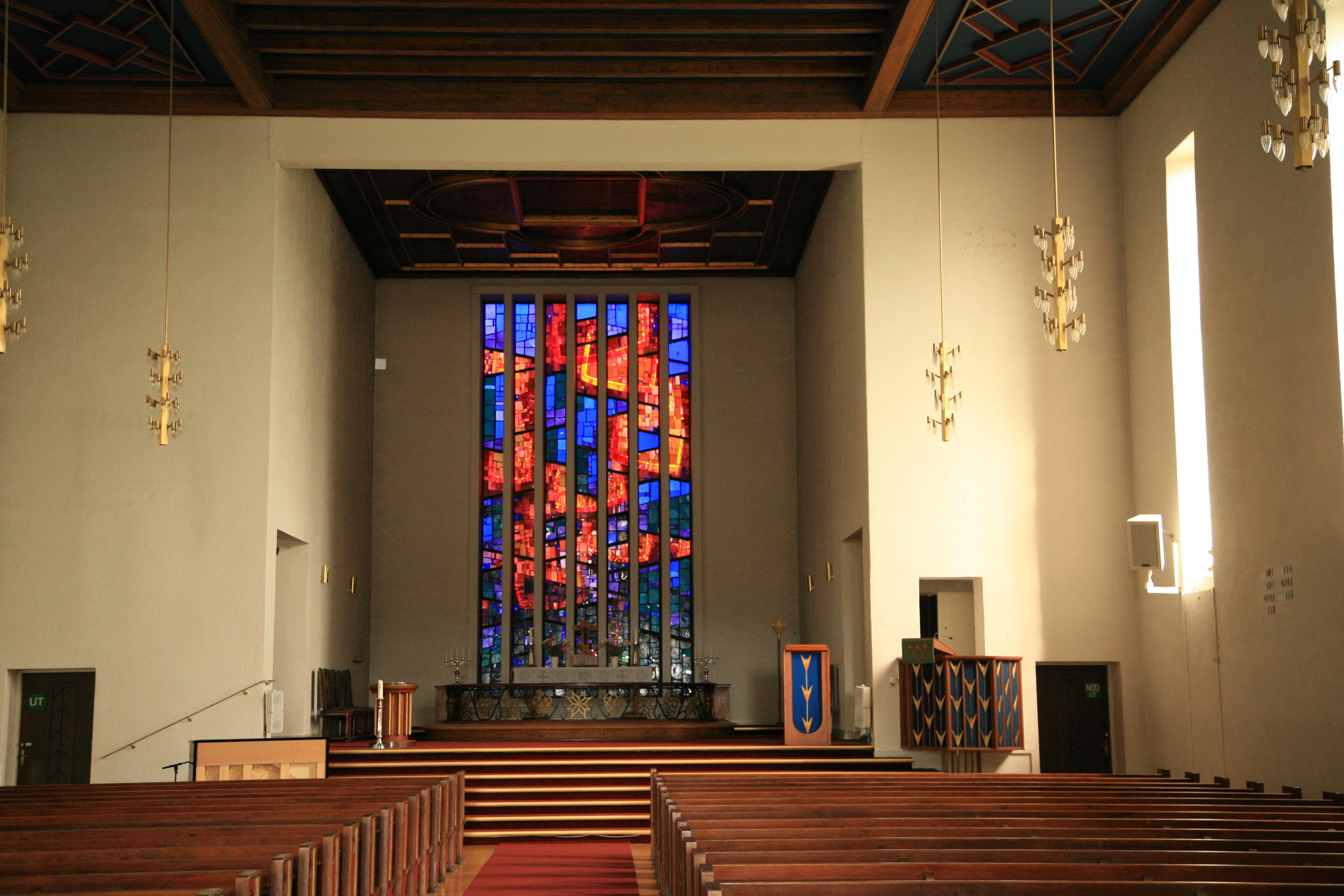
Inside, the decoration is sparse, with frescoes painted straight onto the plaster of the ceiling. Stained glass by Oddmund Kristiansen fills the chancel, throwing coloured light around the altar. He added non-figurative glass there in 1968, three years after a renovation brought taller chancel windows, new doors and chandeliers. Between the vestibule and the nave, a glass wall by Bernhard Greve, the architect's brother, carries seven stars with Old Testament motifs. Antique glass forms the windows of the nave. Rolf Tønsager designed the altar table holding Sigurd Nome's crucifix and the pulpit. The organ came from the Torkildsen brothers in 1940 and offers thirty-one stops. Underfoot the nave stays wooden, the entrance runs in polished slate, and the church is wheelchair accessible.
Nothing moved quickly at first: the site was bought in 1922, and the foundation stone followed in September 1938. The parish had existed only since 1937, and Berggrav laid that stone himself. Three bells cast by Olsen & Søn Nauen sit in the tower, tuned in a minor chord. All three bear Latin inscriptions and names of their own. The largest, Vox Angelorum, holds words from the Christmas gospel and is known as the peace bell. Sancta Maria and Sancta Margareta complete the set. The same bishop gave the completed church its nickname, the church of living hope.
- City
- Oslo
- Content updated
Take this page with you
The myTuur app is free, and once you are standing at a spot its story starts by itself.


Spots like this one are the stops myTuur strings into tours through Oslo. In the app, each story begins where you stand: walk up to a spot and it starts, read it on screen or listen as you go, then follow the route to the next one.
What is myTuur?
myTuur is a free city-guide app. Its tours are built from spots, and each spot carries a story that starts when you get there, to read or to listen to as you like.