Mahnmal zur ehemaligen Gestapo-Zentrale Kiel
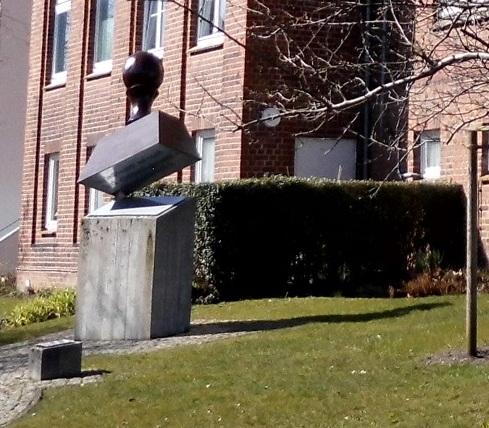
In Kiel, a building that now serves as a police station once housed the headquarters of the Gestapo. In front of it stands the Mahnmal zur ehemaligen Gestapo-Zentrale Kiel, a memorial by the artist Melanie Pilz. Pilz was born in Kiel in 1974 and created the work in 2000. Wood, stainless steel and concrete make up the piece. What you see is a large, simple wooden stamp that appears to hover above its base. The stark, plain form stands in sharp contrast to everything the memorial has to say.
Between 1935 and 1945, the Gestapo prepared the mass surveillance, punishment and murder of people it deemed undesirable. Here the stamp, normally a symbol of order and legality, turns into a warning. The Gestapo's victims had no means of resisting the overwhelming power of the state. The memorial highlights the inhumane treatment as much as the cold, bureaucratic organisation of these arbitrary acts. The perpetrators, for their part, could soothe their consciences by believing they were merely following orders.
The underside of the stamp carries the Gestapo's name and address, engraved in reverse. Beneath it runs a list of the murdered that seems never to end. The Gestapo prepared its atrocities inside the building that stands behind the memorial, then carried them out with bureaucratic efficiency.
- City
- Kiel
- Content updated
Take this page with you
The myTuur app is free, and once you are standing at a spot its story starts by itself.


Spots like this one are the stops myTuur strings into tours through Kiel. In the app, each story begins where you stand: walk up to a spot and it starts, read it on screen or listen as you go, then follow the route to the next one.
What is myTuur?
myTuur is a free city-guide app. Its tours are built from spots, and each spot carries a story that starts when you get there, to read or to listen to as you like.