Griesbadbrunnen am Zundeltor
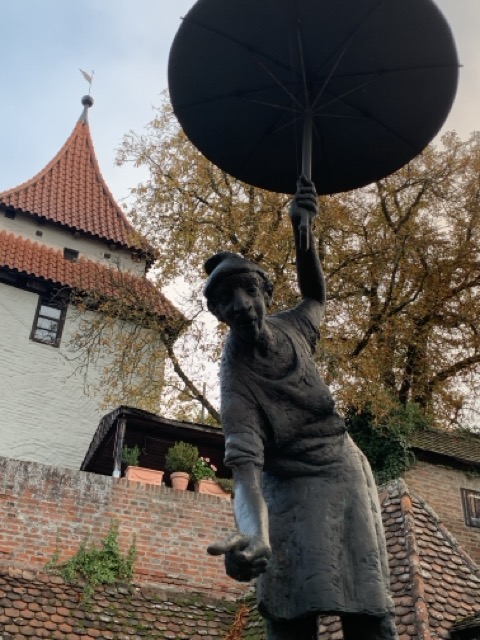
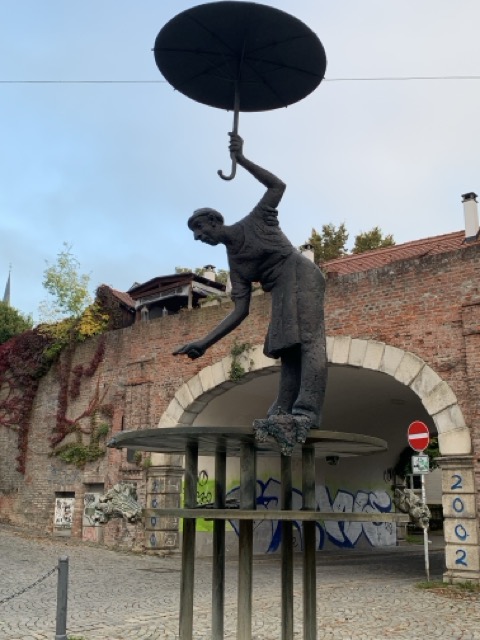
Griesbadbrunnen am Zundeltor is a historic fountain in Ulm, linking local folklore with the city’s old fortifications. The fountain’s name recalls Griesbad, a former bathhouse in Ulm.
Griesbad Michel appears with a bucket, lamp and umbrella, reflecting his story as the bathhouse servant who gathered earthworms for anglers. He became a figure in Ulm’s Fischerstechen tradition.
The nearby Zundeltor formed part of Ulm’s historic city defences, while Seelturm, also called Zundelturm, stands close by. Seelturm rises about twenty metres above the surrounding area.
Built in the fourteenth century for defence, the tower stored tinder before becoming a water tower in 1638. The old well house belonged to Seelhaus waterworks.
It formed one of Ulm’s four former waterworks and now houses the Ulm Water Museum. Seelhaus also gave its name to Seelengraben and Seelturm.
At Seelhaus, nuns cared for poor, sick and needy people. The restored Auf dem Kreuz neighbourhood adds houses built before 1700 to this layered historic setting.
Several walking routes cross this part of Ulm’s old town. Together, the fountain, fortifications, waterworks and Fischerstechen connect everyday infrastructure with Ulm’s civic traditions.
- City
- Ulm
- Content updated
Take this page with you
The myTuur app is free, and once you are standing at a spot its story starts by itself.


Spots like this one are the stops myTuur strings into tours through Ulm. In the app, each story begins where you stand: walk up to a spot and it starts, read it on screen or listen as you go, then follow the route to the next one.
What is myTuur?
myTuur is a free city-guide app. Its tours are built from spots, and each spot carries a story that starts when you get there, to read or to listen to as you like.