Πλατεία Ελευθερίας
Πλατεία Ελευθερίας opens beside the old waterfront as a wide, trapezoidal space of about 5,087 square metres. Banks, insurance offices and business buildings surround today’s car park and bus terminal. Its position once marked a principal entrance from the harbour into the city.
Byzantine walls and a watchtower crossed this ground before the Ottoman period, when the tower was known as Tophane. Late-nineteenth-century waterfront roads turned the site into a formal square with Belle Époque hotels, cafés and a tram terminus. The 1917 city fire destroyed almost everything nearby, leaving the Stein Building as the principal survivor. In 1942, occupying forces gathered thousands of Jewish men here for humiliation, registration and forced labour. A Menorah in Flames memorial by Nandor Glid now recalls that persecution.
The municipality declared the space public in 1963, but parking gradually replaced its earlier civic role. A 2013 design competition proposed returning the paved area to an open square and park. Under the surface, the site holds traces of walls, vanished architecture and a difficult twentieth-century history.
- City
- Thessaloniki Municipal Unit
- Content updated
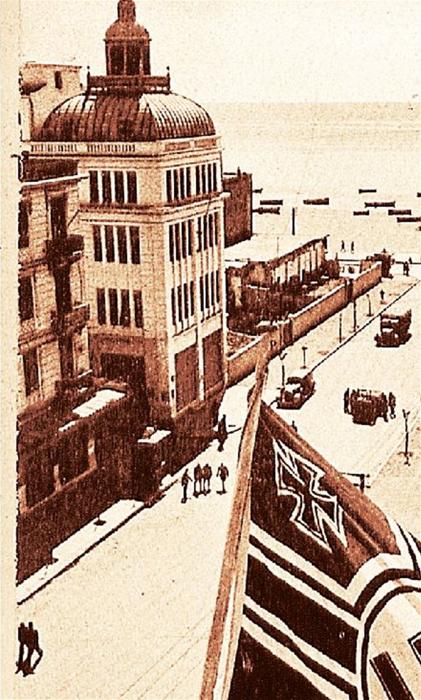
Image: Philly boy92Public domain 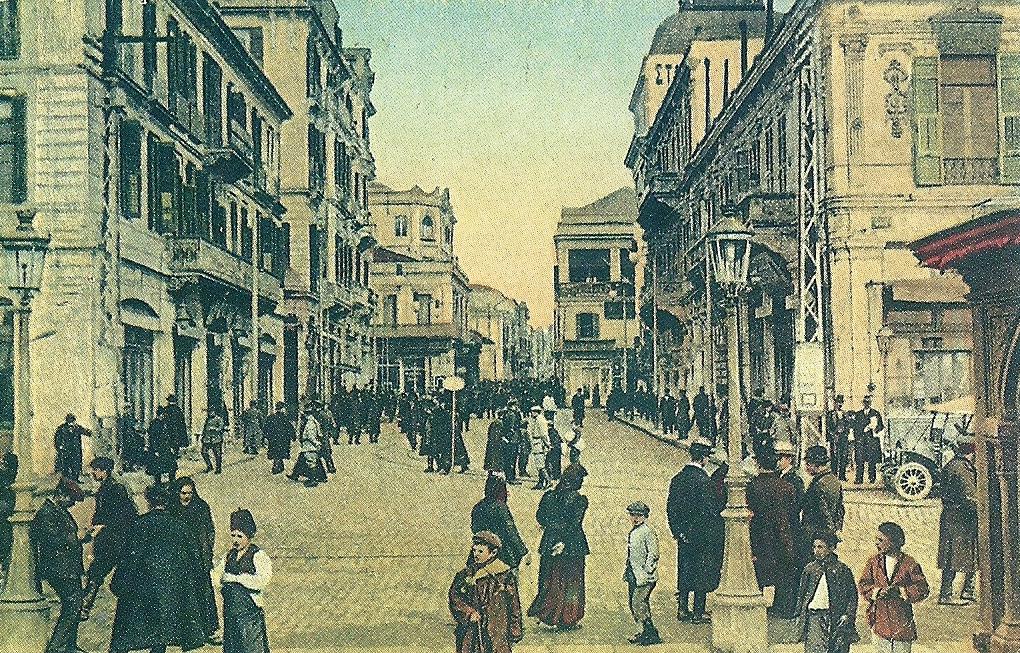
Image: Unknown. Coloured photograph from 1914.Public domain 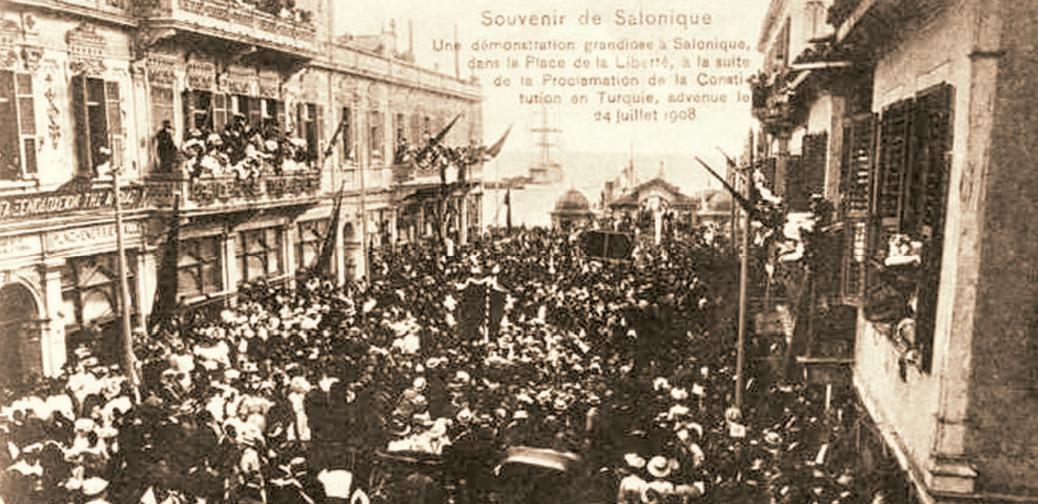
Image: Unknown. Commemorative postcard from 1908.Public domain 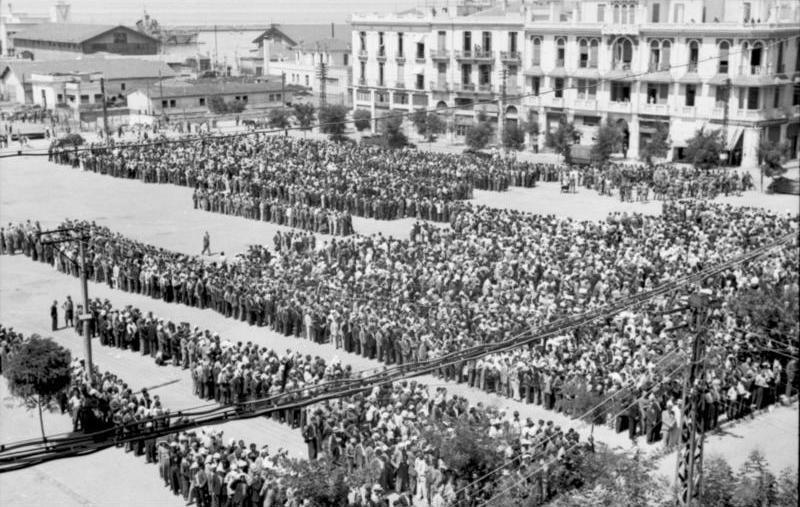
Image: DickCC BY-SA 3.0 de 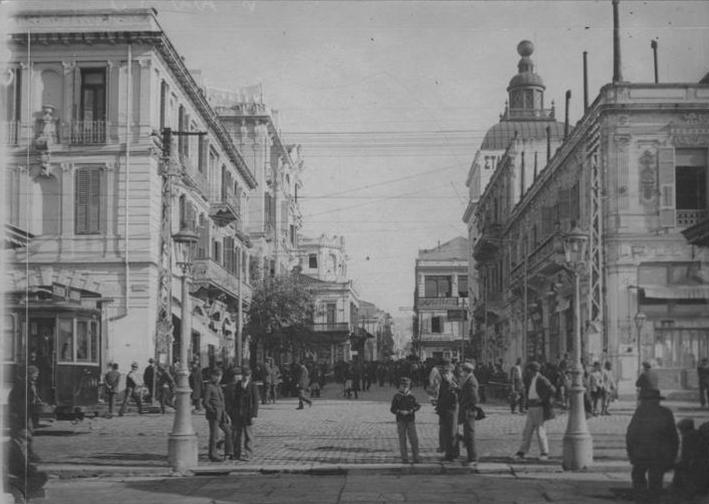
Image: Philly boy92Public domain
Take this page with you
The myTuur app is free, and once you are standing at a spot its story starts by itself.


Spots like this one are the stops myTuur strings into tours through Thessaloniki Municipal Unit. In the app, each story begins where you stand: walk up to a spot and it starts, read it on screen or listen as you go, then follow the route to the next one.
What is myTuur?
myTuur is a free city-guide app. Its tours are built from spots, and each spot carries a story that starts when you get there, to read or to listen to as you like.