Gedenkstätte Arbeitserziehungslager Nordmark
The Gedenkstätte Arbeitserziehungslager Nordmark is a memorial on damp ground by the Russee in Kiel. Fritz Schmidt of the Gestapo opened the camp in June 1944 to relieve overcrowding in the police prison and the Drachensee barracks. Foreign forced labourers from farms and arms factories filled the camp, Soviet citizens and Poles above all. About a quarter of the prisoners were women.
Inmates arrived for the slightest offence at work. Daily life matched that of a concentration camp: ten hours of hard labour, mostly clearing debris in the city. Food, hygiene and medical care fell short of what survival required, and mistreatment and arbitrary executions were common. April 1945 brought prisoners from other camps, nearly two hundred of them from the Fuhlsbüttel subcamp. Shortly before British troops reached Kiel on 4 May 1945, the guards murdered around three hundred inmates. In total the camp held about five thousand people, and at least 578 of them did not survive. A British military court tried the guards in 1947 and executed the deputy camp leader, Otto Baumann. Camp leader Johannes Post was executed too, in his case for killing four Allied pilots.
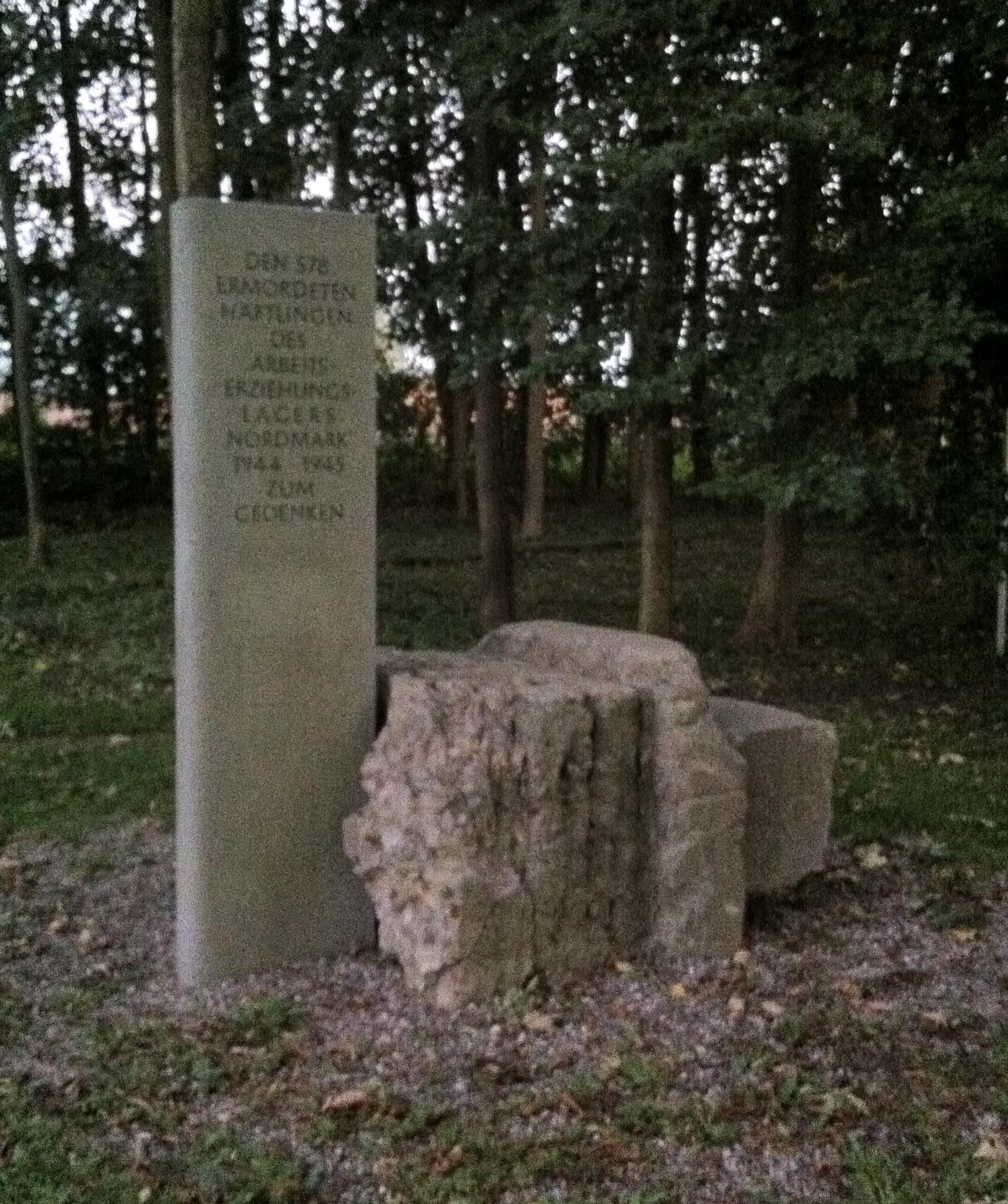
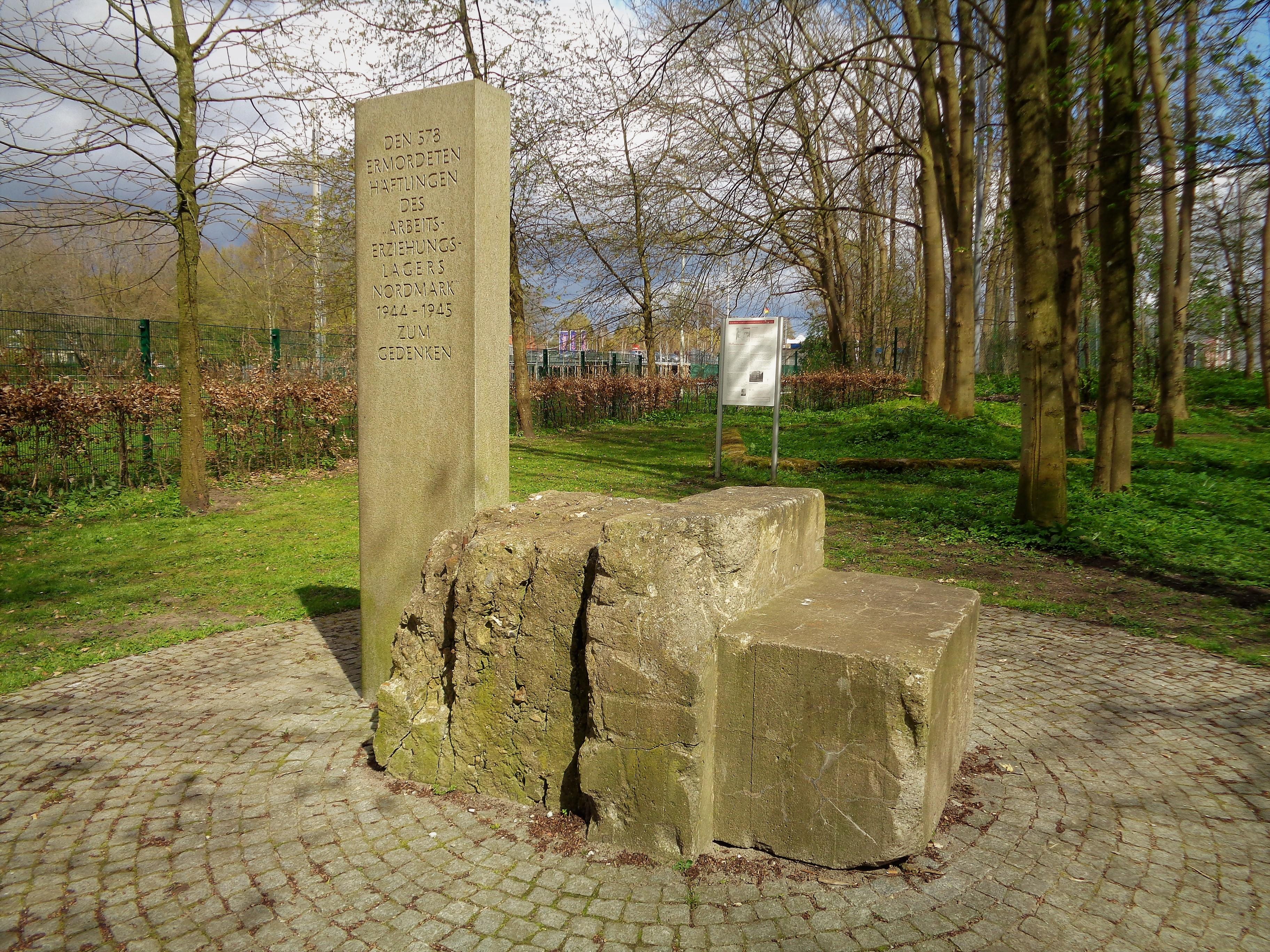
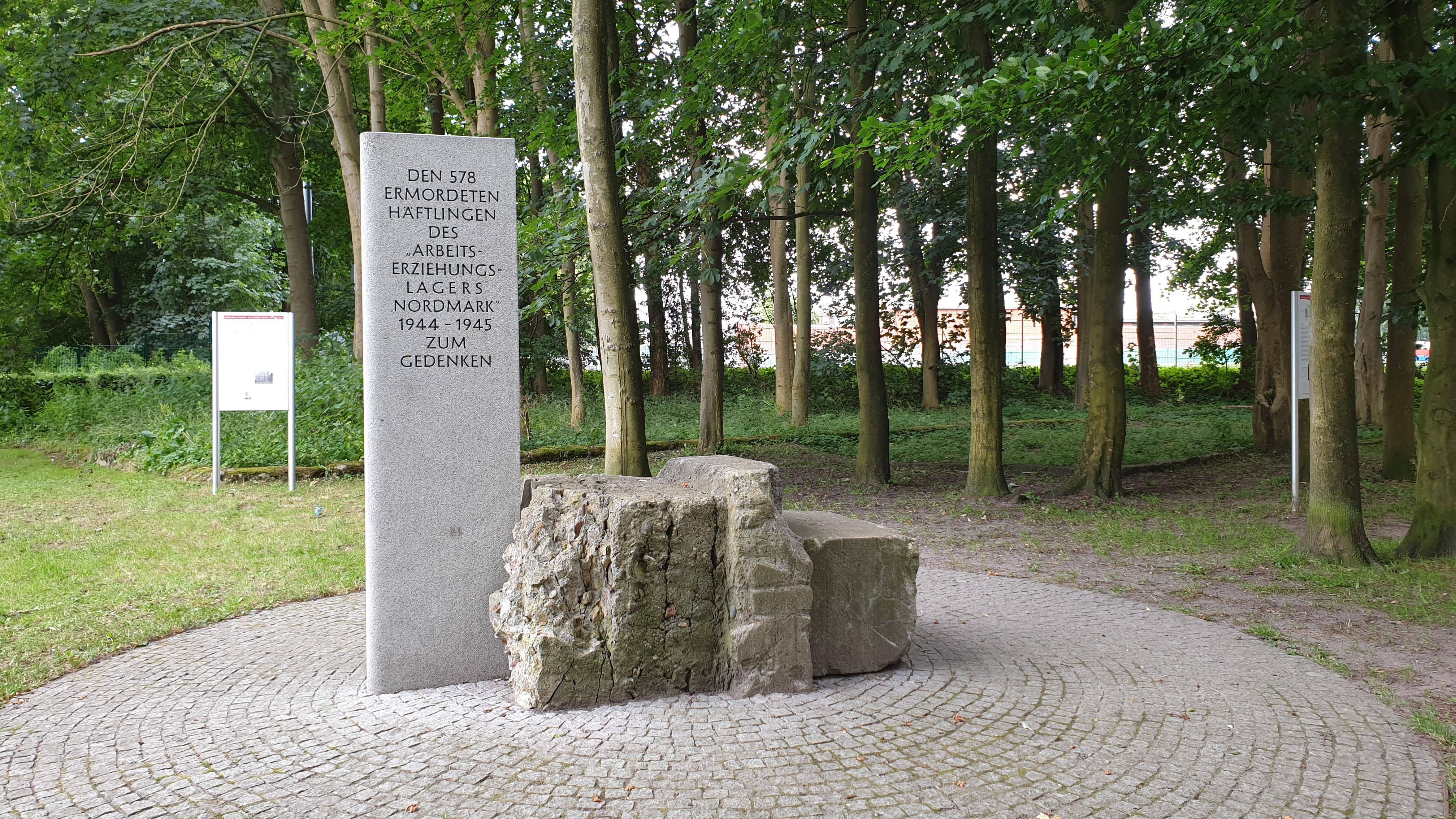
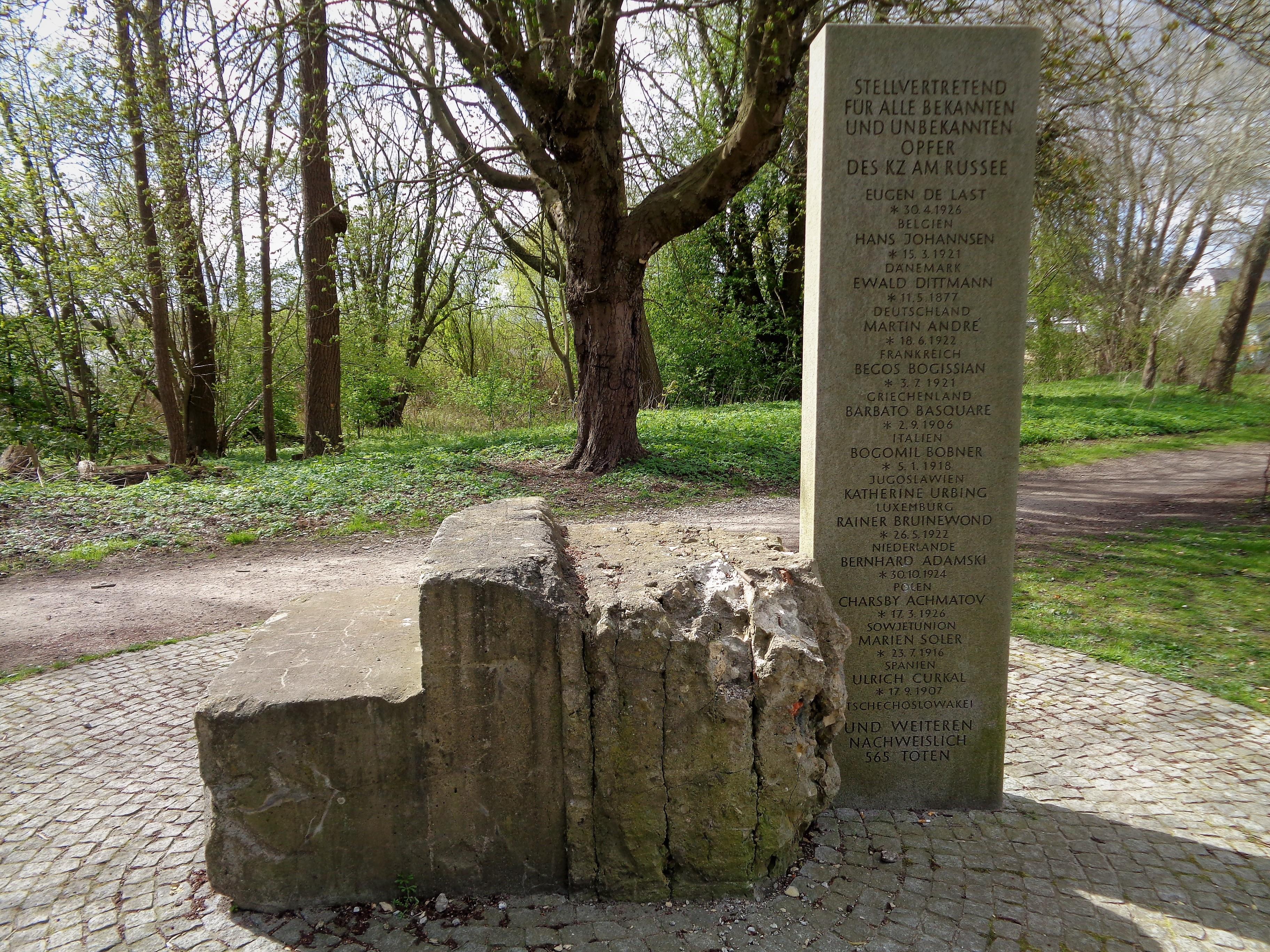
Remembrance here rested on private initiatives for decades. The pastor of Russee set a memorial stone in 1971, and the city added a plaque in 1985 under public pressure. Funding from the EU and the city built the present memorial in 2003. AKENS, a research group on National Socialism in Schleswig-Holstein, designed it after campaigning since the early 1980s. The stele pairs a foundation stone set by Polish forced labourers in 1946 with thirteen names of murdered people from different nations. Three information boards walk you through the camp's history, and the site stays open to all. Guided tours of the former camp grounds run on registration through the city archive. Nearby lie the foundations of the SS guest house, uncovered by AKENS in 1989, and nothing else of the camp survives.
- City
- Kiel
- Content updated
Take this page with you
The myTuur app is free, and once you are standing at a spot its story starts by itself.


Spots like this one are the stops myTuur strings into tours through Kiel. In the app, each story begins where you stand: walk up to a spot and it starts, read it on screen or listen as you go, then follow the route to the next one.
What is myTuur?
myTuur is a free city-guide app. Its tours are built from spots, and each spot carries a story that starts when you get there, to read or to listen to as you like.