Sint Olofskapel
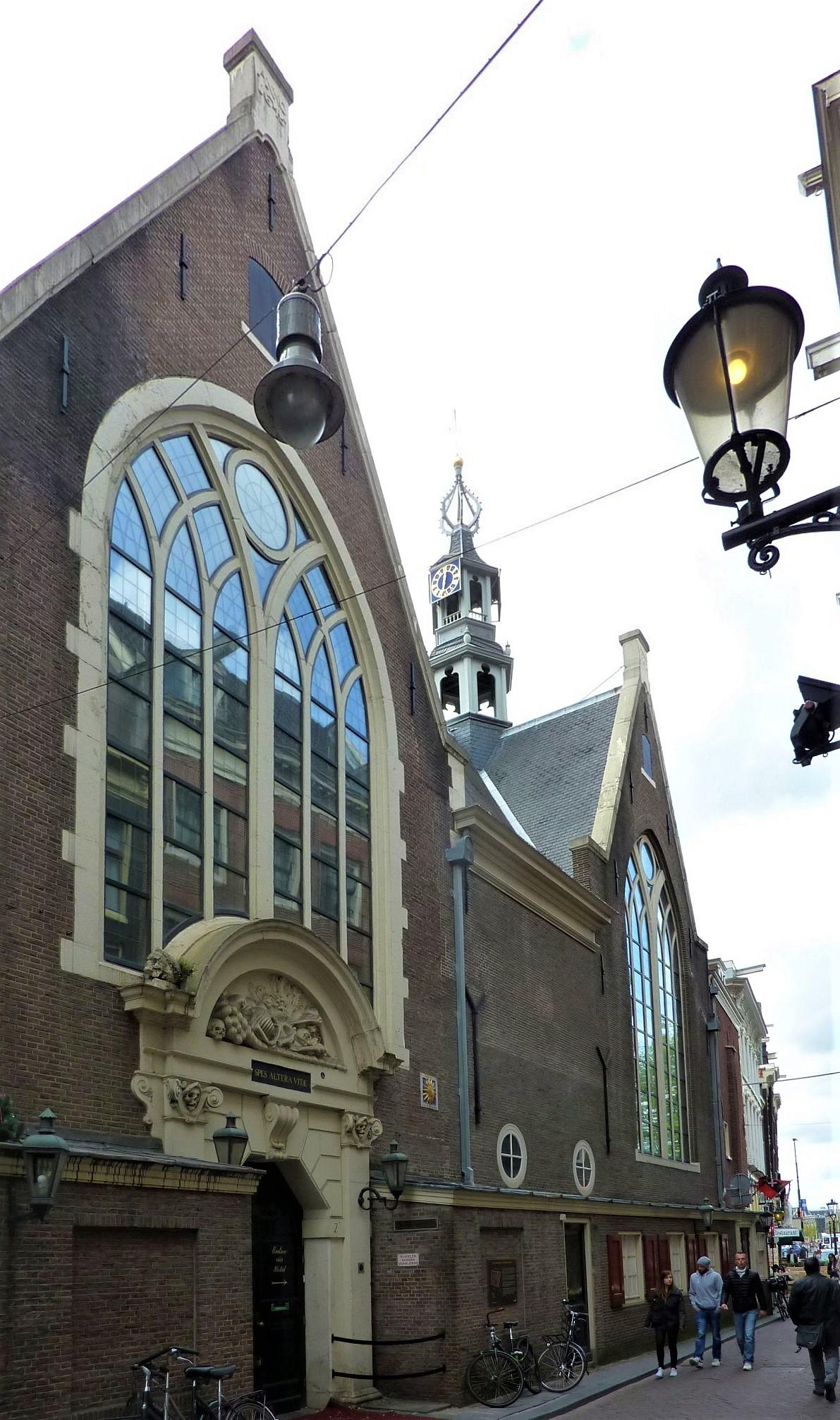
Sint Olofskapel stands beside Sint Olofspoort in Amsterdam, with origins between 1440 and 1450. Dedicated to Saint Olaf, patron saint of seafarers, it reflects the city’s maritime connections. The Gothic-inspired building has three aisles, an asymmetrical plan and four interior pillars, including one late Gothic example.
A polygonal Jerusalem Chapel joined it in the late fifteenth century, housing a copy of the Holy Sepulchre. Pilgrims gathered there, while its brotherhood held Palm Sunday processions before the addition disappeared in 1644. After Amsterdam’s Protestant transition, merchants used the building as an exchange from 1586, followed by Reformed services from 1602. A seventeenth-century entrance gate on the Zeedijk and two Renaissance gates on Nieuwebrugsteeg preserve different stages of its architecture.
A wooden clock tower burned in 1820, and the last church service took place in 1912. Later uses included a cheese market, while a 1966 fire left only the seventeenth-century front before restoration created today’s events venue. Inside, Michiel de Ruyter’s reserved church bench recalls the admiral’s regular attendance. At the Zeedijk gate, Hendrick de Keyser’s 1620 skeleton carries a Latin inscription about hope for life beyond.
- City
- Amsterdam
- Content updated
Take this page with you
The myTuur app is free, and once you are standing at a spot its story starts by itself.


Spots like this one are the stops myTuur strings into tours through Amsterdam. In the app, each story begins where you stand: walk up to a spot and it starts, read it on screen or listen as you go, then follow the route to the next one.
What is myTuur?
myTuur is a free city-guide app. Its tours are built from spots, and each spot carries a story that starts when you get there, to read or to listen to as you like.