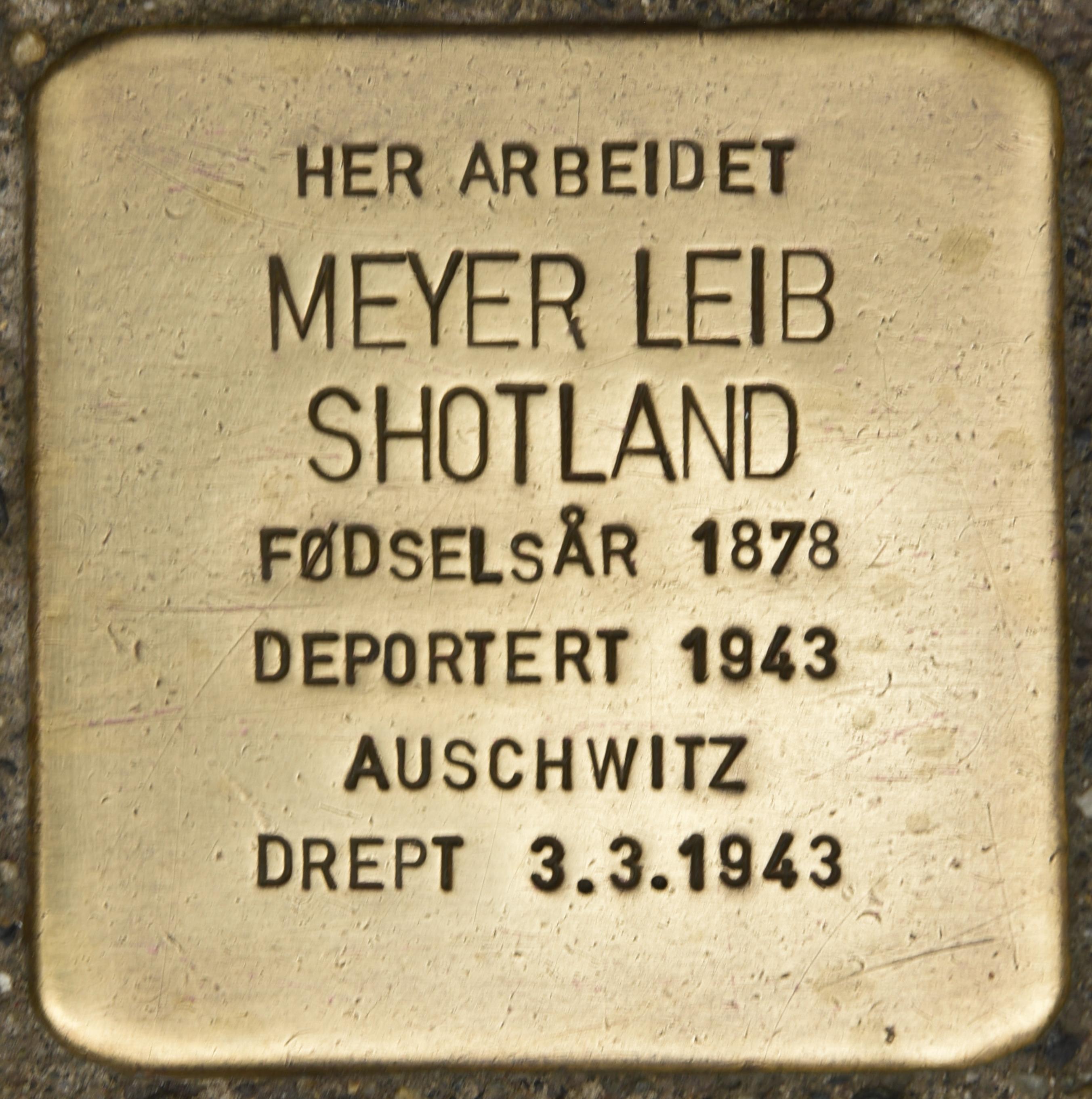
Meyer Leib Shotland
Outside Kirkegata 10 in Norway, a brass square ten by ten centimetres sits flush with the pavement. This is the stolperstein for Meyer Leib Shotland. The metal warms under a winter sun and glints in summer light, yet most feet cross it without stopping. You see the engraved letters only if you look down.
The square belongs to the Stolpersteine project, which the artist Gunter Demnig began in 1993. His markers have since spread into an international field of remembrance, and Norway's first stones date from 2010. The Jewish Museum carries responsibility for the programme there. Each stone usually stands outside the last freely chosen home or workplace of someone persecuted under the Nazis. None of them tells a full biography, and their smallness is deliberate: you stoop, you read, and remembering becomes an act.
Stand with the stone a moment and read the name aloud. Picture this street a lifetime ago: doors opening on to homes, daily commerce, the mundane lives those thresholds held. Today people pass the same way, often unaware until a gleam of brass stops their step. One life returns to the walkway, refusing to be anonymous in the flow of days.
- City
- Tromsø
- Content updated
Take this page with you
The myTuur app is free, and once you are standing at a spot its story starts by itself.


Spots like this one are the stops myTuur strings into tours through Tromsø. In the app, each story begins where you stand: walk up to a spot and it starts, read it on screen or listen as you go, then follow the route to the next one.
What is myTuur?
myTuur is a free city-guide app. Its tours are built from spots, and each spot carries a story that starts when you get there, to read or to listen to as you like.