Piazza Navona
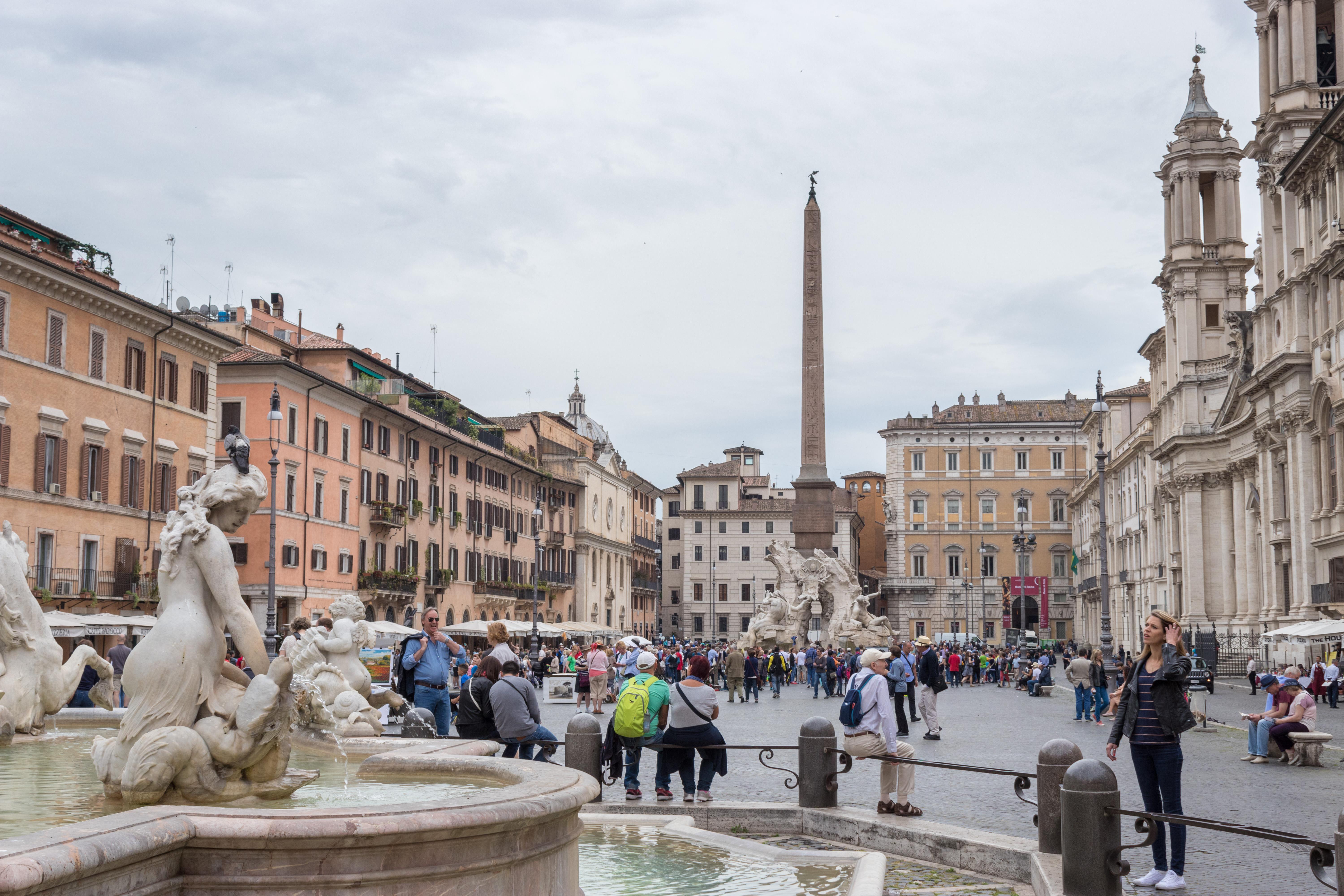
Piazza Navona stretches through Rome as a long Baroque square, shaped by the outline of an ancient stadium. The open space follows Domitian’s stadium, built in 86 AD for athletic contests and horse races.
The stadium’s remains lie five to six metres beneath the present street level. Parts appear beneath a modern building on Piazza di Tor Sanguigna and beneath Sant’Agnese in Agone. Seventeenth-century architects Carlo and Girolamo Rainaldi began the church, while Borromini transformed its animated façade. Palazzo Pamphilj stands beside it, and the Brazilian embassy has occupied the building since 1960. Public celebrations, races and markets once filled the square, which was partly flooded during August weekends until the mid-nineteenth century.
Three fountains organise the view, with Bernini’s Fontana dei Quattro Fiumi at the centre. Travertine rock, four river figures and a granite obelisk create its theatrical form. The Danube, Ganges, Nile and Río de la Plata represent Europe, Asia, Africa and America. A bronze dove carrying an olive branch crowns the obelisk, echoing the papal emblem above the rock. Today, street artists, portraitists and passers-by animate the space above the buried racing track.
- City
- Rome
- Content updated
Take this page with you
The myTuur app is free, and once you are standing at a spot its story starts by itself.


Spots like this one are the stops myTuur strings into tours through Rome. In the app, each story begins where you stand: walk up to a spot and it starts, read it on screen or listen as you go, then follow the route to the next one.
What is myTuur?
myTuur is a free city-guide app. Its tours are built from spots, and each spot carries a story that starts when you get there, to read or to listen to as you like.