Palazzo Carmagnola
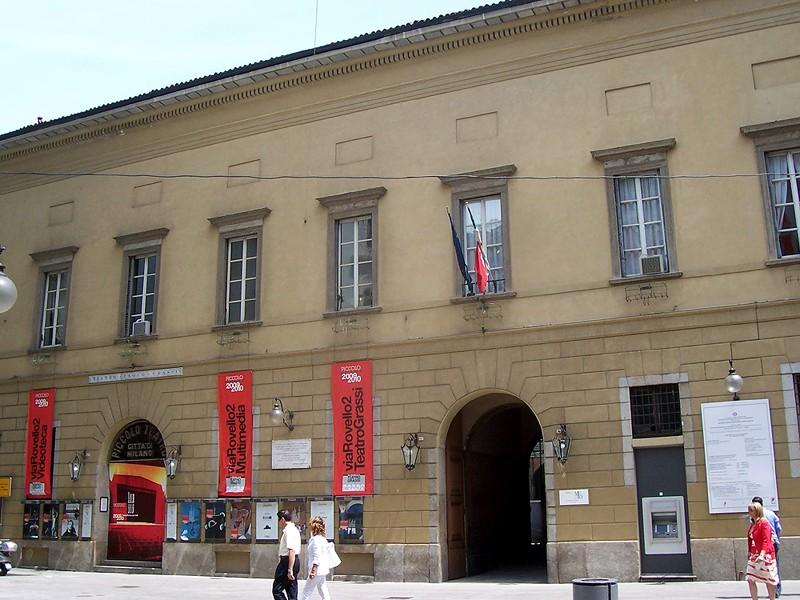
Palazzo Carmagnola is a Milanese palace that has rarely held the same role for long. The Visconti family built it in the early fifteenth century as a secondary residence.
In 1415 the palace passed as a gift to Francesco Bussone, known as Carmagnola, who renovated it substantially between 1420 and 1425. After his execution in 1432 the house changed hands again and again. Later, under Ludovico il Moro, it gained embellishments from Bramante and Leonardo da Vinci. In the seventeenth century it served the city as a public granary. The Banco di Sant'Ambrogio took over in the eighteenth, and in 1786 it rose to become the municipal seat, the Broletto Novissimo. The Napoleonic era made it a prefectural department, and after Italian unification the state moved in through an exchange with Palazzo Marino.
The twentieth century brought the sharpest turn of all. During the Second World War the notorious Ettore Muti Legion occupied the building. In 1947 Paolo Grassi and Giorgio Strehler made it the home of the newly founded Piccolo Teatro di Milano. That passage from wartime violence to playhouse stands as a symbol of Milan's rebirth. Today the palace houses the Sala Grassi of the Piccolo Teatro alongside municipal offices. In the courtyard you can still find a sundial credited to Leonardo himself.
- City
- Milan
- Content updated
Take this page with you
The myTuur app is free, and once you are standing at a spot its story starts by itself.


Spots like this one are the stops myTuur strings into tours through Milan. In the app, each story begins where you stand: walk up to a spot and it starts, read it on screen or listen as you go, then follow the route to the next one.
What is myTuur?
myTuur is a free city-guide app. Its tours are built from spots, and each spot carries a story that starts when you get there, to read or to listen to as you like.