Kaufmann-Bunker
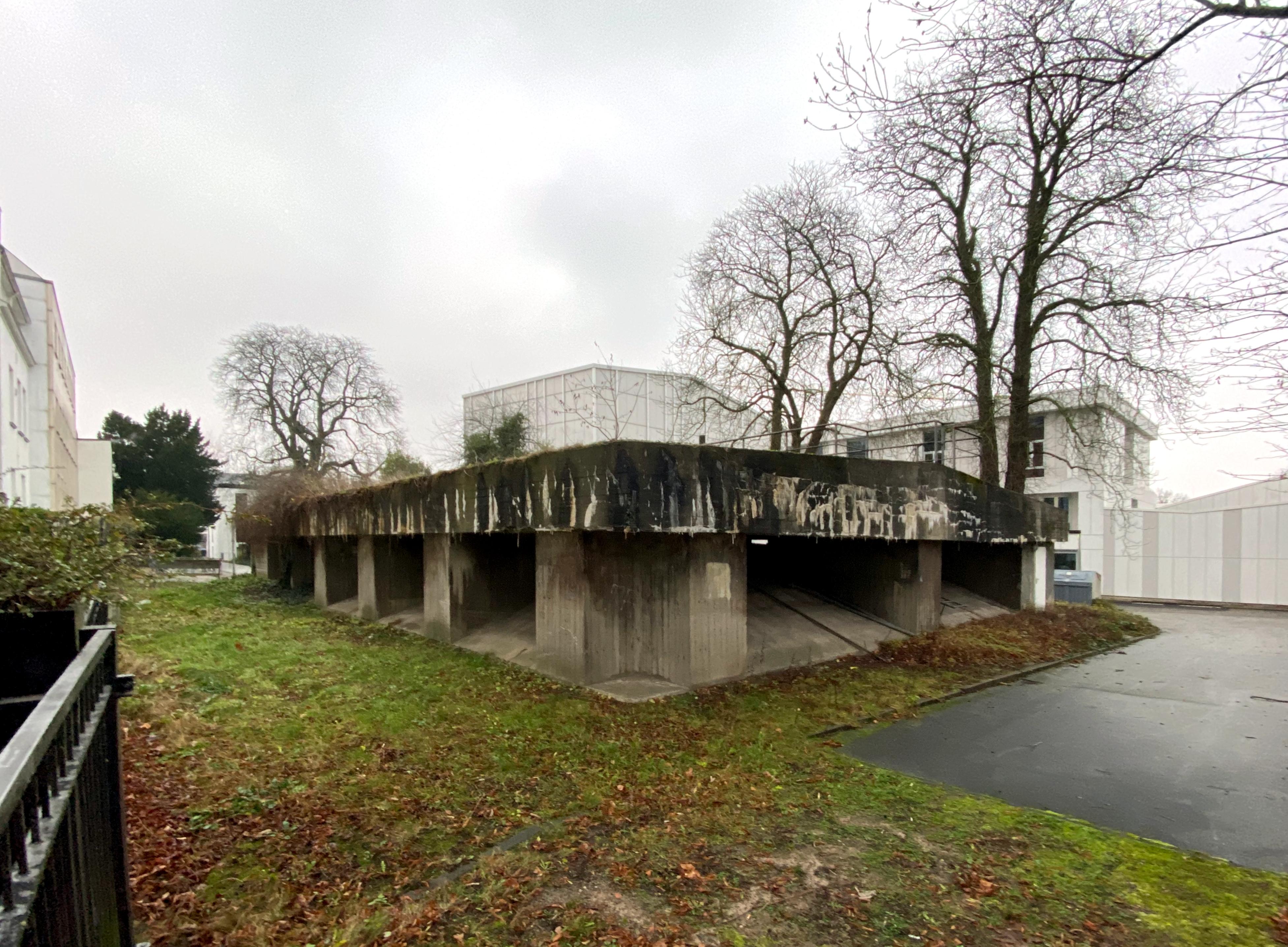
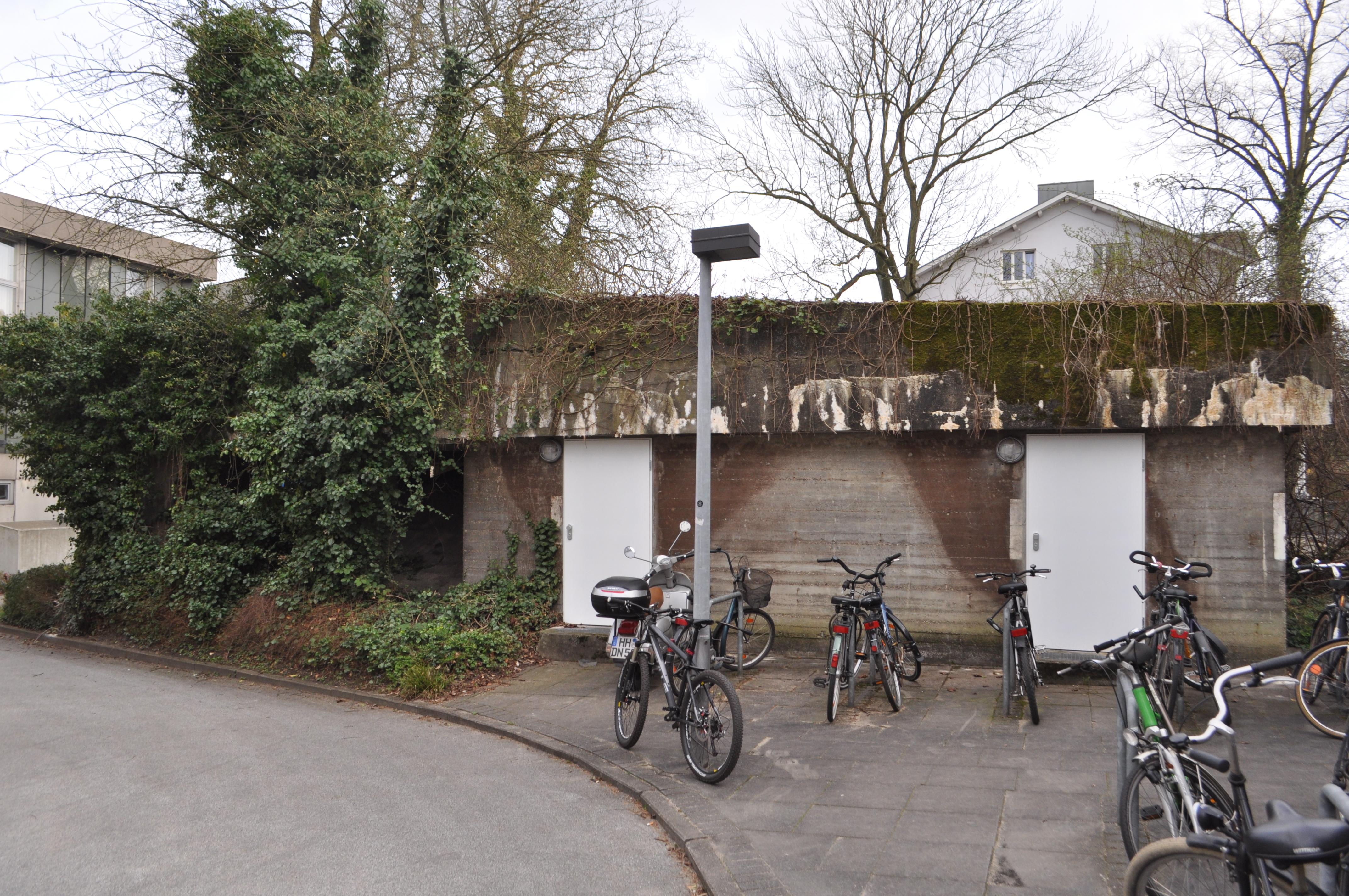
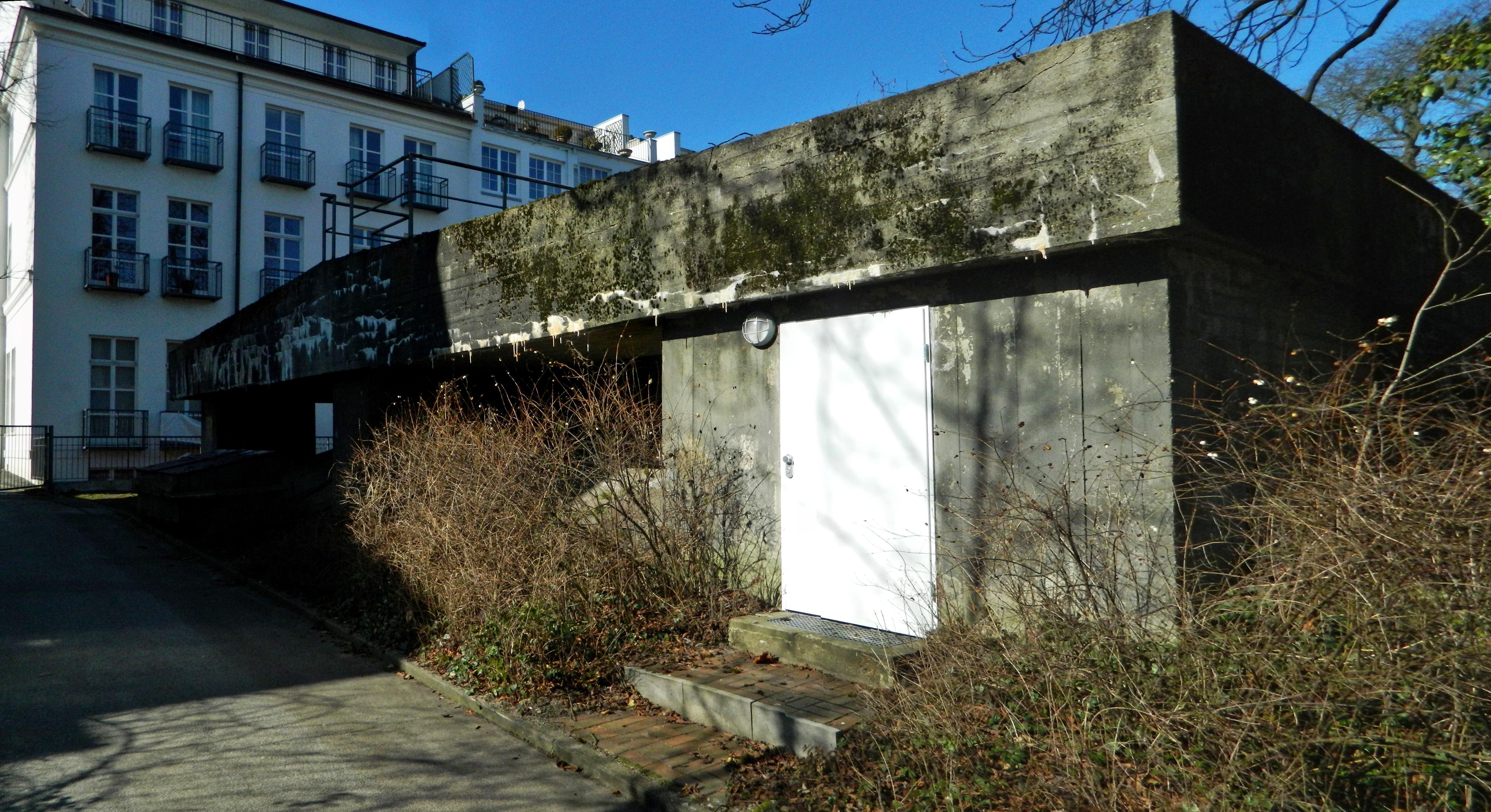
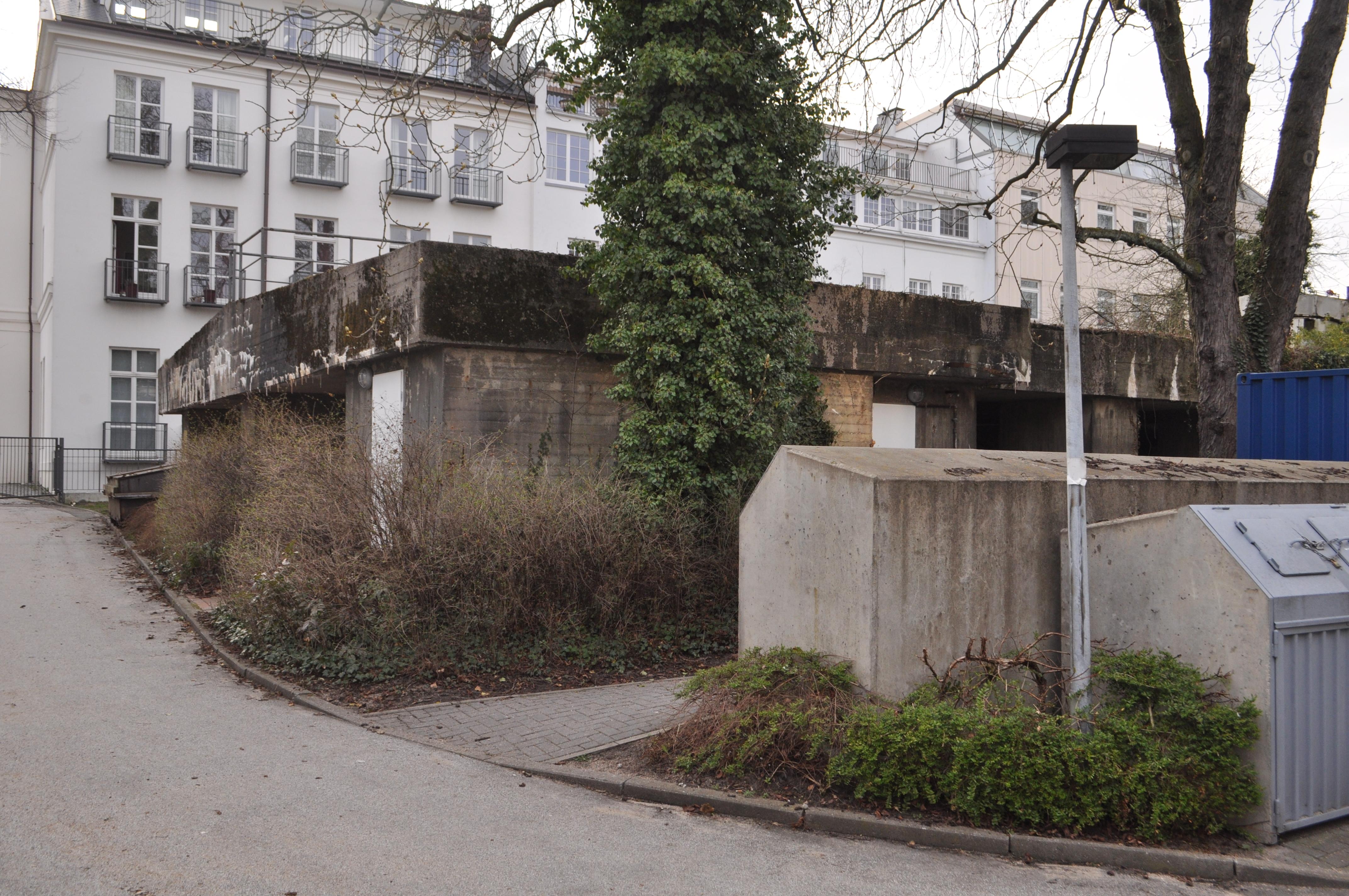
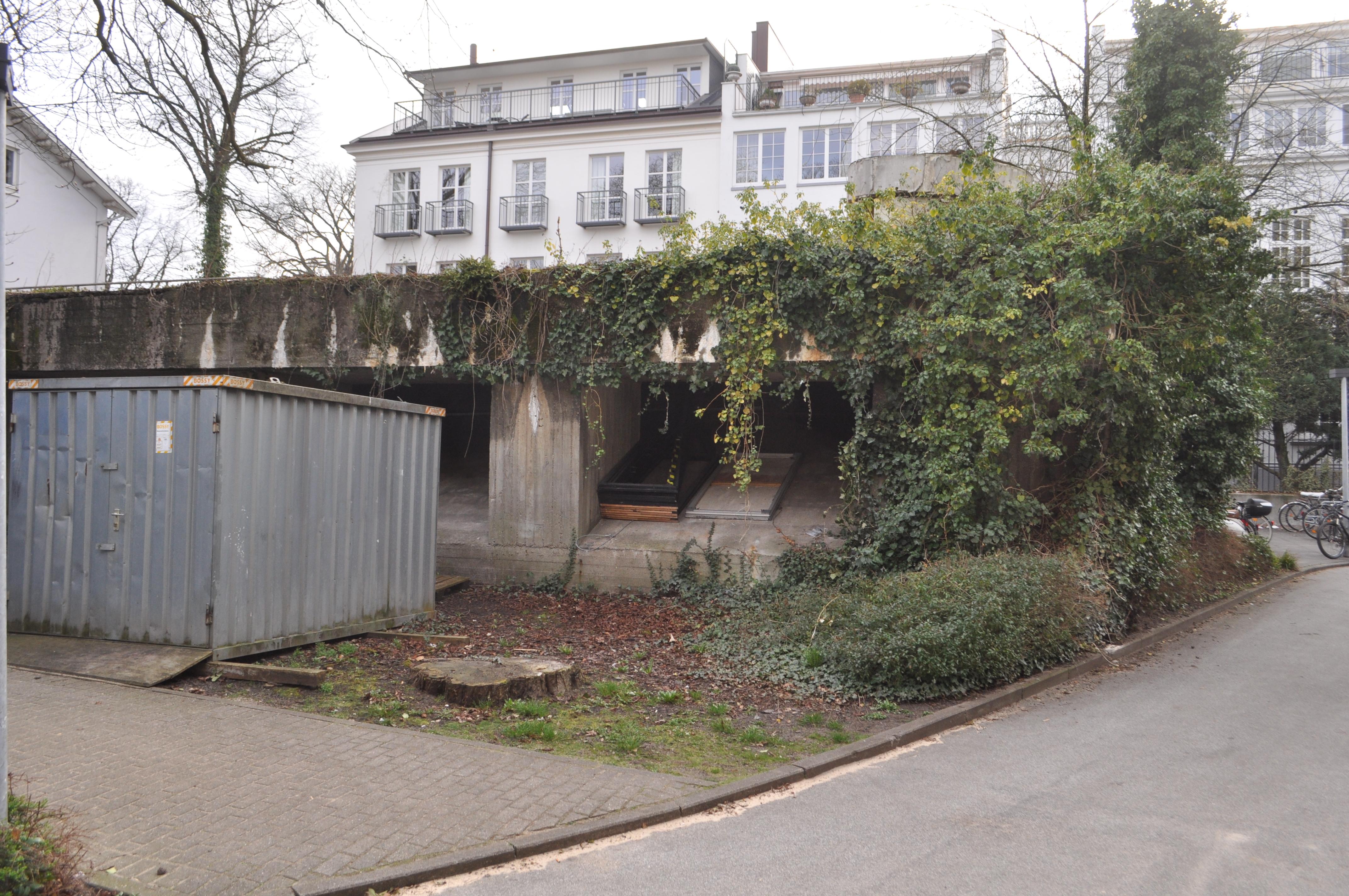
Pöseldorf ranks among Hamburg's prestigious quarters, yet hardly anything at street level betrays what lies beneath. The Kaufmann-Bunker sits on the grounds of the Hochschule für Musik und Theater, largely underground. Its floor area comes close to that of a tennis court. It went up in 1940 to shelter Karl Kaufmann, the Reichsstatthalter, and other senior officials during air raids.
The Budge Palais, a grand residence of the Jewish Budge family, once stood on this spot. The city acquired the house under duress in 1937 and turned it into the Reichsstatthalterei, the administrative complex the bunker served. The engineering shows what an attack was expected to bring. A gas lock guards the entrance, a diesel generator supplies emergency power, and a filtration system keeps fresh air coming. Beyond them lie a staff room, a telephone exchange and even two toilets for officials riding out a raid. In 1942 the ceiling gained extra reinforcement to withstand the bombing raids. After the war, British forces took over the shelter, which later fell into disuse.
A protected monument since 2010, it counts among the last original Nazi-era bunkers left in Hamburg. You can only see it on a guided visit with the association Unter Hamburg e.V., as the rooms are tight. Inside, the air stays chilly even on warm days, a reminder that every inch was built for survival, not comfort.
- City
- Hamburg
- Content updated
Take this page with you
The myTuur app is free, and once you are standing at a spot its story starts by itself.


Spots like this one are the stops myTuur strings into tours through Hamburg. In the app, each story begins where you stand: walk up to a spot and it starts, read it on screen or listen as you go, then follow the route to the next one.
What is myTuur?
myTuur is a free city-guide app. Its tours are built from spots, and each spot carries a story that starts when you get there, to read or to listen to as you like.