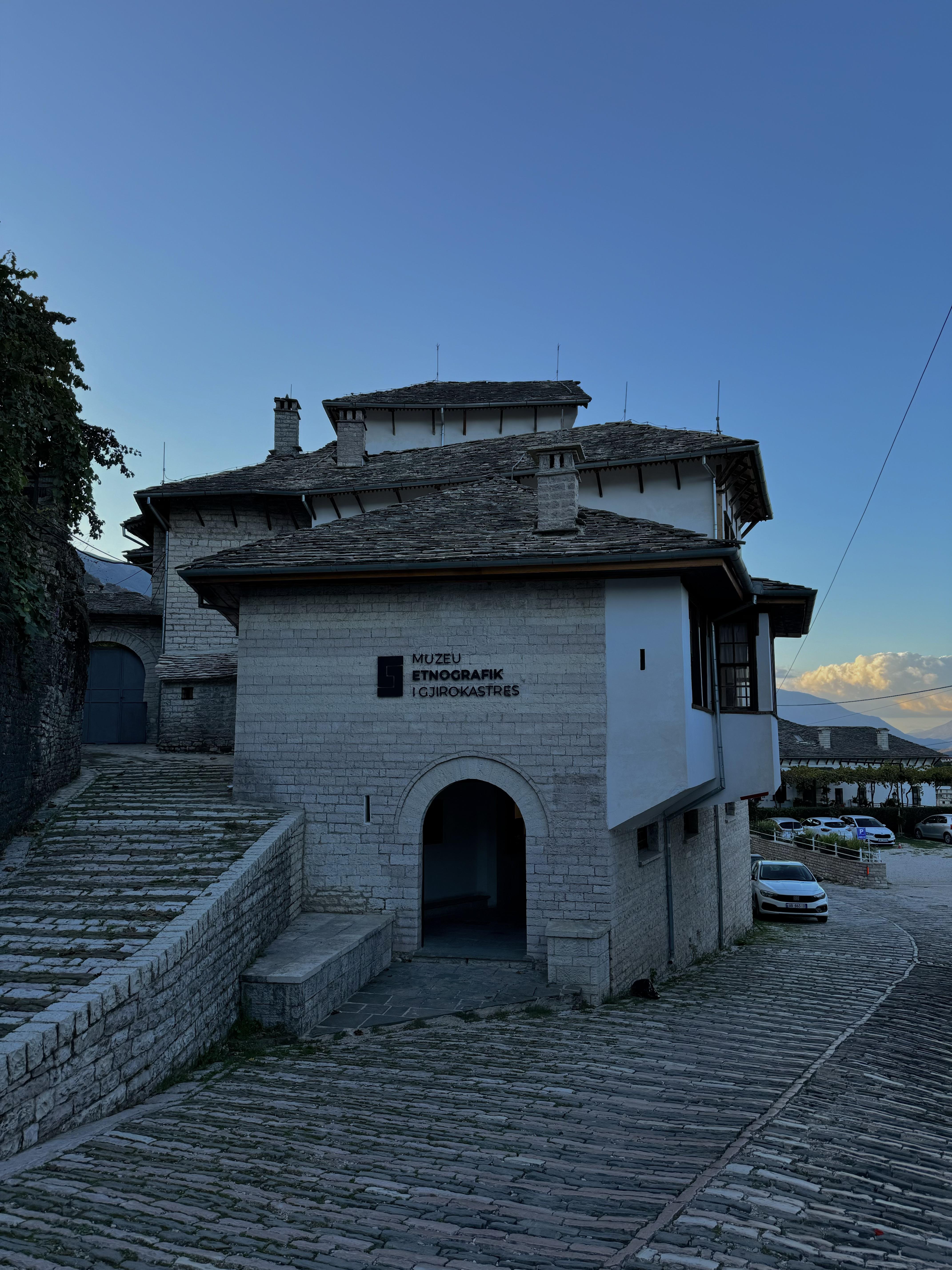
Muzeu Etnografik
Muzeu Etnografik stands in Gjirokastra’s Palorto neighbourhood, among the best-preserved parts of the city’s historic quarter. Stone walls and a distinctive design recreate the classic Gjirokastrite house. Built in 1966 on the site where Enver Hoxha was born, the building replaced a house destroyed by fire. From 1966 to 1991, it served as the Anti-Fascist Museum.
After socialism ended in Albania, the four-storey building became an ethnographic museum. Rooms arranged like nineteenth-century homes show how wealthy merchant families and Ottoman administrators lived. Household goods, folk costumes, textiles, and objects connected with folklore and craftsmanship fill the interiors. Each setting follows daily work, family customs, and celebrations in Gjirokastra.
The displays connect everyday objects with the traditions behind them. Classic Albanian costumes reveal regional styles and textile techniques. A visit leaves you with the image of domestic life preserved across four floors, from household objects to carefully arranged rooms.
- City
- Gjirokastra
- Content updated
Take this page with you
The myTuur app is free, and once you are standing at a spot its story starts by itself.


Spots like this one are the stops myTuur strings into tours through Gjirokastra. In the app, each story begins where you stand: walk up to a spot and it starts, read it on screen or listen as you go, then follow the route to the next one.
What is myTuur?
myTuur is a free city-guide app. Its tours are built from spots, and each spot carries a story that starts when you get there, to read or to listen to as you like.