Portal of the Schönborn Chapel with Angels by Curé
On the north side of the transept in Würzburg stands the Schönborn Chapel. Built between 1721 and 1736, it serves as the burial place of the powerful Schönborn family. Its Baroque north portal greets you first with massive paired columns and their Corinthian capitals.
Most of the sculpture is the work of Claude Curé, who arrived from the Paris area as court sculptor in 1721. In the triangular pediment above the columns, two lions hold the family's crowned coat of arms. Over the door opens a round window with a wrought-iron grille, flanked by curved, broken pediment pieces. Notice how the imagery plays death against life: a skull gazes down from above the window. Below it, two winged children's heads, the putti, look down with kindness. Even the crowned cartouche directly above the door ends at its foot in a small skull. The tall carved wooden doors are the work of Ferdinand Hundt.
Inside, above the same door, hovers an angel by Curé, half dark and half gilded, sounding the trumpet for the Last Day. The skulls outside receive their reply in this figure: death remains in the stone, hope rings out in gold.
- City
- Würzburg
- Content updated
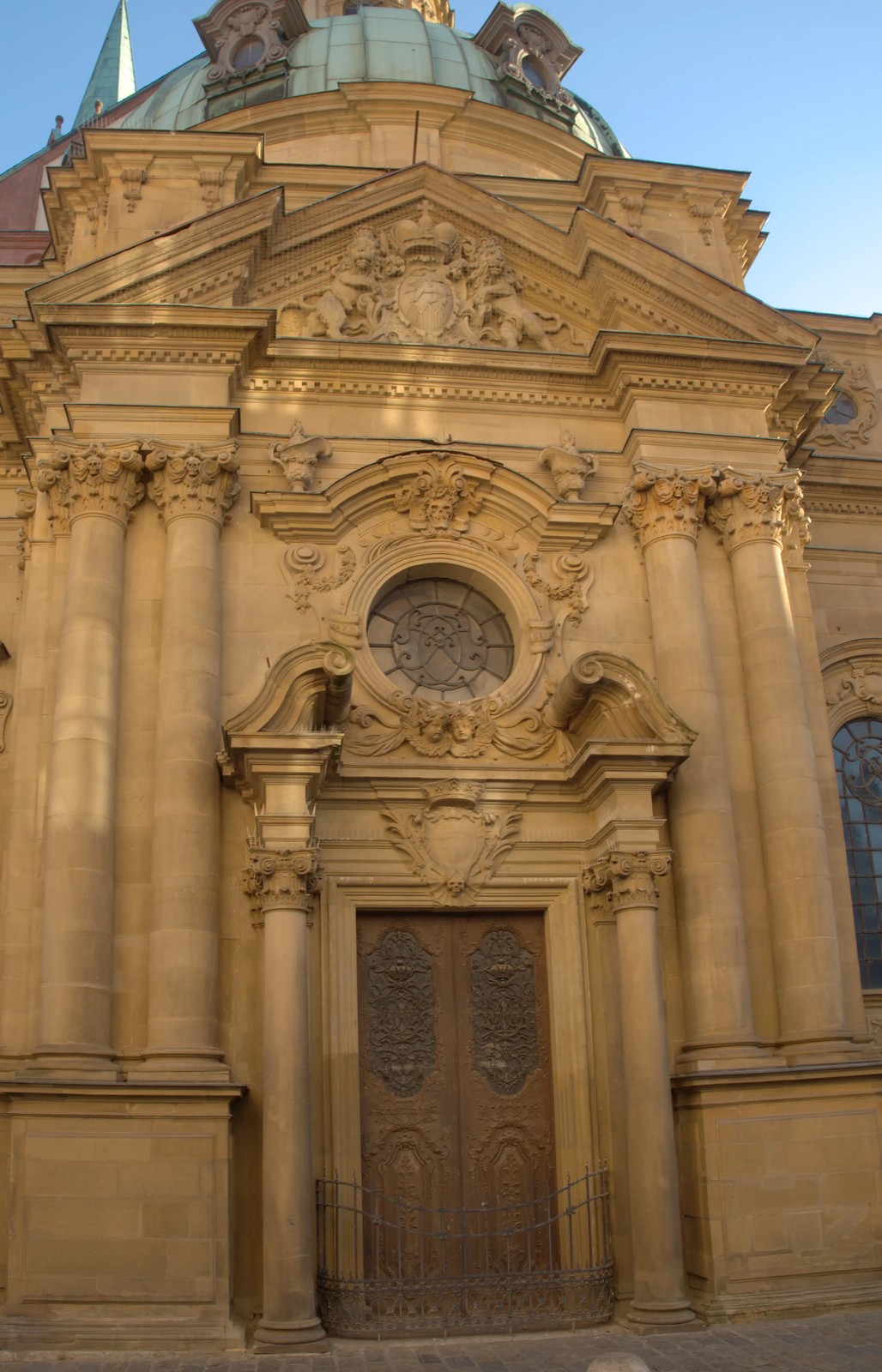
Image: wikimedia 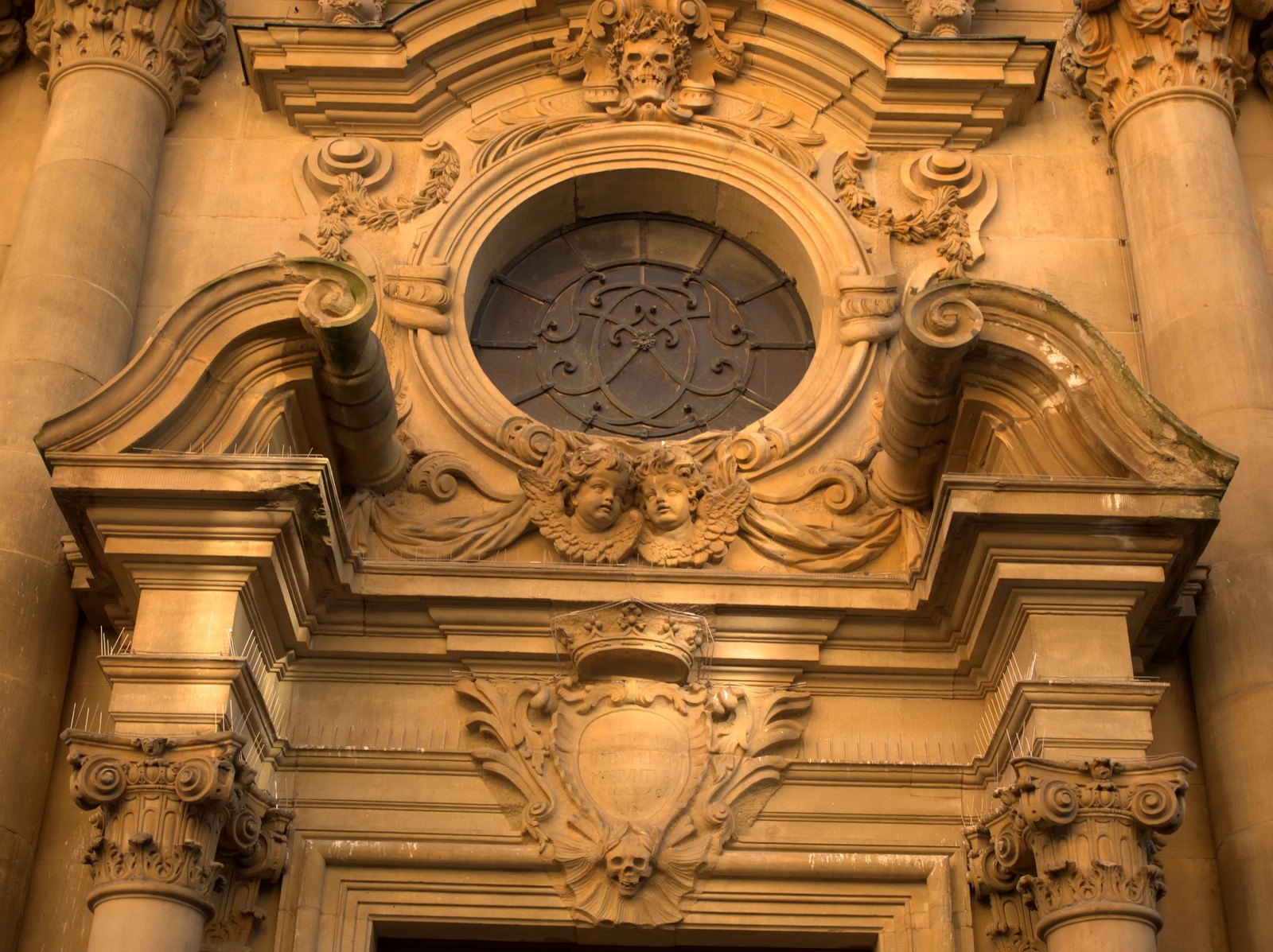
Image: wikimedia 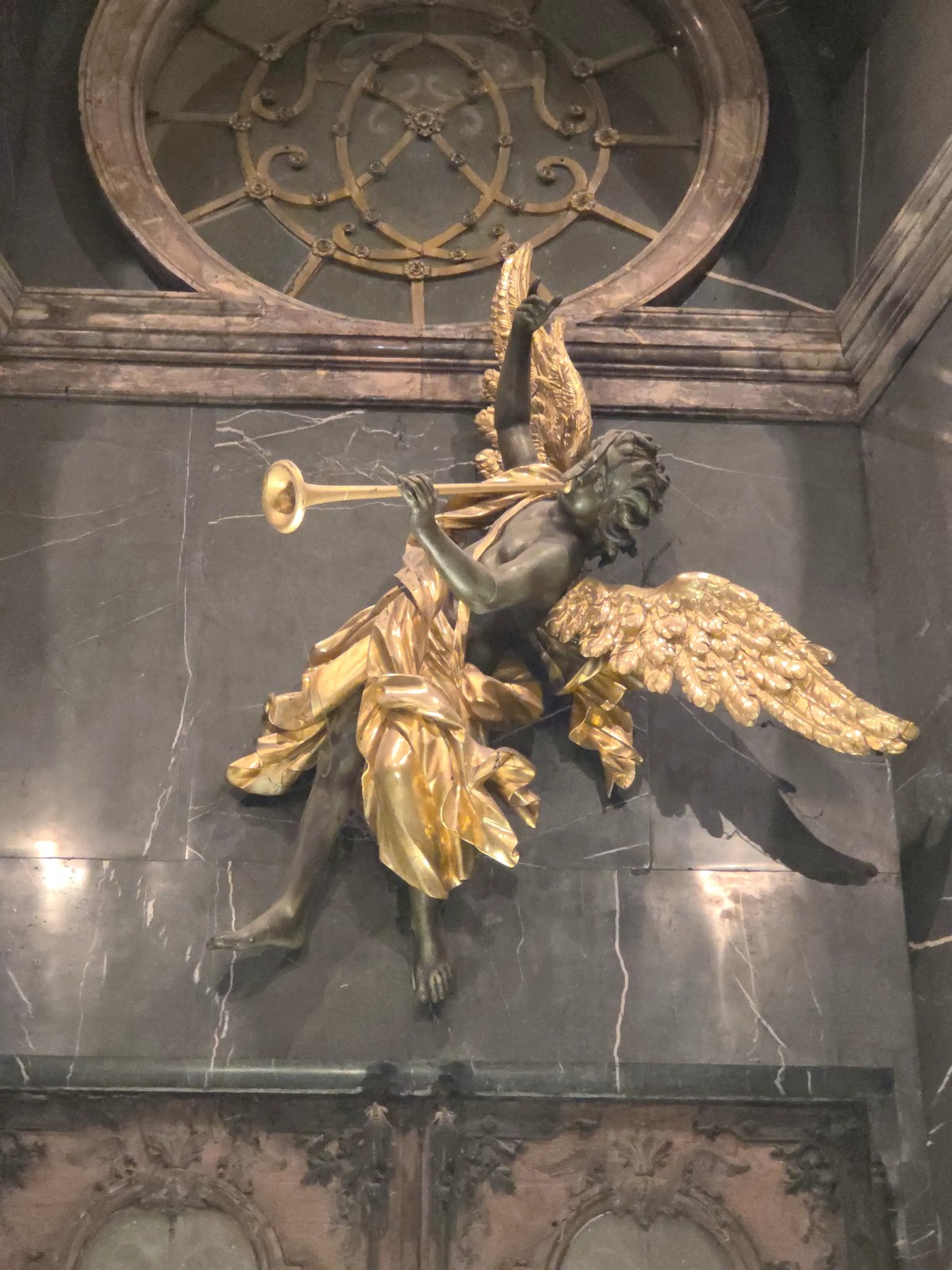
Image: wikimedia
Take this page with you
The myTuur app is free, and once you are standing at a spot its story starts by itself.


Spots like this one are the stops myTuur strings into tours through Würzburg. In the app, each story begins where you stand: walk up to a spot and it starts, read it on screen or listen as you go, then follow the route to the next one.
What is myTuur?
myTuur is a free city-guide app. Its tours are built from spots, and each spot carries a story that starts when you get there, to read or to listen to as you like.