Leichtweißhöhle
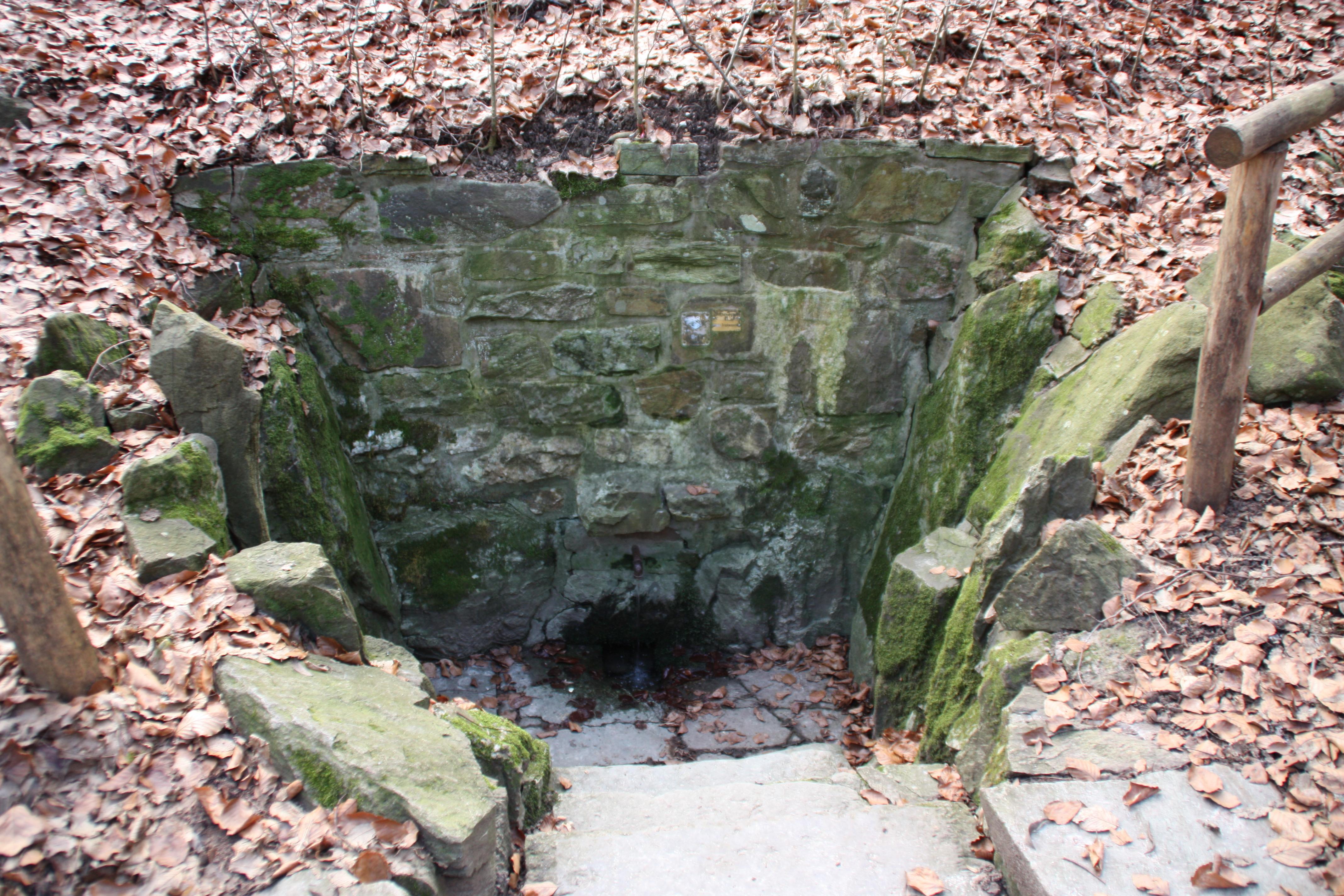
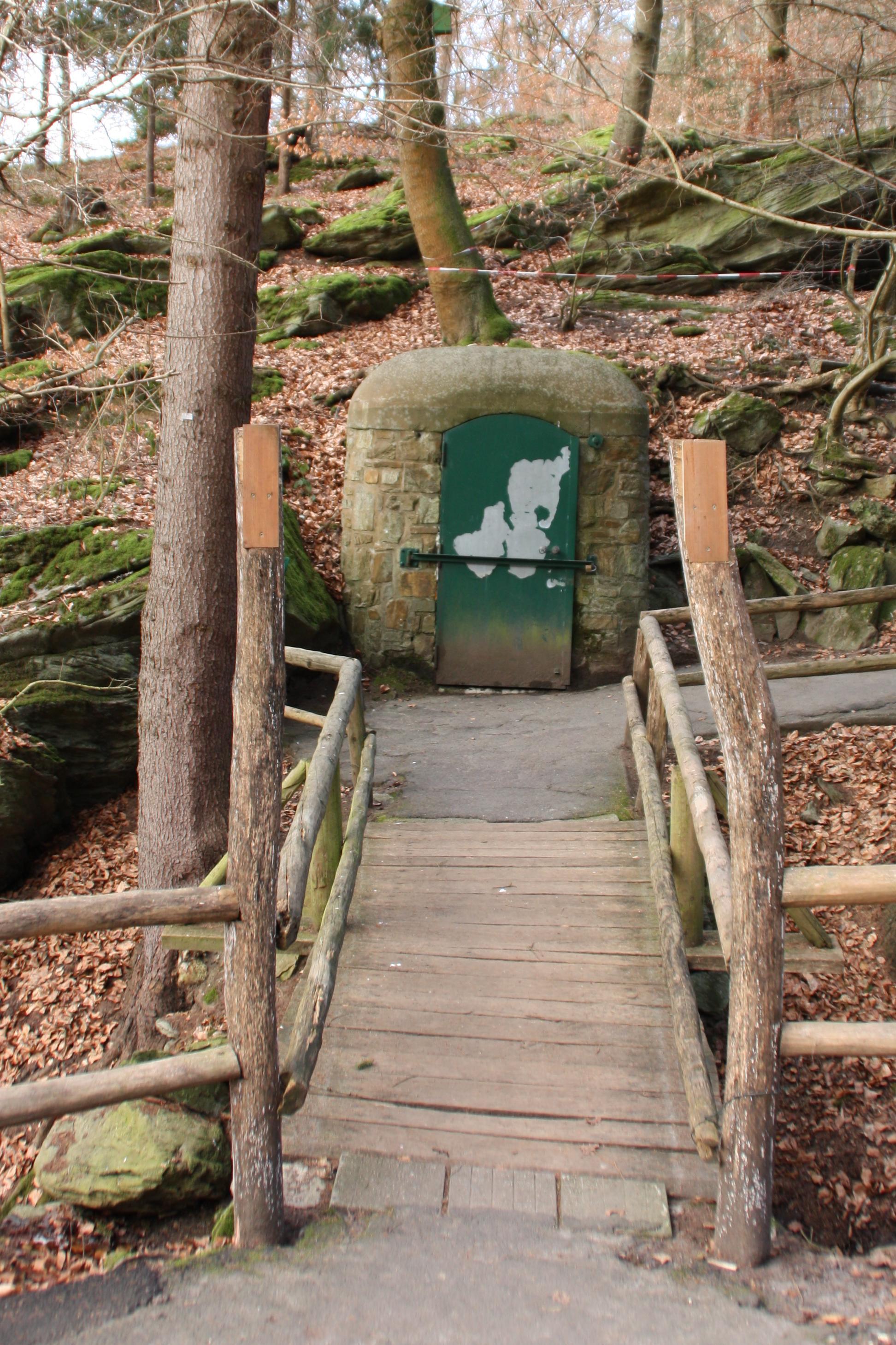
Leichtweißhöhle lies in northern Wiesbaden, among the Taunus mountains, as an artificially enlarged slate rock overhang. A second entrance, dark slate, and a wooden bridge over an artificial waterfall shape the approach. Inside, the passage extends about thirty metres and reaches two metres in height.
Forest workers discovered it in 1791 after seeing smoke rise from the rocks. Heinrich Anton Leichtweiß used the refuge between 1789 and 1791 as a poacher and outlaw. In 1856, Wiesbaden’s Beautification Society expanded the space into a romantic robber’s den. A moss-lined sleeping niche, round room, stone table, old firearms, and sabers furnish the story.
After the Second World War, vandalism brought closure until the city restored the entrance in 1983. Guided tours connect the cave’s theatrical setting with Leichtweiß’s history and its changing public role. Nearby, a playground and trails marked by the Via Mattiacorum extend the visit into the Taunus landscape.
- City
- Wiesbaden
- Content updated
Take this page with you
The myTuur app is free, and once you are standing at a spot its story starts by itself.


Spots like this one are the stops myTuur strings into tours through Wiesbaden. In the app, each story begins where you stand: walk up to a spot and it starts, read it on screen or listen as you go, then follow the route to the next one.
What is myTuur?
myTuur is a free city-guide app. Its tours are built from spots, and each spot carries a story that starts when you get there, to read or to listen to as you like.