Oberes Tor
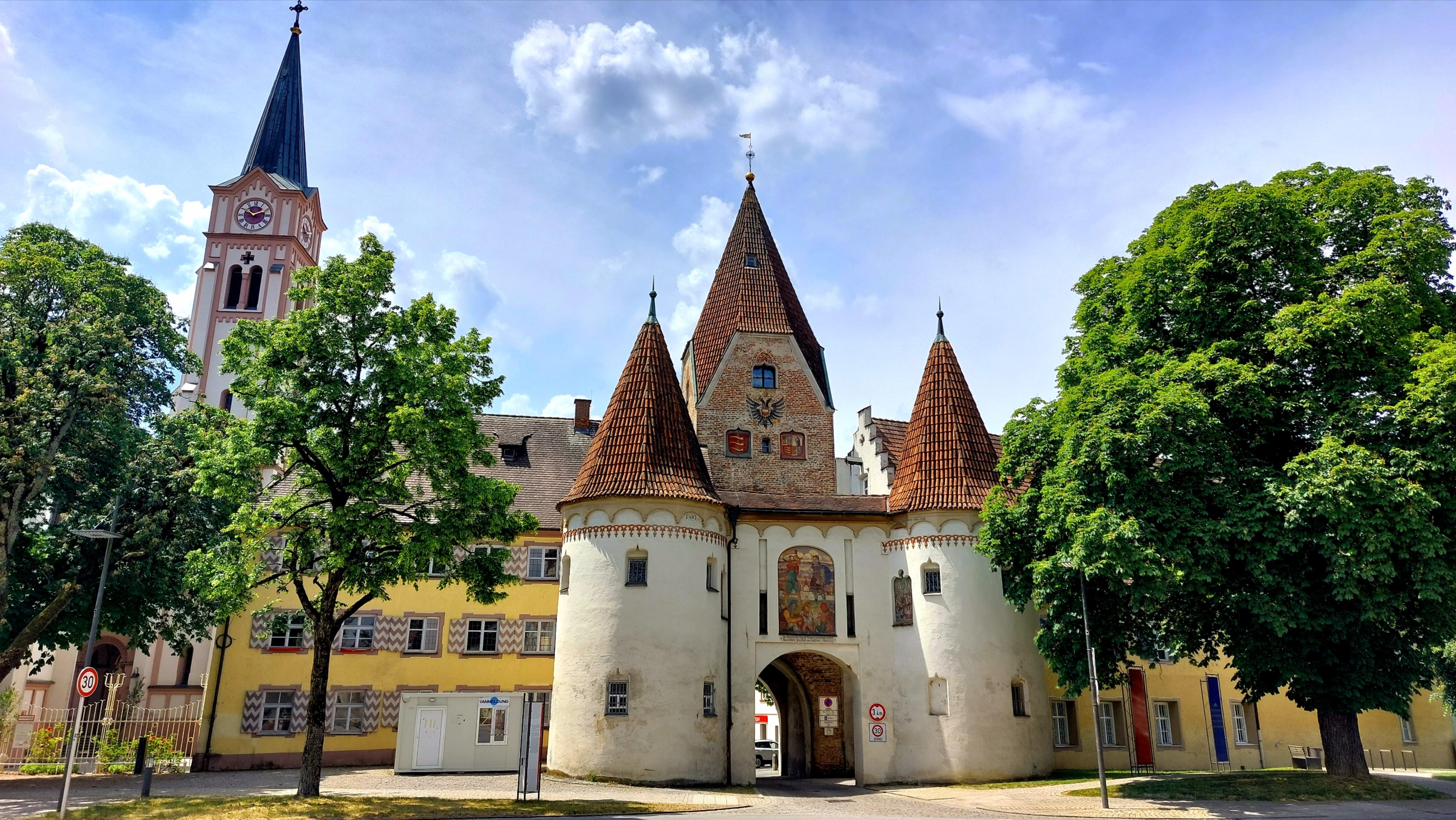
Oberes Tor rises as a late medieval gate, with one dominant tower between two lower, squat fore-towers. The main tower shows broad areas of bare stone.
Renovation in 1959 removed the covering from the main tower, while older plaster survives on the fore-towers. The fore-towers contain cellars about four metres below today’s ground level. Those chambers belonged to the town’s former ring of fortifications.
Damage during the 1525 peasants’ uprising led to repairs, while later work uncovered fresco fragments and portcullis wheel chambers. A large fresco by Anton Bischof, completed in 1922, depicts negotiations between citizens and insurgents. The gate once accommodated a night watchman, a midwife and storage cellars. Since 1910, sewer work has altered the passage, and parts of a destroyed vaulted connection reappeared in 1985. Oberes Tor belongs to the local museum complex and has wheelchair access. Timber decay has made conservation a major concern.
- City
- Weißenhorn
- Content updated
Take this page with you
The myTuur app is free, and once you are standing at a spot its story starts by itself.


Spots like this one are the stops myTuur strings into tours through Weißenhorn. In the app, each story begins where you stand: walk up to a spot and it starts, read it on screen or listen as you go, then follow the route to the next one.
What is myTuur?
myTuur is a free city-guide app. Its tours are built from spots, and each spot carries a story that starts when you get there, to read or to listen to as you like.