Tomba di Giulietta
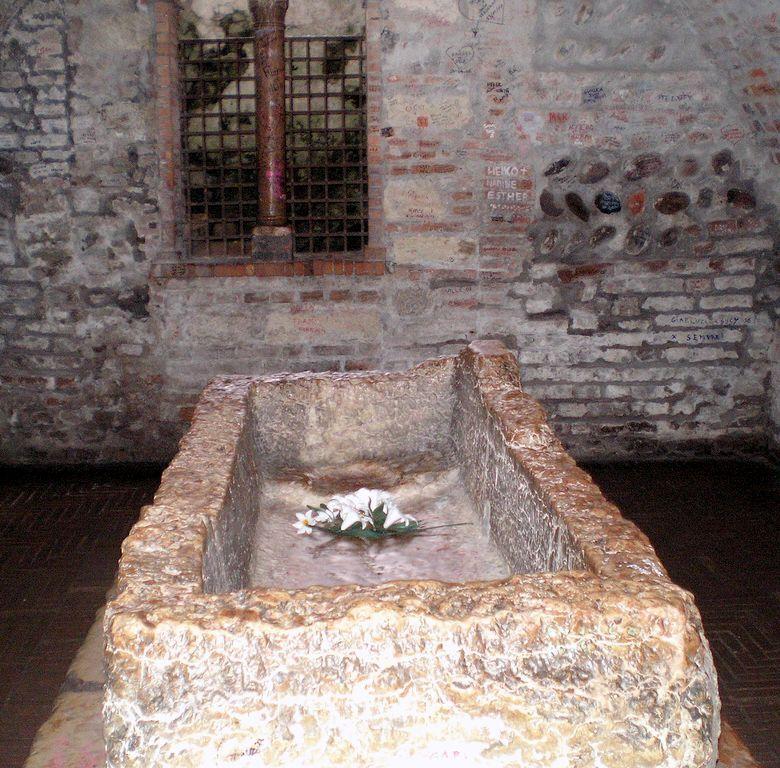
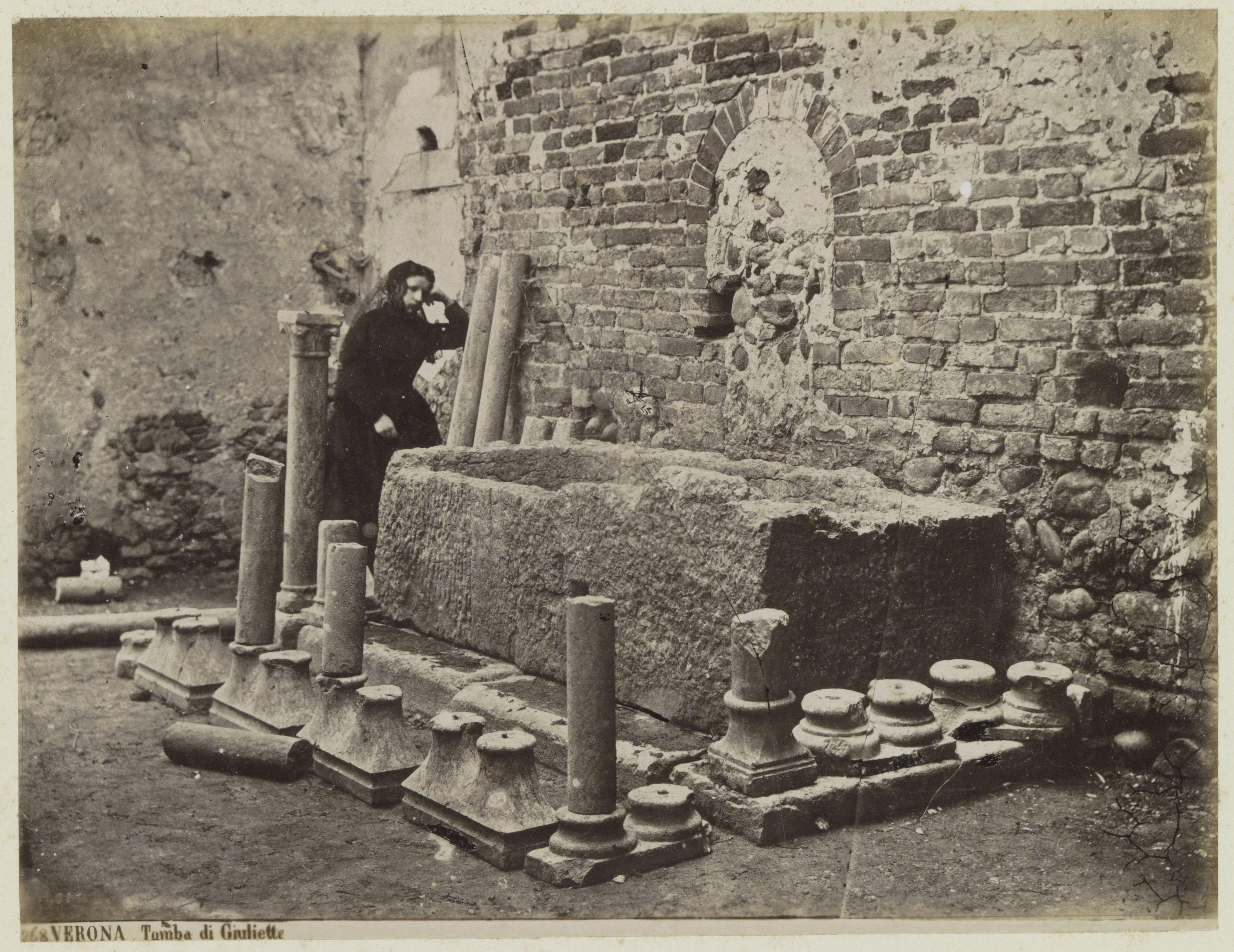
Tomba di Giulietta stands in Verona’s former Franciscan monastery of San Francesco al Corso. In the underground crypt, you see an open sarcophagus carved from red Verona marble, surrounded by old gravestones from the monks who once lived there.
The vessel probably dates from the thirteenth century, yet it has no inscription and remains completely empty. Girolamo dalla Corte linked it to Juliet in the sixteenth century, while Shakespeare’s play later turned that tradition into a destination for admirers of Romeo and Juliet. Charles Dickens and Marie-Louise of Austria once removed marble fragments, prompting protection measures and a chapel around the damaged stone. In 1938, the sarcophagus moved into this purpose-built crypt within the Museo degli Affreschi “G.B. Cavalcaselle”, which occupies the former monastery.
The surrounding complex began in the early thirteenth century on a site associated with Saint Francis of Assisi’s visit to Verona in 1220. A nearby marble bust of William Shakespeare, made by Renato Cattani, recalls the literary connection, while civil wedding ceremonies continue the romantic association. What stays with you is the contrast between the simple, unmarked tomb and the immense love story attached to it.
- City
- Verona
- Content updated
Take this page with you
The myTuur app is free, and once you are standing at a spot its story starts by itself.


Spots like this one are the stops myTuur strings into tours through Verona. In the app, each story begins where you stand: walk up to a spot and it starts, read it on screen or listen as you go, then follow the route to the next one.
What is myTuur?
myTuur is a free city-guide app. Its tours are built from spots, and each spot carries a story that starts when you get there, to read or to listen to as you like.