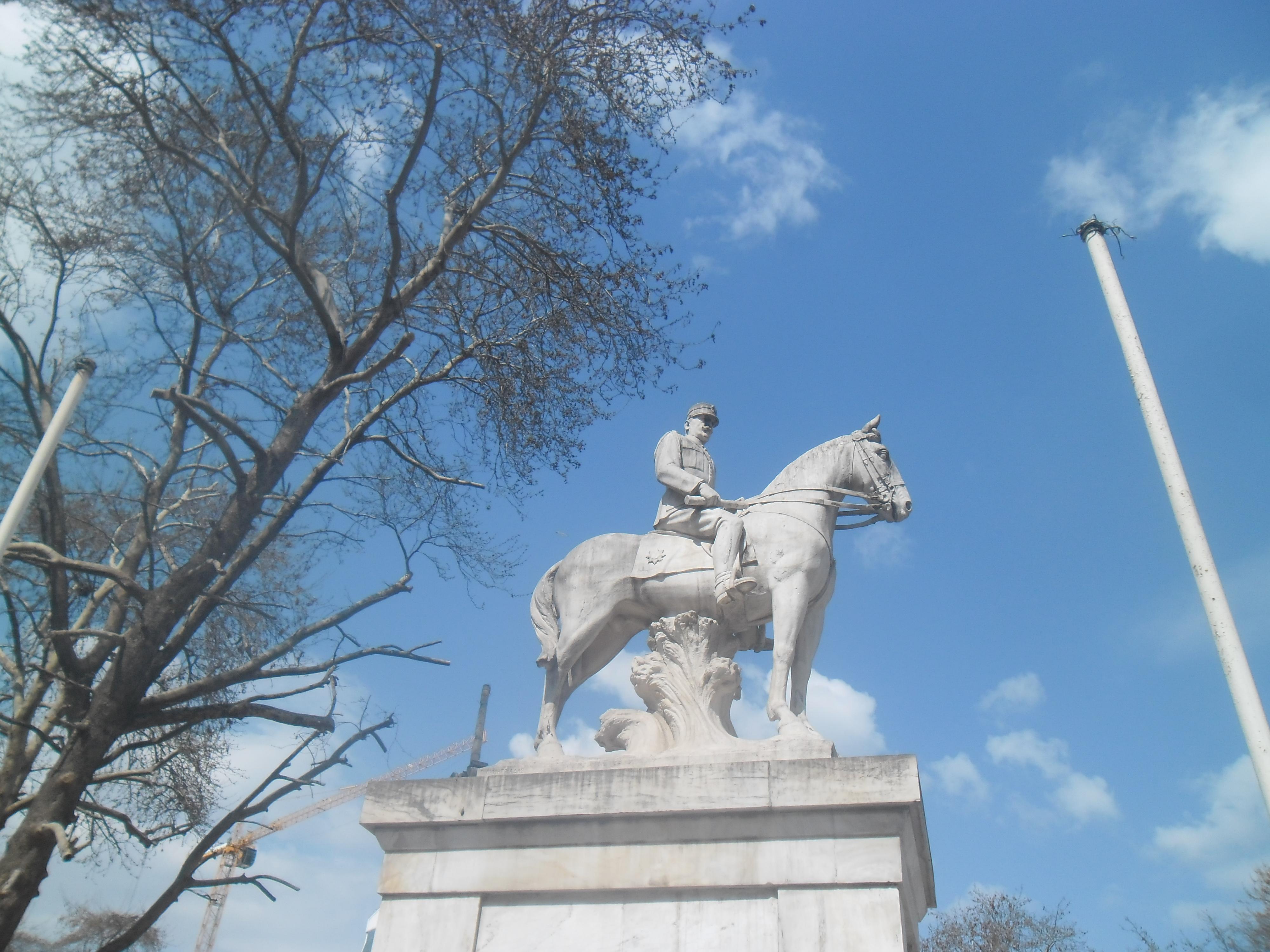
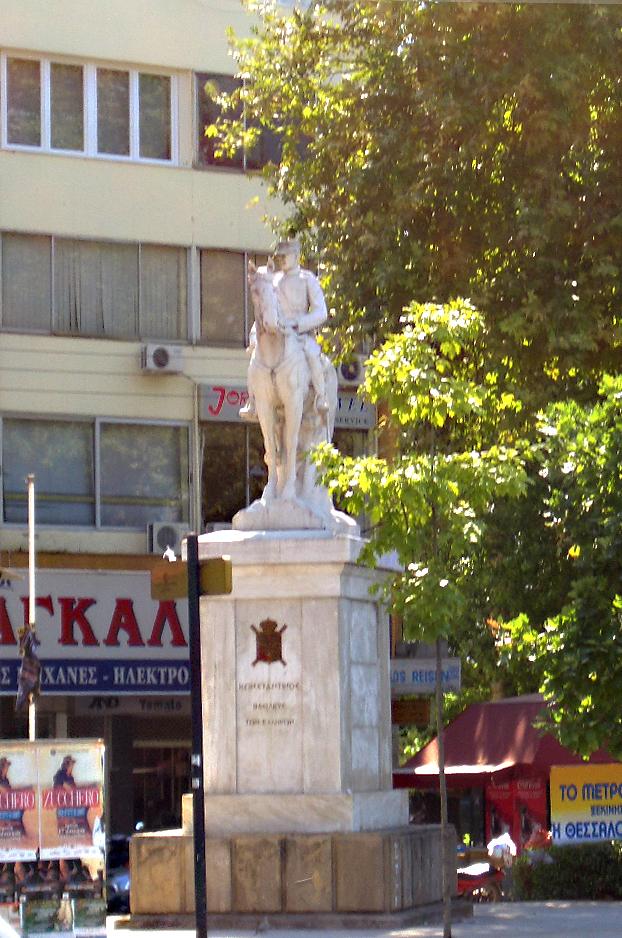
Άγαλμα Κωνσταντίνου Α'
Statue of Constantine I stands in Greece as a reminder of a ruler who redirected the Roman world. Its base carries the name of the emperor commemorated here. The figure recalls Constantine’s rise from soldier’s son to emperor during the crises of the late Roman Empire. He reunited large parts of the state after victory at the Milvian Bridge in 312.
That victory preceded the Edict of Milan, issued with Licinius in 313. The decree ended imperial persecution and allowed Christians to practise their faith openly and recover confiscated property. In 325, Constantine summoned bishops to the Council of Nicaea, where major questions of Christian doctrine received formal attention. He also founded Constantinople, moved imperial power eastward, and introduced administrative and monetary reforms. One enduring detail remains the chi-rho, the sign he placed on his soldiers’ standards before the battle.
- City
- Thessaloniki Municipal Unit
- Content updated
Take this page with you
The myTuur app is free, and once you are standing at a spot its story starts by itself.


Spots like this one are the stops myTuur strings into tours through Thessaloniki Municipal Unit. In the app, each story begins where you stand: walk up to a spot and it starts, read it on screen or listen as you go, then follow the route to the next one.
What is myTuur?
myTuur is a free city-guide app. Its tours are built from spots, and each spot carries a story that starts when you get there, to read or to listen to as you like.