Pabellón de Colombia
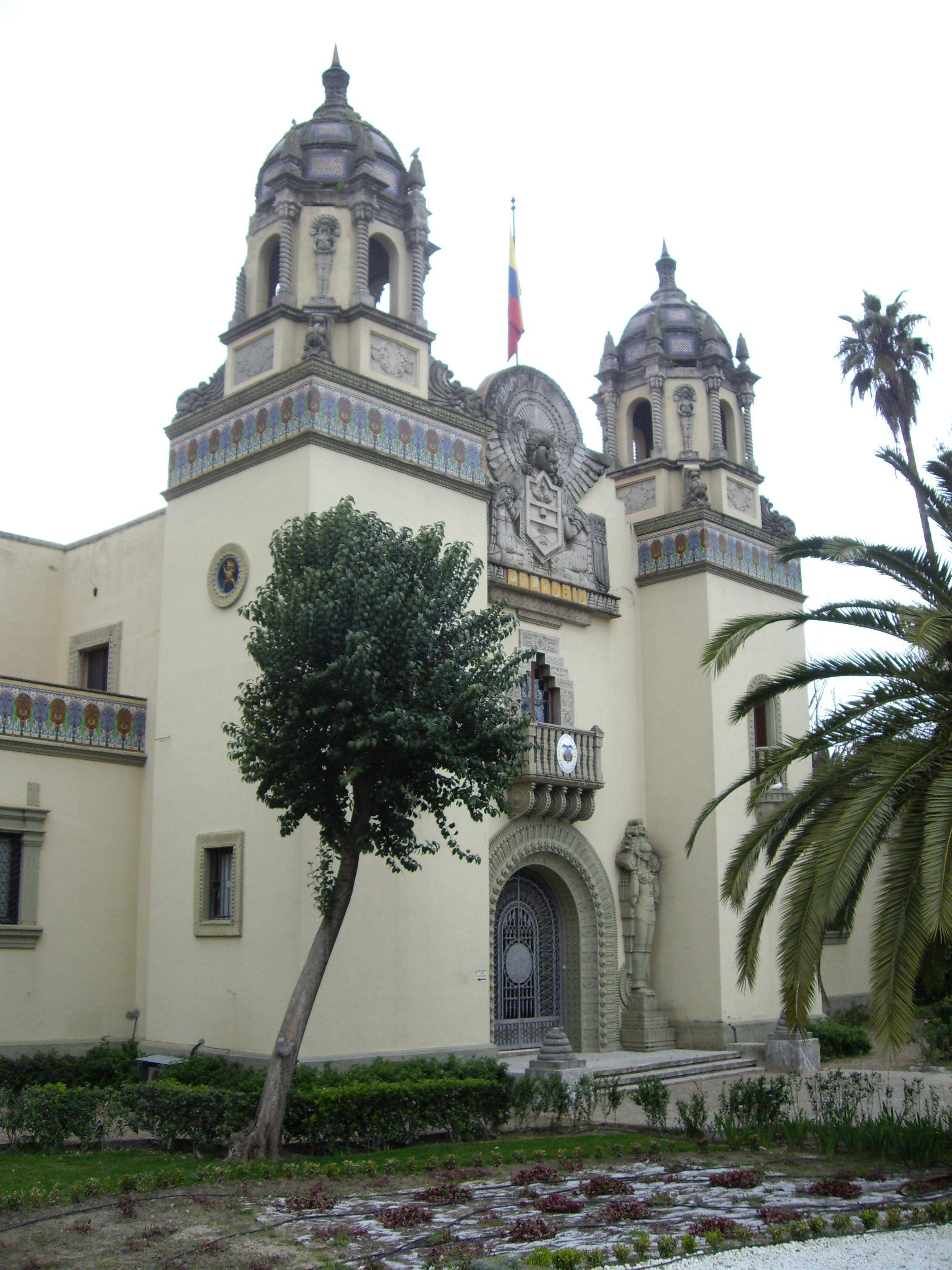
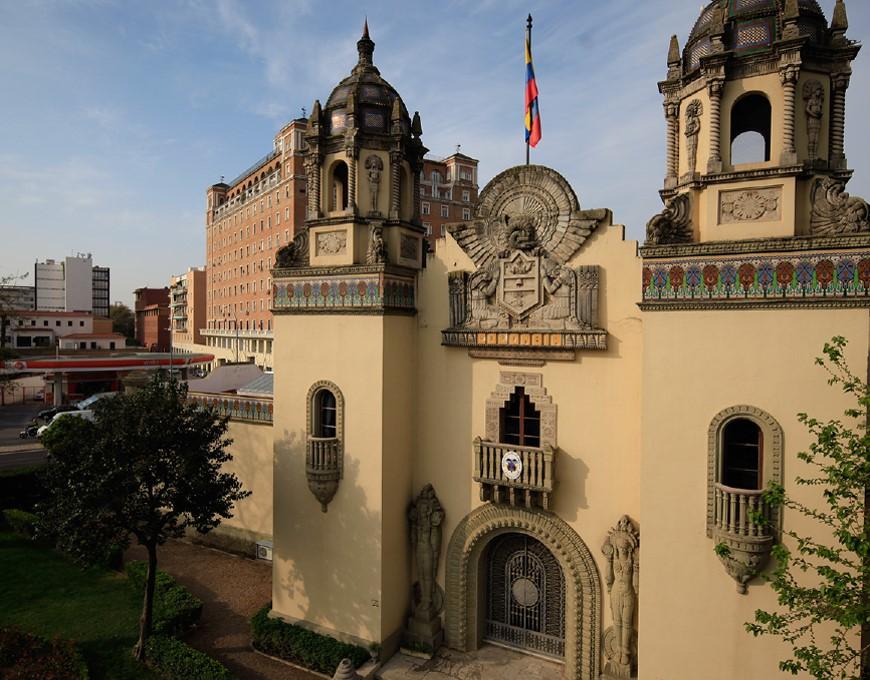
Pabellón de Colombia stands in Seville as a public building from the Ibero-American Exposition of 1929. Its entrance rises between two towers, each about eighteen metres high, while galleries surround a central patio. An imperial staircase connects the ground floor with the upper gallery. Colonial houses in Colombia and Venezuela inspired this arrangement, which combines civil and religious architectural elements.
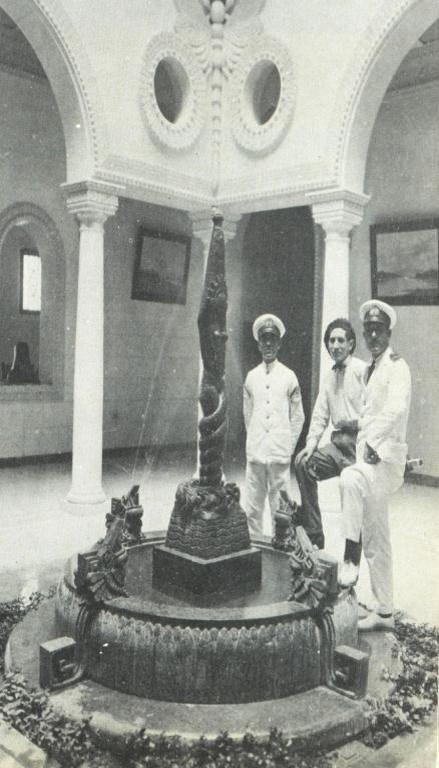
Colombia planned its participation from 1911, and funding received approval in June 1926. José Granados de la Vega led the design, while Ángel Hoyuelas Martínez directed construction for the exhibition. Rómulo Rozo shaped the ornamentation in 1928, drawing on Maya, Chibcha, Tolima and San Agustín art. His work includes the Colombian coat of arms, animal mouldings, indigenous-inspired ironwork and the Bachué sculpture beside a first-floor fountain. Ana Krauss designed stained glass inspired by Colombian vegetation, and a ceramic frieze shows ritual masks.
The exhibition presented Colombian art, crafts, coffee, emeralds, silverwork, colonial works and national publications. A recreation of San Agustín sculptures accompanied the Quimbaya Treasure, comprising 123 gold pieces given to Spain in 1892. Four allegorical deities frame the towers, representing navigation, agriculture, commerce and industry.
- City
- Seville
- Content updated
Take this page with you
The myTuur app is free, and once you are standing at a spot its story starts by itself.


Spots like this one are the stops myTuur strings into tours through Seville. In the app, each story begins where you stand: walk up to a spot and it starts, read it on screen or listen as you go, then follow the route to the next one.
What is myTuur?
myTuur is a free city-guide app. Its tours are built from spots, and each spot carries a story that starts when you get there, to read or to listen to as you like.