Richard Max Broosch
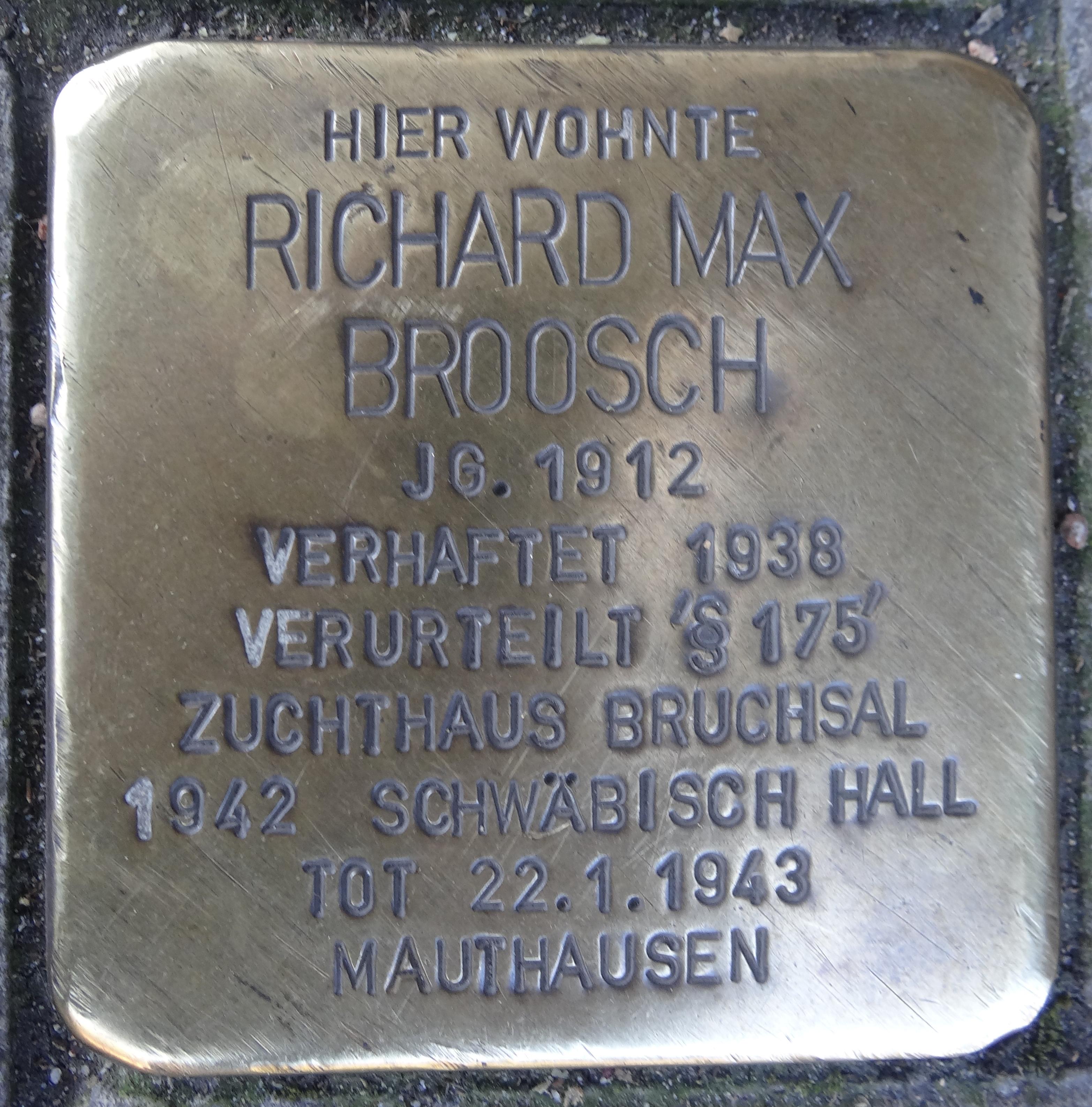
Richard Max Broosch is commemorated in Heidelberg by a Stolperstein set into the pavement on Bergheimer Straße. This wheelchair-accessible spot places remembrance within the city’s everyday movement.
The small, square brass plaque belongs to a memorial tradition begun by artist Gunter Demnig in the 1990s. Each stone marks the last freely chosen residence of someone persecuted or murdered under the Nazi regime. The inscriptions can include a person’s name, birth year and known fate. Heidelberg contains many such stones, forming a decentralised memorial across streets and neighbourhoods. Together, they remember Jewish people, Sinti and Roma, political prisoners, disabled people, homosexuals and others targeted by Nazi persecution. Their street-level position brings individual lives into view where homes, work and community once stood. One brass surface on Bergheimer Straße connects a single Heidelberg address with a wider European history of remembrance.
- City
- Heidelberg
- Content updated
Take this page with you
The myTuur app is free, and once you are standing at a spot its story starts by itself.


Spots like this one are the stops myTuur strings into tours through Heidelberg. In the app, each story begins where you stand: walk up to a spot and it starts, read it on screen or listen as you go, then follow the route to the next one.
What is myTuur?
myTuur is a free city-guide app. Its tours are built from spots, and each spot carries a story that starts when you get there, to read or to listen to as you like.