voormalige Paleis van Justitie
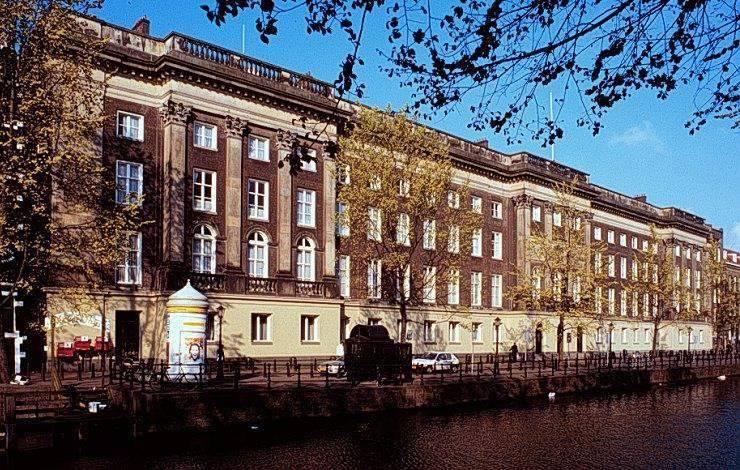
The voormalige Paleis van Justitie stands in Amsterdam as a monumental building shaped by several civic lives.
Its story begins with the Aalmoezeniersweeshuis, an orphanage built here between 1663 and 1665.
Between 1825 and 1829, city architect Jan de Greef transformed and enlarged the orphanage into a courthouse, completed internally in 1836.
Justice services moved here from the Prinsenhof.
Brick and sandstone form a neoclassical façade with three risalites, Corinthian pilasters, a heavy cornice, and a balustrade.
Jacob van Lennep’s attributed poetry appears above the first-floor windows.
The central projection contains the entrance hall and staircase, while earlier spaces later held a city library, hospitals, archives, and added floors.
A planned square and bridge never appeared before the entrance.
After judicial departments moved away, careful renovation preserved the façade and monumental character while creating Rosewood Amsterdam, with 134 rooms, three restaurants, a bar, three inner gardens, and a spa.
Water cellars beneath the former courtyards became archive rooms, leaving a memorable trace of how Amsterdam kept adapting this place.
- City
- Amsterdam
- Content updated
Take this page with you
The myTuur app is free, and once you are standing at a spot its story starts by itself.


Spots like this one are the stops myTuur strings into tours through Amsterdam. In the app, each story begins where you stand: walk up to a spot and it starts, read it on screen or listen as you go, then follow the route to the next one.
What is myTuur?
myTuur is a free city-guide app. Its tours are built from spots, and each spot carries a story that starts when you get there, to read or to listen to as you like.